Counting the waves…
Counting the waves…

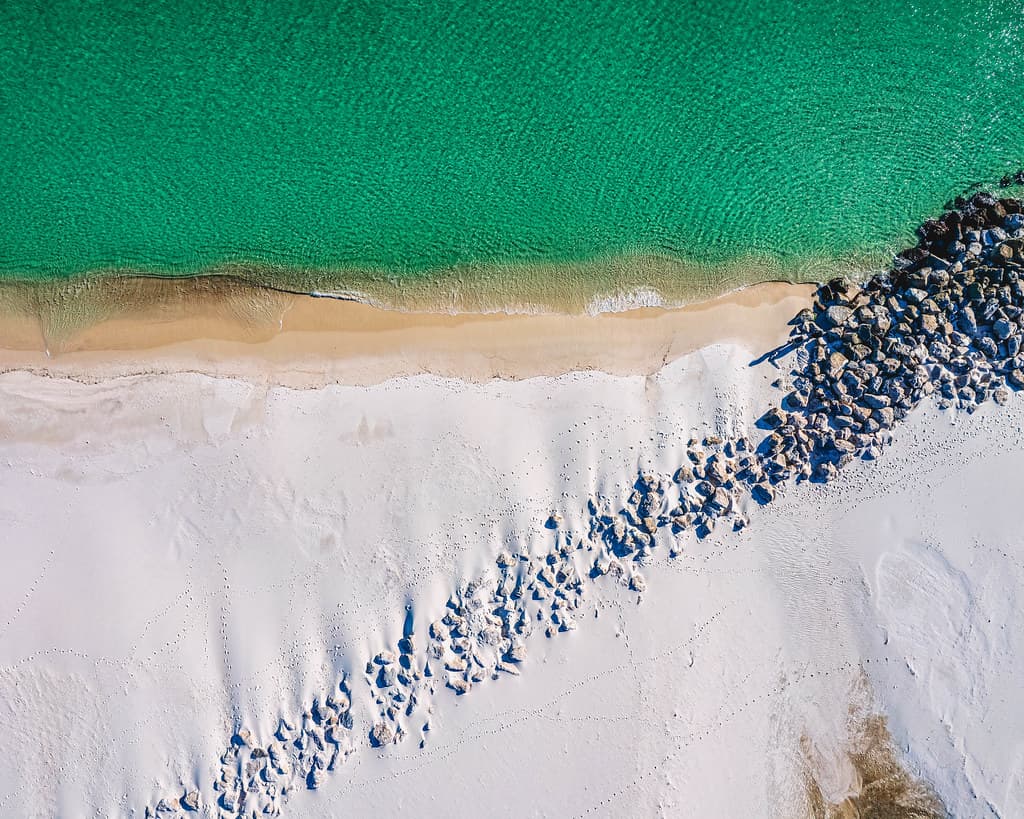
Perdido Key occupies the liminal space where Florida surrenders to Alabama—a narrow ribbon of barrier island that feels more like secret than destination. The quartz sand here produces an audible chirp underfoot, a geological quirk that sounds like walking on snow. Drive south on County Road 292 and the island reveals itself slowly: marshlands give way to golf courses, then finally to Johnson Beach, where the National Seashore protects the eastern tip from development. The dunes rise in windswept ridges, anchored by sea oats that rattle in the perpetual Gulf breeze. The turquoise spectrum here depends entirely on where you stand. Wade out twenty yards and you're still knee-deep, the sand bottom visible through water the color of mint. Another thirty feet and the first sandbar appears, a submerged highway where families cluster. Beyond that, the Gulf darkens to navy where the shipping lanes begin. Mornings bring glass-flat surf; afternoons summon a chop that keeps boogie-boarders occupied but rarely threatens. You'll share this beach with mullet fishermen casting nets at dawn, with retirees who've colonized the western condos, and with day-trippers from Pensacola who know better than to fight the crowds at Pensacola Beach. The island's western end dead-ends at the state line, where a pedestrian bridge leads into Alabama and the shoreline continues, uninterrupted, as if borders were merely bureaucratic fiction.
Places, rentals, tours and events within walking and driving distance of Perdido Key Beach.
Photos
Perdido Key Beach is generally safe for swimming, with calm, clear Gulf waters ideal for families. The beach features lifeguards during peak season at designated areas. Always check the flag warning system before entering the water: green means calm conditions, yellow indicates moderate surf and currents, red signals dangerous conditions, and double red flags mean water is closed. Rip currents can occur, especially during storms or rough weather. Swim near lifeguard stations when possible, and avoid swimming alone or after consuming alcohol.
The best time to visit Perdido Key Beach is April through October for warm swimming conditions, with water temperatures reaching 80-85°F in summer. Peak season runs June through August, bringing crowds and higher prices but guaranteed sunshine. Spring (March-May) and fall (September-November) offer pleasant weather, fewer visitors, and lower rates. Winter months are quieter with cooler temperatures (60s-70s°F) but still enjoyable for beach walks and dolphin watching. Hurricane season runs June through November, with September being the most active month.
Perdido Key Beach is located on State Road 292 (Perdido Key Drive), about 15 miles southwest of Pensacola. From Pensacola, take State Road 292 west across the bridge. Public beach access points with parking include Johnson Beach (part of Gulf Islands National Seashore) which charges a daily entrance fee, and several smaller public access areas along Perdido Key Drive with limited free parking. Parking fills quickly during summer weekends, so arrive early. Some areas offer metered parking or require resident permits.
Perdido Key offers diverse dining options including The Oyster Bar for fresh seafood, Flora-Bama Lounge (a famous beach bar straddling the Florida-Alabama line), and various casual beachfront restaurants serving Gulf Coast cuisine. Accommodations range from beachfront condos and vacation rentals to resorts like Perdido Beach Resort. Nearby Orange Beach and Gulf Shores, Alabama (10-15 minutes west) provide additional restaurant and lodging options. Grocery stores and beach supply shops are available along Perdido Key Drive for self-catering visitors.
Yes, Perdido Key is an important sea turtle nesting area. Loggerhead, green, and occasionally Kemp's ridley turtles nest on these beaches from May through October, with hatchlings emerging July through November. Nests are marked and protected by volunteers and wildlife officials. If you encounter a nesting turtle or hatchlings, observe from a distance, avoid using flashlights or camera flashes, and never touch or disturb them. Many local organizations offer guided turtle walks during nesting season, providing educational opportunities while protecting these endangered species.