Counting the waves…
Counting the waves…

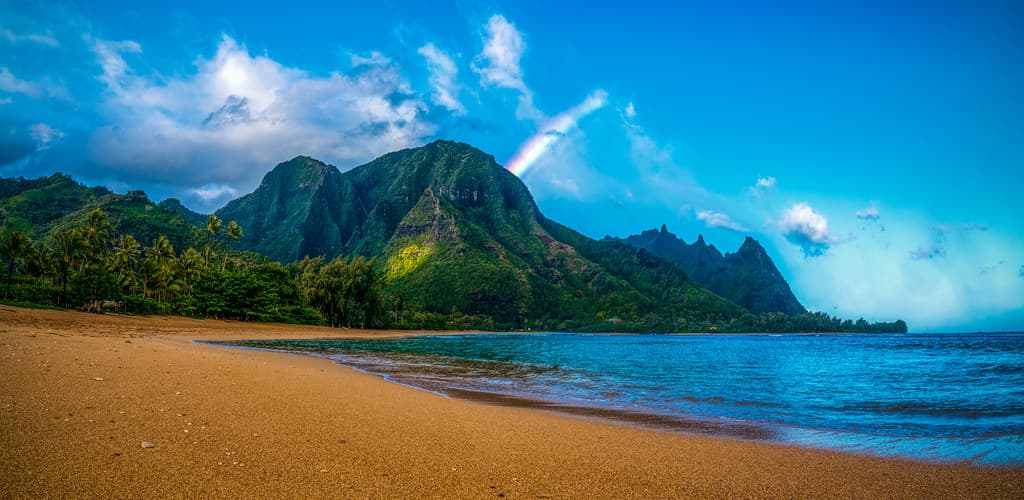
Tunnels earns its name from the labyrinth of lava tubes honeycombing the reef a hundred yards offshore. You'll enter the water from a crescent of coarse sand bookended by ironwood trees, their needles carpeting the shore. The swim out takes you across a shallow apron where sunlight refracts through knee-deep water onto volcanic stone worn smooth as river rock. Once you reach the drop-off, the reef plunges into blue channels webbed with caverns and overhangs. Parrotfish crunch coral in staccato bursts. Humuhumunukunukuāpua'a dart between staghorn formations. If you time your visit between April and September, when trade winds ease and the ocean smooths to cobalt glass, visibility stretches past sixty feet. Winter swells rebuild the seafloor, rearranging sand and coral, but also churn the water opaque and generate currents that turn the tunnels treacherous. Above water, Makana Ridge rises four thousand feet behind you, its fluted cliffs catching afternoon light in shades of rust and jade. Local families claim the best parking before nine, spreading out beneath the ironwoods with coolers and shade tents. By midday the narrow dirt lot overflows, and latecomers park a half-mile back along the highway, trudging in with snorkel sets slung over shoulders.
Places, rentals, tours and events within walking and driving distance of Tunnels Beach.
Photos
Swimming and snorkeling safety at Tunnels Beach varies dramatically by season. During summer months (May-September), waters are typically calm and ideal for snorkeling among the vibrant reef. Winter brings large surf, strong currents, and dangerous conditions unsuitable for swimming. Always check current conditions before entering the water, as rip currents can occur. The reef has sharp coral, so reef-safe shoes are recommended. There are no lifeguards on duty. Never snorkel alone and stay within the protected lagoon area when conditions permit.
The best time for snorkeling at Tunnels Beach is during summer months, typically May through September, when ocean conditions are calmest. Mornings generally offer the clearest water and best visibility before afternoon winds pick up. Winter months (October-April) bring large swells that make the water murky and dangerous for swimming. Visit on weekdays to avoid crowds, as this popular beach gets busy on weekends. Check surf reports before going, and avoid visiting after heavy rains when runoff reduces water clarity.
Tunnels Beach is located on Kauai's north shore, accessed via Kuhio Highway (Route 560) about 8 miles past Hanalei town. Look for the beach access near mile marker 8, across from Haena Beach Park. Parking is extremely limited along the narrow roadside shoulder, with space for only 10-15 vehicles. Arrive early (before 8am) to secure a spot, especially in summer. The walk from the road to the beach is short. Consider alternative parking at nearby Haena Beach Park if no spaces are available.
Tunnels Beach has no facilities—no restrooms, showers, or food vendors. The nearest public restrooms are at Haena Beach Park, about a half-mile away. For food, you'll need to drive back toward Hanalei town (8 miles) where you'll find restaurants, food trucks, and grocery stores. There are no hotels immediately nearby; most visitors stay in Hanalei, Princeville, or other north shore accommodations. Bring all necessary supplies including water, snacks, and sun protection, as this is a remote beach with limited services.
Tunnels Beach offers exceptional snorkeling with diverse marine life among its extensive reef system. Common sightings include green sea turtles (honu), colorful tropical fish like parrotfish, butterflyfish, and triggerfish, plus occasional octopus and eels in the reef crevices. The underwater lava tubes and caverns that give the beach its name create habitats for various species. During summer, visibility often exceeds 50 feet. Monk seals occasionally rest on the beach. Remember to maintain respectful distance from all wildlife and never touch the coral or marine animals.