Counting the waves…
Counting the waves…
A refined fusion of water purity, environmental stability, and communal vibrancy for Ahupu Bay Beach.
View MethodologyAnalyzed via live sensors and environmental data.
Wave height, wind, and atmospheric stability.
Live footfall and crowd balance metrics.
Community reviews and curated sentiment.
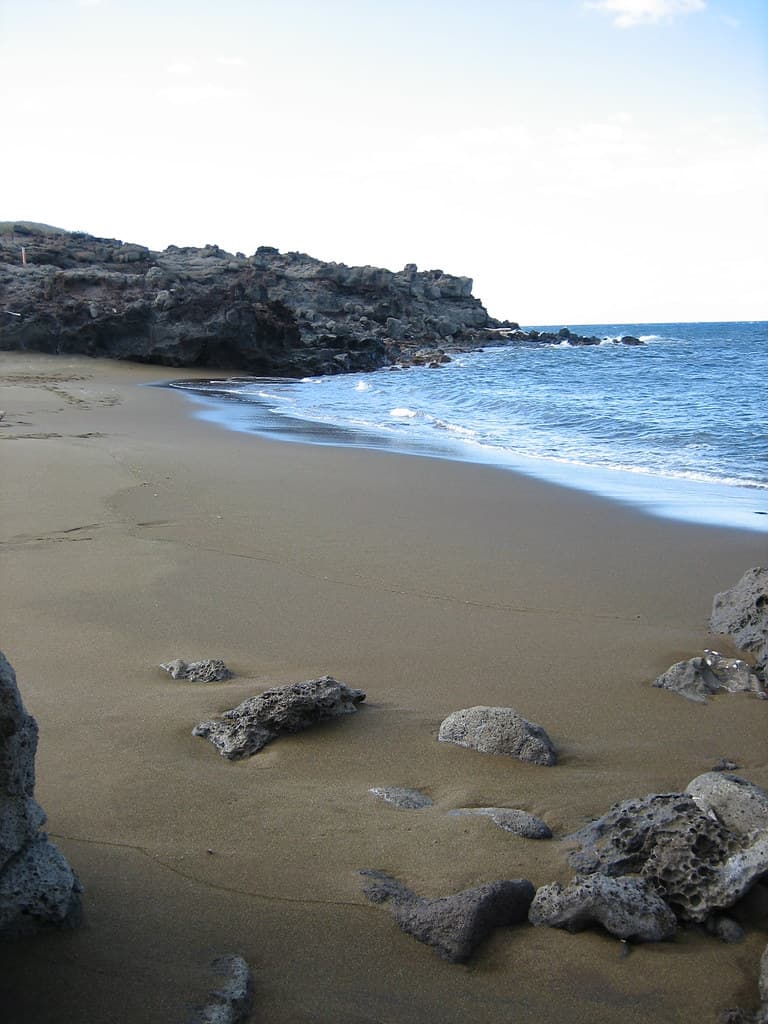
“Ahupu Bay curves along Kaho'olawe's southeastern shore, where red-dust cliffs meet cobalt swells and the only footprints are yours. Access requires Native Hawaiian cultural protocols and advance permission; no hotels,…”
Limited recent visitor reports — live OBI telemetry is your best guide for current conditions.
You won't Google-map your way to Ahupu Bay. Kaho'olawe remains off-limits to casual tourism, its beaches accessible solely through the Kaho'olawe Island Reserve Commission's volunteer restoration programs or sanctioned cultural visits. The island spent decades as a U.S. Navy bombing range; unexploded ordnance still dots the interior, making beach zones the safest—and most spiritually significant—ground to tread.
The bay itself unfolds in shades of rust and indigo: basalt boulders warmed by trade winds, sand flecked with olivine, surf that hammers the reef with rhythmic precision. Offshore, you'll spot spinner dolphins arcing through the channel between here and Maui, their silhouettes sharp against the horizon. Mornings bring kona winds that flatten the water into a mirror; by afternoon, whitecaps churn the outer breaks.
 Credit: Unsplash
people on beach during daytime
 Credit: Unsplash
seashore beside high rise buildings
Plant natives, clear invasives
Winter channel migrations peak
Zero light pollution, full stars
Where it is
Ahupu Bay Beach
Kaho?olawe, Hawaii, USA
20.571300°, -156.640700°
Weather
Loading…
Swell
—
Temp
Warm · Restorative
UV Index
Moderate
Wind
—
Tidal State
Last known
Max Sunlight
—
Ideal Shade
—
Jan - Dec (Peak)
May - Nov (Off-season)
Historical data suggests peak visibility and stable sea temperatures occur during the prime visitation window.
Select a category to load nearby places.
Unlock restaurants, luxury stays and curated maritime experiences within 2km
Ahupu Bay Beach is located on Kaho'olawe, an uninhabited island with no lifeguards, amenities, or emergency services. Swimming conditions vary seasonally, with calmer waters typically in summer months. However, accessing this beach is extremely challenging and potentially dangerous due to the island's restricted status. The surrounding waters can have strong currents, and there's no infrastructure for visitor safety. Without proper supervision or nearby help, swimming here carries significant risks that most travelers cannot adequately prepare for.
While Hawaii generally enjoys year-round pleasant weather, Ahupu Bay Beach on Kaho'olawe is essentially inaccessible to regular tourists. The island is uninhabited and access is strictly controlled due to ongoing restoration efforts and unexploded ordnance from former military use. Summer months (May-September) typically offer calmer ocean conditions and less rainfall across Hawaii, but without legal access to the island, timing your visit is not a practical consideration for travelers. The island remains off-limits except for authorized cultural and environmental programs.
Ahupu Bay Beach is not accessible to the general public. Kaho'olawe is an uninhabited island with no public ferry service, no airport, and no infrastructure including parking facilities. Access is strictly restricted and controlled by the Kaho'olawe Island Reserve Commission. Only authorized personnel participating in cultural or environmental restoration programs can visit, and they must arrange special permission and transportation well in advance. Regular tourists cannot legally visit this beach, making it one of Hawaii's most remote and restricted locations.
Ahupu Bay Beach has absolutely no amenities, facilities, restaurants, or accommodations. Kaho'olawe is completely uninhabited with no running water, electricity, or structures for visitors. There are no hotels, campgrounds, restrooms, or food services on the entire island. Even the limited authorized groups who visit must bring all their own supplies, water, and equipment. The nearest lodging and dining options would be on neighboring Maui, but again, public access to Kaho'olawe itself is not permitted, making these amenities irrelevant for this particular beach.
Kaho'olawe was used as a military bombing range for decades, leaving unexploded ordnance throughout the island that makes it dangerous for visitors. In 1994, the island was transferred to the State of Hawaii for eventual return to Native Hawaiian control. Today, the Kaho'olawe Island Reserve Commission oversees restoration efforts, clearing ordnance and rehabilitating the ecosystem. Access is restricted to protect both visitors from hazards and the island's fragile environment. Only authorized cultural practitioners and restoration workers may visit through special permit programs.
Photos