Counting the waves…
Counting the waves…

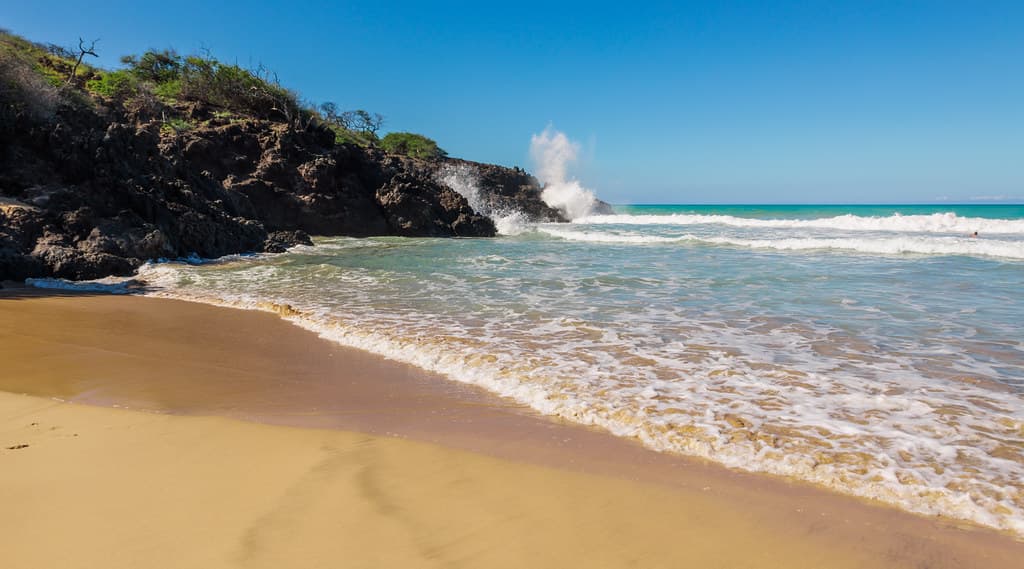
Hapuna Beach unfurls along the Kohala Coast like a rare interruption in the island's otherwise volcanic shoreline. The sand here is uncommonly soft—ground coral and shell, not basalt—and it slopes gently into water that shifts from pale jade at the tideline to deep cobalt beyond the break. On calm summer mornings, you can wade out fifty feet and still touch bottom; by winter, swells roll in from the northwest, stacking into rideable waves that draw bodysurfers and boogie boarders into the shorebreak. The beach is broad enough that even on busy weekends you can claim a patch of sand without feeling crowded. Kiawe trees provide dappled shade along the backshore, though most visitors bring pop-up tents or umbrellas. Lifeguards patrol year-round, and the facilities—showers, restrooms, picnic pavilions—are well-maintained. The water stays warm, hovering around seventy-five degrees, and visibility on windless days stretches thirty feet or more. Beyond the swim zone, the coastline turns rugged again: black lava fingers jut into the sea at both ends of the beach, and the Mauna Kea resort rises to the north. But here, for this brief, generous curve of sand, the Big Island softens. You'll taste salt on your lips, feel the undertow tug at your shins, and understand why locals and visitors alike return season after season.
Places, rentals, tours and events within walking and driving distance of Hapuna Beach.
Photos
Hapuna Beach is generally excellent for swimming during summer months (May-September) when waters are calm and clear. However, winter swells (October-April) can create dangerous shore breaks, strong currents, and high surf unsuitable for swimming. Lifeguards are on duty daily, and warning flags indicate current conditions. The beach's gradual slope makes it ideal for families during calm periods, but always check with lifeguards before entering the water. Rocks at the beach's northern end require caution. Early mornings typically offer the calmest conditions year-round.
Hapuna Beach is spectacular year-round, but conditions vary seasonally. May through September offers the calmest ocean conditions, warmest water temperatures, and best swimming. Winter months (November-March) bring larger waves favored by bodyboarders but can be too rough for casual swimmers. The beach is busiest on weekends and holidays. For optimal weather and fewer crowds, visit on weekday mornings. Afternoon winds typically pick up, especially in summer. The Kona Coast enjoys sunny, dry weather throughout the year, making Hapuna reliably pleasant in any season.
Hapuna Beach is located off Highway 19, about 30 miles north of Kailua-Kona and 10 miles south of Waimea. Look for well-marked signs directing you to Hapuna Beach State Recreation Area. The beach has a large paved parking lot with approximately 50 spaces, charging a modest daily fee (typically $5-10 for non-residents). Parking fills quickly on weekends and holidays, so arrive before 10am for guaranteed spots. The lot provides direct beach access via a short paved path.
Hapuna Beach State Recreation Area offers full facilities including restrooms, outdoor showers, covered picnic pavilions, and lifeguards. However, there are no food vendors or restaurants directly on the beach, so bring your own supplies or picnic. The adjacent Hapuna Beach Prince Hotel (now Westin Hapuna Beach Resort) is a short walk away and offers dining options, though primarily for resort guests. Several convenience stores and restaurants are available in nearby Waimea (15 minutes) or along Highway 19. Plan to bring water, snacks, and shade as the beach has limited natural cover.
Hapuna Beach features unusually white sand for the Big Island because it's composed primarily of coral and shell fragments rather than volcanic rock. Most Big Island beaches have black or green sand formed from lava, but Hapuna's half-mile crescent developed from millennia of wave action breaking down coral reefs and shells into fine, bright white particles. This makes it one of only a few white-sand beaches on the island and the largest. The sand's composition also contributes to the brilliant turquoise water color, creating the classic tropical beach appearance rare on Hawaii's youngest island.