
Counting the waves…
Counting the waves…

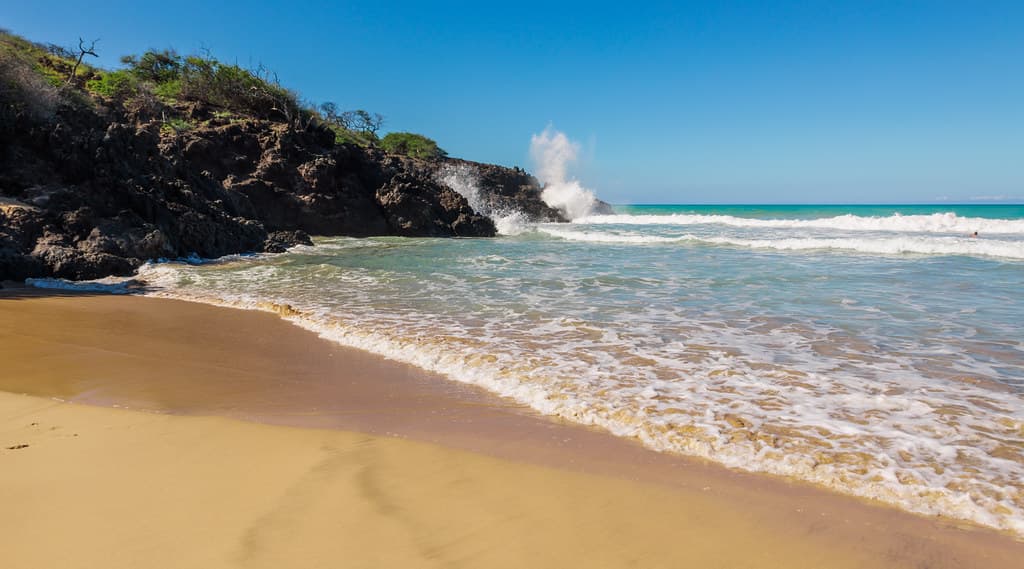
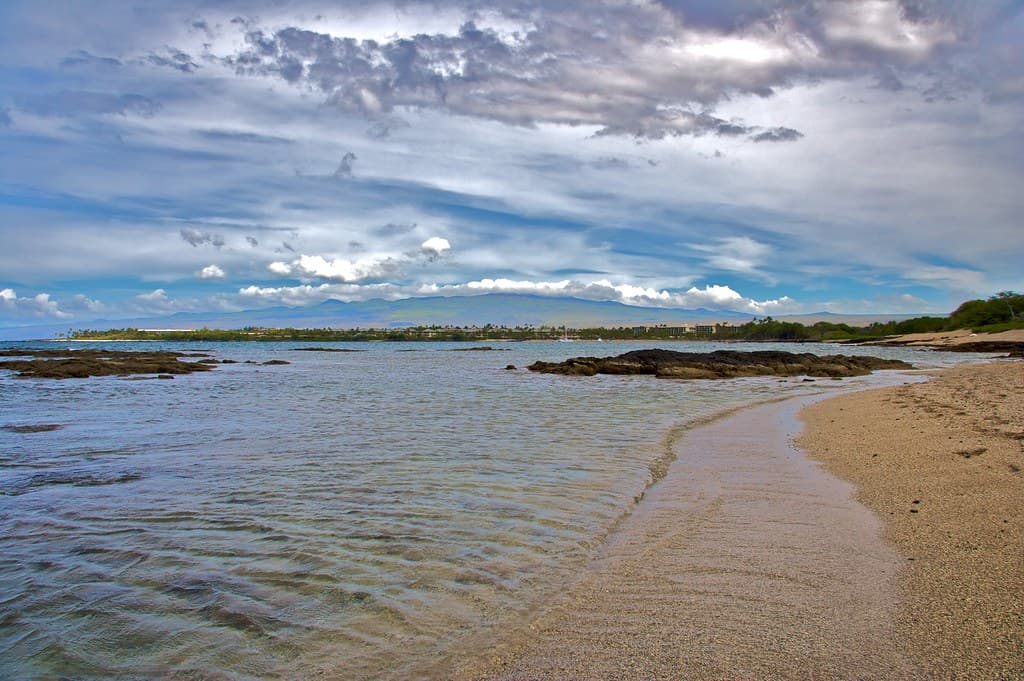
Mauna Kea Beach curves in a perfect half-moon on the sunny Kohala Coast, where the Mauna Kea Beach Hotel has stood since 1965 and Laurance Rockefeller first chose this cove for its unusual white sand. Unlike the island's volcanic black shores, this pocket of crushed coral and shell sits sheltered between two lava points, its soft texture drawing beachgoers who spread towels beneath the shade of kiawe trees. The water grades from turquoise at the tideline to deep sapphire where the seafloor drops, and you'll spot green sea turtles surfacing near the rocks on both ends of the bay. Snorkeling is best along the northern point, where the lava formations create ledges and caves that shelter schools of manini, parrotfish, and the occasional whitetip reef shark gliding over sand channels. Bodysurfers and boogie boarders work the middle of the beach when swells arrive, timing their rides on waves that break fast and close to shore. You'll need to arrive before 10 a.m. to claim one of the limited public parking spots—the lot fills quickly, and the resort strictly enforces the count. The beach takes on different moods throughout the day: mornings bring glassy water ideal for swimming laps parallel to shore, midday sees families camped under umbrellas, and late afternoon light turns the white sand amber while spinner dolphins occasionally cruise the bay. Showers and restrooms sit near the parking area, and a short path winds through the resort's lower lawn if you want to admire the Hawaiian art collection indoors.
Places, rentals, tours and events within walking and driving distance of Mauna Kea Beach.
Photos
Mauna Kea Beach is generally excellent for swimming, with calm, protected waters most of the year thanks to its crescent shape. The gradual slope and sandy bottom make it family-friendly. Winter months (November-March) can bring larger surf and stronger currents, so check conditions before entering. Lifeguards are not always present, so swim cautiously. The clear waters offer good snorkeling along the rocky points at either end of the beach. Always observe posted warnings and ask resort staff about current conditions.
Mauna Kea Beach enjoys excellent year-round weather, with temperatures typically ranging from 75-85°F. Summer (May-October) offers the calmest ocean conditions and best snorkeling visibility. Winter (November-April) brings occasional larger waves and slightly cooler temperatures, but remains pleasant. The Kohala Coast location means less rainfall than other parts of the Big Island. Weekdays are less crowded than weekends. Arrive early morning for best parking availability and to secure a good beach spot, especially during peak tourist seasons.
Mauna Kea Beach is located off Highway 19 between mile markers 68 and 69, accessed via the Mauna Kea Beach Hotel entrance road. Public parking is extremely limited, with only about 20-30 spaces available on a first-come, first-served basis. The lot often fills by mid-morning, especially on weekends. Parking is free but spaces cannot be reserved. Hotel guests have separate parking access. If the lot is full, you'll need to visit another nearby beach like Hapuna Beach, which has larger public parking facilities.
The Mauna Kea Beach Hotel sits directly on the beach, offering upscale dining and luxury accommodations. Hotel restaurants are open to non-guests but can be pricey. There are no food vendors or concessions directly on the beach, so bring your own snacks and water if not staying at the resort. Additional hotels and restaurants are located along the Kohala Coast, within a 10-15 minute drive. The towns of Waikoloa and Kailua-Kona offer more dining variety and are 20-30 minutes away by car.
Mauna Kea Beach is renowned for having some of the finest white sand in Hawaii. Unlike many Hawaiian beaches with volcanic black or golden sand, this beach features powdery white coral sand that stays relatively cool underfoot. The crescent-shaped bay stretches about half a mile, offering pristine conditions. The white sand and turquoise waters create postcard-perfect scenery that's been featured in numerous films and magazines. The beach has consistently ranked among America's best beaches, partly due to this exceptional sand quality and the stunning contrast with the surrounding landscape.