Counting the waves…
Counting the waves…

Kua Bay sits inside Kekaha Kai State Park, but locals still call it Maniniowali—a name that predates the paved access road by centuries. The beach unfolds in a tight crescent barely three hundred yards long, hemmed by rough a'a lava and backed by kiawe trees that offer threadbare shade. What it lacks in size it repays in sand: fine, squeaky, bright enough to squint against even through sunglasses. Winter swells carve the beach into steep berms; summer calms restore it, sometimes overnight. The water temperature hovers in the mid-seventies year-round, fed by deep offshore currents that keep it brisk and startlingly clear. Snorkelers hug the southern rocks where yellow tangs dart through coral heads, but the shore break can turn punishing without warning. Locals arrive at dawn to claim their patch of sand; by ten, the lot is full and latecomers idle on the access road, hazards blinking. There are no concessions, no lifeguards after hours, no cell signal. The light here is unforgiving in the best sense. Afternoon sun blanches the sand to near-white, throwing every ripple and footprint into relief. Stay past four and the coast road glows bronze, the ocean flattening to silk as the trades die down. Bring everything you need—water, shade, patience—and leave before the crowd turns restless.
Places, rentals, tours and events within walking and driving distance of Kua Bay (Maniniowali Beach).
Photos
Kua Bay offers excellent swimming conditions during calm summer months (May-September), with clear turquoise waters and gentle waves. However, winter swells (October-April) can create dangerous shore breaks, strong currents, and high surf unsuitable for swimming. There are no lifeguards on duty, so assess conditions carefully before entering the water. The sandy bottom and gradual entry make it ideal for families during calm periods. Always check ocean conditions before swimming, watch for posted warnings, and avoid the water during high surf advisories.
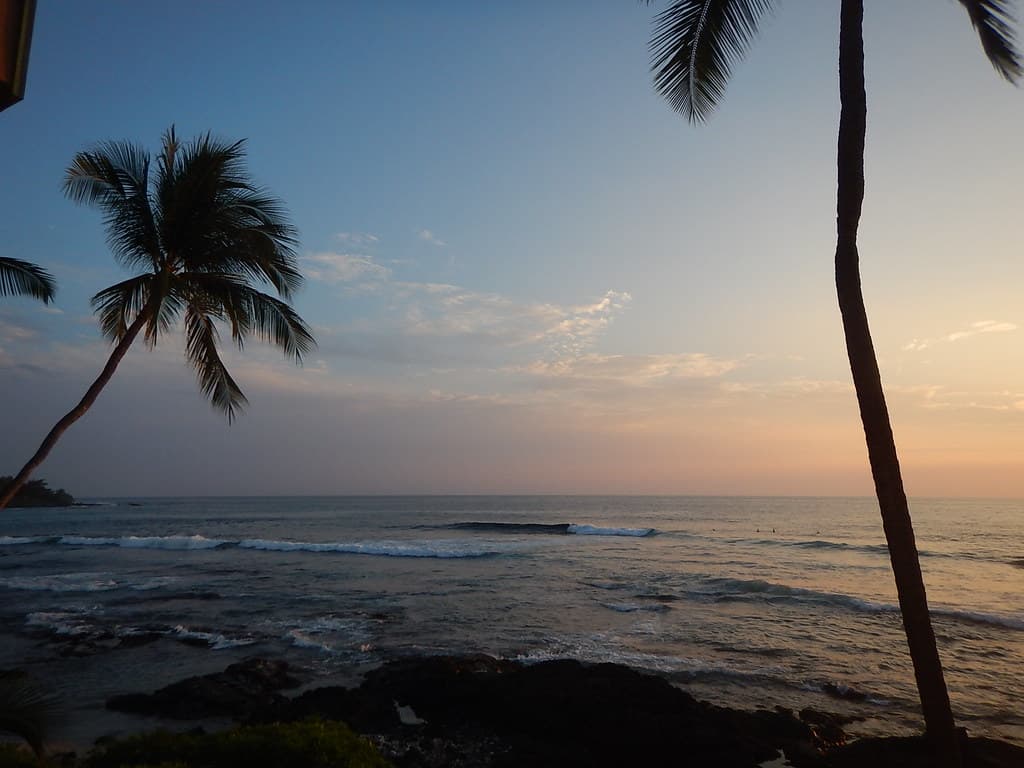
Kua Bay is accessible year-round, but the best conditions are typically May through September when seas are calmer and skies sunnier. Morning visits (before 10am) offer easier parking and less crowded beaches. The bay faces west, making it popular for sunset viewing. Winter months bring larger surf, which attracts boogie boarders but can make swimming dangerous. Afternoons often see increased winds. The beach's white sand and brilliant blue waters are stunning any time, but arrive early on weekends and holidays when parking fills quickly.
Kua Bay is located off Highway 19 (Queen Kaahumanu Highway) between mile markers 88 and 89, about 15 minutes north of Kailua-Kona. Look for the Maniniowali Beach sign and turn onto the paved access road leading to the parking lot. The parking area is moderate-sized and fills quickly, especially on weekends and holidays—arrive before 9am for best availability. The walk from parking to the beach is a short, easy path. There's no entry fee, but bring everything you need as amenities are limited.
Kua Bay has minimal facilities—only portable restrooms and no food concessions, shops, or freshwater showers. There's no shade on the beach, so bring umbrellas, sun protection, and plenty of drinking water. The nearest restaurants and grocery stores are in Kailua-Kona, about 15-20 minutes south. Pack a cooler with snacks, lunch, and beverages for the day. For accommodations, visitors typically stay in Kailua-Kona or the Kohala Coast resort areas and visit Kua Bay as a day trip to experience its pristine white sand.
Kua Bay's brilliant white sand is primarily composed of coral and shell fragments rather than the volcanic black sand common elsewhere on the Big Island. This creates a striking contrast with the deep blue water and dark lava rock surroundings. The sand's composition and the bay's protected location allow it to accumulate and maintain its powdery texture. This makes Kua Bay unusual for Hawaii's Big Island, where most beaches feature black, green, or mixed sand due to the island's active volcanic geology and relatively young geological age.