Counting the waves…
Counting the waves…

You'll earn Makalawena. The trailhead off Highway 19 offers no fanfare—just a rutted dirt road that discourages rental sedans and a twenty-minute trek over black volcanic rock baked by the Kona sun. Most beachgoers peel off at Makalewena's smaller neighbor, Kua Bay, leaving this crescent to those who pack water and commit to the walk. The sand here feels different underfoot—powdery white grains that squeak when you shuffle toward the water. A freshwater pond sits just inland, fringed by coconut palms and naupaka shrubs that rustle in the afternoon trade winds. The bay's western edge curves into tide pools where green sea turtles graze on limu, oblivious to snorkelers hovering above. Morning light paints the Kohala mountains in shades of ochre and sage, while spinner dolphins occasionally arch through the outer waters. Bring everything you need: shade umbrella, drinking water, lunch. No facilities exist here, no vendors, no lifeguard tower. The isolation is the point. When the wind picks up after noon, kiawe trees along the dunes offer refuge. Stay late enough and you'll watch the sun drop behind Hualālai, turning the white sand pink before the first stars appear over Mauna Kea.
Places, rentals, tours and events within walking and driving distance of Makalawena Beach.
Photos
Swimming conditions at Makalawena Beach vary significantly by season and location along the shore. Winter months (November-March) often bring larger swells and stronger currents, making swimming more challenging. Summer typically offers calmer waters ideal for swimming and snorkeling. The beach has no lifeguards, so always assess conditions before entering. Look for calmer pockets near the southern end. Strong currents and occasional sharp lava rocks exist, so water shoes are recommended. Never swim alone and be cautious during high surf.
Makalawena Beach is beautiful year-round, but timing affects your experience. Summer months (May-September) offer the calmest ocean conditions and best swimming weather. Mornings provide cooler temperatures and often lighter winds. Winter (November-March) brings higher surf, which appeals to experienced swimmers but may limit swimming areas. Weekdays are significantly less crowded than weekends. Arrive early in the day to secure easier parking and enjoy the beach before afternoon winds pick up, which is common along the Kona coast.
Makalawena Beach requires a 20-30 minute hike from the parking area. From Kailua-Kona, drive north on Highway 19 and turn at the Kona Coast State Park/Kekaha Kai entrance (between mile markers 90-91). Drive the rough, unpaved road about 1.5 miles to the parking area (high clearance recommended but not required if driven carefully). From the lot, hike the marked coastal trail northward. The trail crosses lava fields and can be hot and exposed, so bring plenty of water and sun protection.
Makalawena Beach has no amenities whatsoever—no restrooms, showers, food vendors, or drinking water. This is a completely undeveloped, remote beach. You must pack in everything you need, including plenty of water, snacks, sun protection, and shade (umbrella or tent). Pack out all trash. The nearest facilities are at Kekaha Kai State Park near the parking area, though these are basic. For restaurants and shops, you'll need to return to Kailua-Kona, approximately 15-20 minutes south by car.
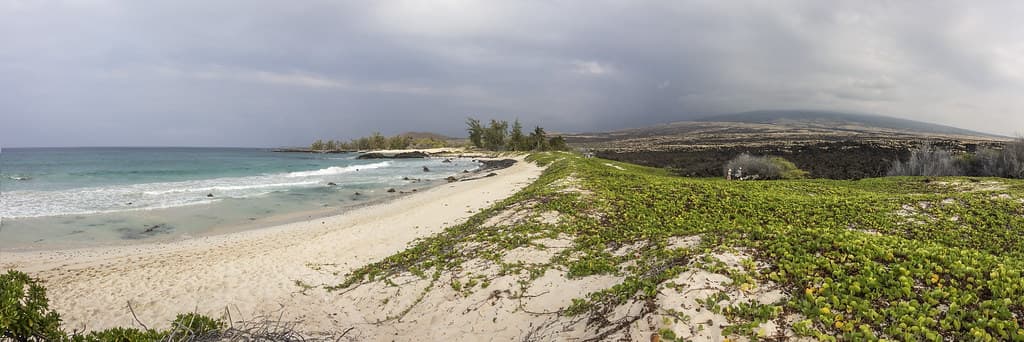
Makalawena Beach features some of the finest, whitest sand on the Big Island, which is remarkable since most Hawaiian Big Island beaches have black or green volcanic sand. This brilliant white sand is composed of coral and shell fragments, creating a stunning contrast against the black lava rocks and turquoise waters. The sand is notably soft and powdery. The beach's remote location has helped preserve this pristine white sand environment, making it feel like a hidden tropical paradise despite being relatively accessible from Kailua-Kona.