Counting the waves…
Counting the waves…
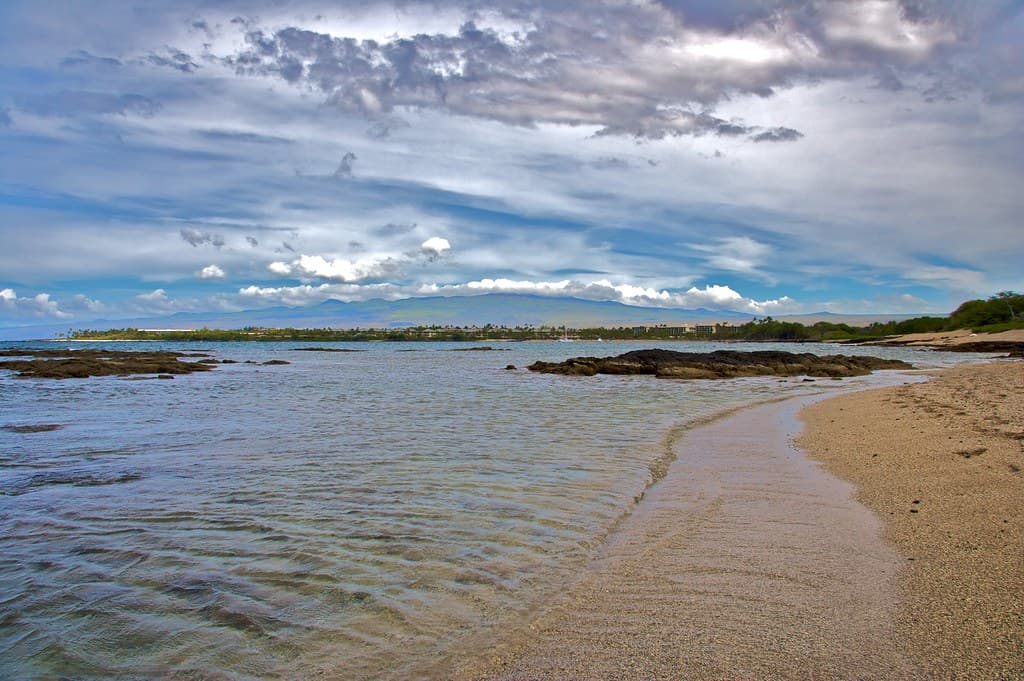
Kikaua Point Beach hides in plain sight along the Kona coast, nestled within the Kukio Golf & Beach Club but open to the public through a little-known access agreement. The fifty-yard stretch of sand feels more like a private lagoon than a public beach—because technically, it almost is. But the real estate lies underwater: volcanic fingers create natural swim lanes where green sea turtles forage among the urchin-studded rock, often within arm's reach of snorkelers drifting in the shallows. The lava formations here are young enough that you can still see the ropy pahoehoe texture frozen mid-flow, now colonized by pink coralline algae and bright yellow tangs. Water clarity peaks in the morning before trade winds kick up, when visibility stretches thirty feet and you can watch turtles methodically scrape breakfast from the rocks with their beaked mouths. The narrow beach itself offers little more than a dozen yards of usable sand, but most visitors spend their time bobbing in the protected pools anyway. Timing matters. Arrive before ten to claim one of the scarce parking spots and to catch the water at its glassiest. By afternoon, the resort crowd thickens and the westward sun throws glare across the surface. Pack your own shade—there's one lonely palm and a pavilion that fills fast—and bring reef-safe sunscreen. The turtles don't care about your SPF, but the coral does.
Places, rentals, tours and events within walking and driving distance of Kikaua Point Beach.
Photos
Kikaua Point Beach offers generally calm conditions ideal for snorkeling, particularly in the protected cove area. The bay's reef formations create natural barriers that reduce wave action, making it suitable for swimmers of moderate ability. However, always check current conditions before entering, as winter swells can increase wave activity. The rocky entry points require water shoes for safe navigation. Visibility is typically excellent for viewing marine life including sea turtles. Avoid venturing outside the protected areas where currents can be stronger, and never snorkel alone.
Kikaua Point Beach can be enjoyed year-round due to Hawaii's consistent tropical climate. However, morning visits typically offer the calmest water conditions and best visibility for snorkeling before afternoon trade winds pick up. Summer months (May-September) generally provide the flattest ocean conditions, while winter (November-March) may bring larger swells. Water temperatures remain comfortable throughout the year, ranging from 75-82°F. Weekdays are less crowded than weekends. Arrive early for easier parking and to experience the beach before midday sun intensifies.
Kikaua Point Beach is located within the Four Seasons Resort Hualalai property, about 7 miles north of Kailua-Kona. Public beach access is available through a marked parking lot off Queen Ka'ahumanu Highway (Highway 19). Look for the small public access sign near mile marker 87. The parking area is limited to approximately 10-15 spaces and fills quickly, especially on weekends. From the lot, it's a short walk through the resort area to reach the beach. Arrive early morning for best parking availability.
Kikaua Point Beach has minimal public amenities. While the beach sits adjacent to the Four Seasons Resort Hualalai, resort facilities are for guests only. Public restrooms are not available at the beach access point, so plan accordingly. There are no food vendors, shops, or equipment rentals on-site. Visitors should bring their own snorkeling gear, water, snacks, and sun protection. The nearest restaurants and grocery stores are in Kailua-Kona, about 15 minutes south. Consider packing a cooler with supplies for your beach visit.
Kikaua Point Beach is renowned for excellent snorkeling with diverse marine life encounters. The protected bay's coral reefs attract colorful tropical fish including butterflyfish, tangs, and parrotfish. Green sea turtles (honu) are frequently spotted feeding on algae near the rocky areas. The clear waters and relatively shallow reef make it ideal for observing marine ecosystems up close. Manta rays occasionally visit the area, and dolphins have been spotted in the bay. The reef's health and biodiversity make this a premier snorkeling destination on the Big Island's Kona Coast.