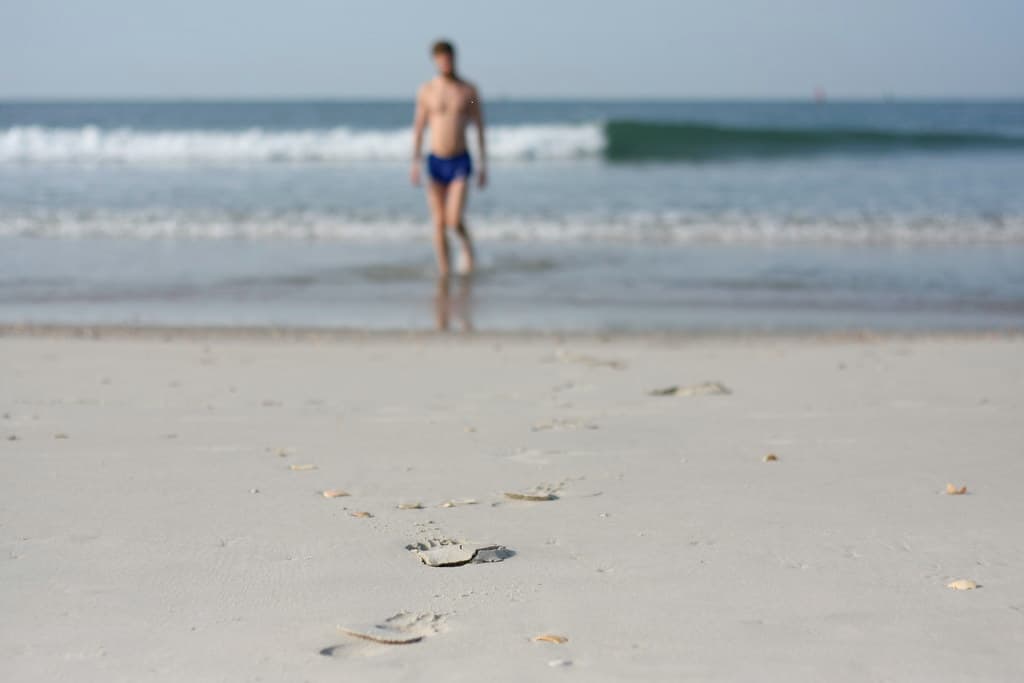
Counting the waves…
Counting the waves…

The passenger ferry from Harkers Island deposits you on a sliver of the Core Banks where the only footprints are yours and the piping plovers'. Cape Lookout's beach curves southwest from the lighthouse in a ribbon of tan sand that changes texture hourly—packed firm at low tide, scalloped soft when the Atlantic reclaims it. The diamond-patterned beacon rises 163 feet, its daymark visible from passing ships, while at your feet ghost crabs scuttle into burrows and coquina shells tumble in the backwash. This is not a beach for casual umbrellas and cooler runs. You haul everything in and pack everything out. The Park Service maintains vault toilets and allows primitive camping behind the dunes, where tents shake in the same wind that once filled the sails of Blackbeard's fleet. Shelling is extraordinary after northeasters, when whelks, sand dollars, and olive shells pile in the wrack line alongside driftwood smoothed to bone. Wade into the surf and you'll feel the Labrador Current's cool push even in July. Fishermen cast for red drum and bluefish from the point, where Lookout Bight meets the open ocean in a confusion of currents. When the day-trippers leave on the 4 p.m. ferry, the island empties to just the gulls, the lighthouse keeper's quarters (now a museum), and the kind of quiet that makes you remember the Atlantic is older than any name we've given it.

Places, rentals, tours and events within walking and driving distance of Cape Lookout Lighthouse Beach.
Photos
Swimming is possible at Cape Lookout Lighthouse Beach, but exercise caution. The beach has no lifeguards, and currents can be strong, particularly near inlets and during tidal changes. The ocean side typically has rougher surf than the sound side. Strong rip currents are common along North Carolina's Outer Banks. Always check weather conditions before entering the water, swim parallel to shore if caught in a current, and never swim alone. The isolated nature of this barrier island means emergency assistance may be delayed.
Spring (April-May) and fall (September-October) offer ideal conditions with mild temperatures, fewer crowds, and comfortable beach weather. Summer (June-August) brings warmth perfect for swimming but higher visitor numbers and intense heat. Winter visits are possible for solitude and beachcombing, though ferry schedules may be limited and weather unpredictable. Hurricane season runs June through November. The lighthouse is typically open for climbing from mid-May through September. Wildlife viewing, especially for bird migration, is excellent during spring and fall.
Cape Lookout is only accessible by passenger ferry or private boat—no bridges connect it to the mainland. Passenger ferries operate from Harkers Island, Beaufort, and Davis, with Harkers Island offering the shortest crossing (20 minutes). Ferry services run seasonally, with limited winter schedules. Reservations are strongly recommended, especially in summer. Once on the island, the lighthouse is about 1.5 miles from most ferry drop-off points. You can walk, or some visitors bring bicycles. Private vehicles aren't permitted on passenger ferries.
Cape Lookout National Seashore has no restaurants, stores, or lodging facilities. This is an undeveloped barrier island, so bring all food, water, and supplies you'll need for the day. The only structure is the lighthouse keeper's quarters, which occasionally offer limited exhibits. Primitive camping is allowed with a free permit, but you must bring everything including fresh water. For meals and accommodations, stay in nearby Beaufort, Harkers Island, or Morehead City, which offer hotels, vacation rentals, and restaurants within 30 minutes of ferry terminals.
The lighthouse is open for climbing seasonally (typically mid-May through September), offering panoramic views from 207 feet after ascending 207 steps. Hours vary and climbing may close due to weather. The distinctive black-and-white diamond daymark pattern is unique among North Carolina lighthouses—each has different markings so sailors can identify their location during daylight. Cape Lookout's pattern has been guiding mariners since 1859. Check the National Park Service website before visiting, as climbing access and hours change seasonally and a small fee applies.