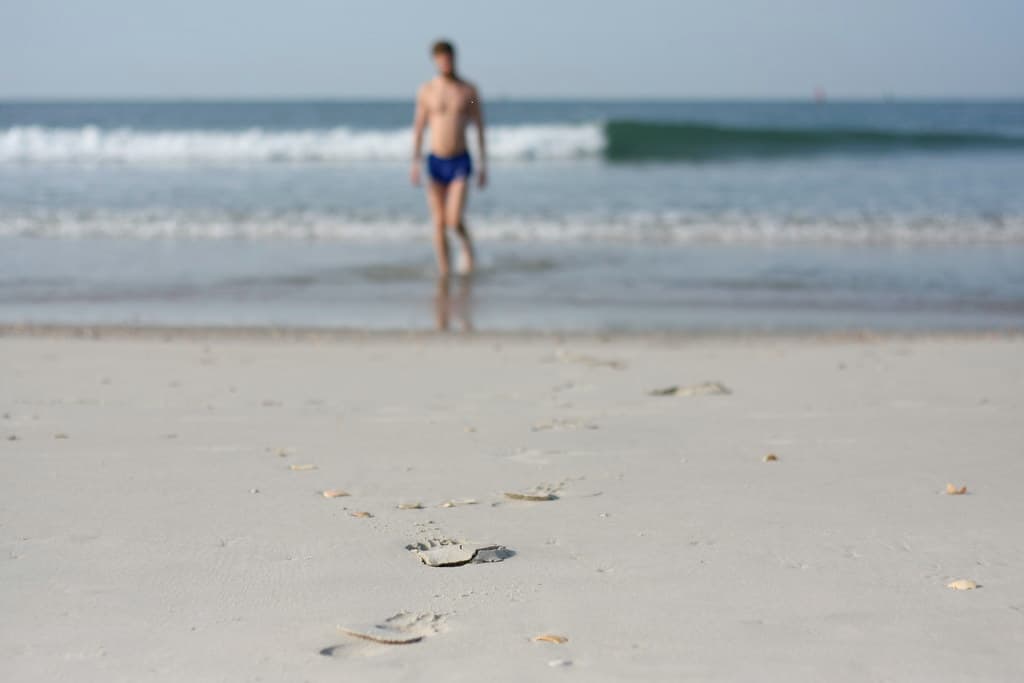
Counting the waves…
Counting the waves…

The passenger ferry from Harkers Island takes twenty minutes, and the moment you step onto the sand at Cape Lookout, you realize you've left the mainland's infrastructure behind. No paved roads connect these barrier islands to the rest of North Carolina. What you carry in, you carry out. The beach runs unbroken in both directions, backed by low dunes and salt marshes where egrets stalk the shallows. The Cape Lookout Lighthouse, its checkerboard pattern visible for miles, stands 163 feet above Barden Inlet. You can climb the 207 cast-iron steps during open hours, but even from the ground, its presence orients every walk along this coast. Wild horses descended from colonial-era stock graze near Shackleford Banks to the west, their hoofprints mixing with yours in the tidal flats. You'll camp primitive-style if you stay overnight—no showers, no electric hookups—hauling your gear by hand or four-wheel-drive vehicle from the ferry drop. Days dissolve into shelling, surf fishing, and long stretches where the only sound is wind through spartina grass. When the sun drops, the light from the diamond tower sweeps across your tent, a steady pulse reminding you that solitude here is earned, not bought.
Places, rentals, tours and events within walking and driving distance of Cape Lookout National Seashore Beach.
Photos
Swimming is permitted at Cape Lookout, but there are no lifeguards on duty. Strong currents, shifting sandbars, and unpredictable waves can create hazardous conditions. The ocean side typically has rougher surf than the sound side. Check weather and tide conditions before entering the water, never swim alone, and stay close to shore. Watch for Portuguese man-of-war jellyfish, especially in summer. The National Park Service recommends exercising caution and being aware that help may be far away on this remote barrier island.
Cape Lookout is accessible year-round, with each season offering different experiences. Spring (April-May) and fall (September-October) provide mild temperatures, fewer crowds, and excellent bird watching. Summer brings warm water and peak visitation but also heat, humidity, and biting insects. Winter offers solitude and cooler weather ideal for beachcombing and shelling. Note that ferry service is more limited in winter months. Weather can change rapidly, so prepare for sun, wind, and sudden storms regardless of season.
Cape Lookout is only accessible by passenger ferry or private boat—there are no bridges to the barrier islands. Several licensed ferry services operate from Harkers Island, Davis, and Atlantic, with parking available at their terminals. From Harkers Island, ferries depart to the lighthouse area (approximately 20-minute ride). Reservations are strongly recommended during peak season. Once on the island, transportation is by foot or four-wheel-drive vehicle with a permit. Check current ferry schedules as they vary seasonally.
Cape Lookout has minimal amenities—there are no restaurants, stores, or hotels on the islands. Vault toilets are available near the lighthouse and some ferry docks, but running water is limited. Bring all food, water, and supplies you'll need for the day. The closest lodging, restaurants, and stores are in nearby mainland communities like Harkers Island, Beaufort, and Morehead City. Primitive camping is allowed on the beach with a free permit, but campers must be completely self-sufficient and pack out all trash.
Yes, the iconic black-and-white diamond-patterned lighthouse is open for climbing seasonally, typically from mid-May through mid-September. Visitors can climb 207 steps to the gallery for panoramic views of the island and ocean. Tickets are sold on-site and tours are first-come, first-served with limited capacity. The keeper's quarters museum is also available to explore. Hours and availability can vary, so check with the National Park Service before your visit. The lighthouse is reached via ferry from Harkers Island.