Counting the waves…
Counting the waves…

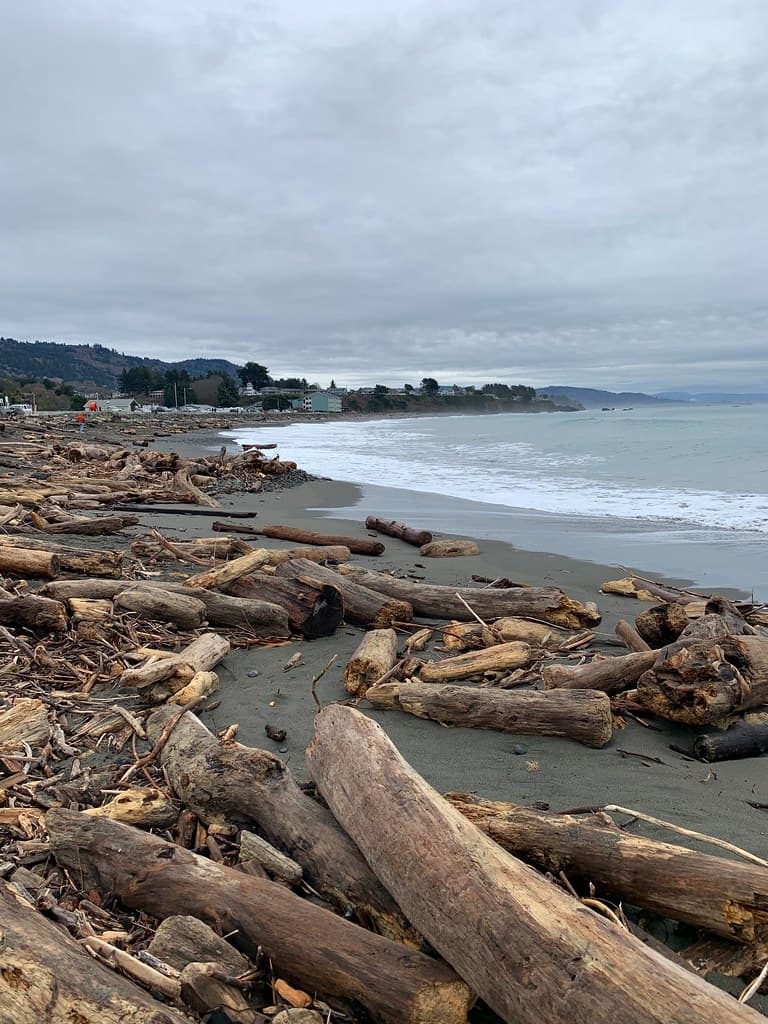
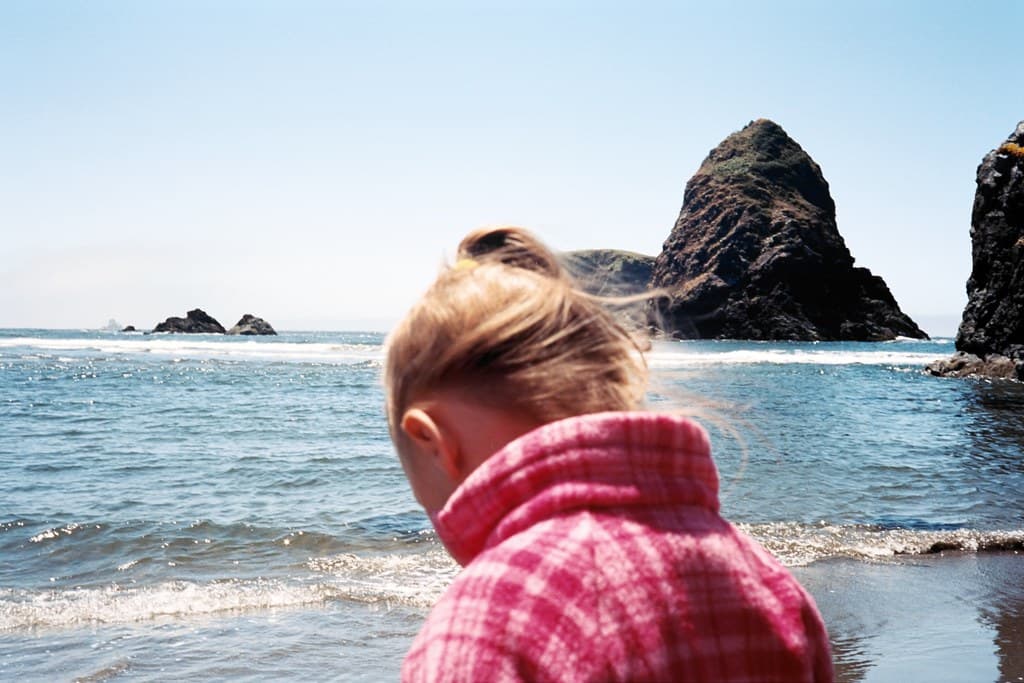
The trail drops steeply from the highway overlook, switchbacking through coastal scrub until you emerge onto a crescent of charcoal sand. Whaleshead Rock rises 100 feet from the surf line, its natural arch framing the horizon depending on your vantage point. Tide pools pock the southern rocks, where purple sea urchins cling to basalt and anemones pulse in shallow depressions. Driftwood logs—some smooth as bone, others still trailing root systems—form impromptu windbreaks along the upper beach. You'll hear the percussion of cobblestones tumbling in the surf before each wave retreats, a rhythmic clatter beneath the deeper roar. Gulls circle the offshore stacks, their calls mingling with the hiss of foam sliding up wet sand. Morning fog often shrouds the headlands until midday, when sun breaks through to illuminate the kelp beds swaying in the shallows. Winter storms rearrange the driftwood architecture and expose new tide pools; summer brings calmer water but colder upwelling. Pack layers regardless of season—wind funnels between the headlands even on still days, and the ocean temperature hovers in the low fifties year-round.
Places, rentals, tours and events within walking and driving distance of Whaleshead Beach.
Photos
Swimming at Whaleshead Beach is generally not recommended due to strong currents, unpredictable waves, and cold Pacific water temperatures that rarely exceed 55°F even in summer. The beach is better suited for tide pooling, beachcombing, and photography. Sneaker waves are a risk along the entire Oregon coast, so always stay alert and keep a safe distance from the water's edge. If you do wade, never turn your back to the ocean and supervise children closely.
Whaleshead Beach offers year-round beauty, with each season providing different experiences. Summer (June-August) brings the most stable weather and lower winds, ideal for exploration and photography. Winter and spring (December-April) are prime for storm watching and gray whale migration viewing. Low tide periods are best for exploring tide pools and accessing sea caves near the distinctive offshore rock formation. Mornings often feature calmer conditions and better light for photographing the namesake whale-shaped rock.
Whaleshead Beach is located along Highway 101, approximately 7 miles north of Brookings. Look for the Samuel H. Boardman State Scenic Corridor signs. A small parking area is available directly off the highway with space for about 10-15 vehicles. From the lot, a short but steep trail descends to the beach. The path can be slippery when wet, so wear appropriate footwear. No facilities are available at the parking area, so plan accordingly.
Whaleshead Beach itself has no facilities, restaurants, or lodging. The nearest amenities are in Brookings, about 7 miles south, which offers various restaurants, grocery stores, hotels, and vacation rentals. Harris Beach State Park, roughly 4 miles south, has a campground with tent and RV sites. Pack food, water, and supplies before visiting, as this is a remote coastal area. Gold Beach, 25 miles north, provides additional dining and accommodation options along the scenic coastline.
The beach is named after a distinctive offshore rock formation that resembles a whale's head emerging from the water, complete with what appears to be a blowhole and eye. This geological feature is part of the Samuel H. Boardman State Scenic Corridor, one of Oregon's most photographed coastal landmarks. The rock is best viewed from the beach at various angles and tides. The surrounding area features dramatic cliffs, sea caves, and natural arches, making it a favorite spot for landscape photographers and nature enthusiasts.