Counting the waves…
Counting the waves…
A refined fusion of water purity, environmental stability, and communal vibrancy for Hole-in-the-Wall Beach.
View MethodologyAnalyzed via live sensors and environmental data.
Wave height, wind, and atmospheric stability.
Live footfall and crowd balance metrics.
Community reviews and curated sentiment.
“You'll hear the arch before you see it—waves slamming through the sculpted basalt tunnel echo across driftwood logs the size of boxcars. The trail descends through Sitka spruce and salal, depositing you onto a beach…”
Limited recent visitor reports — live OBI telemetry is your best guide for current conditions.
The namesake arch rises from the beach like a Gothic cathedral window, its opening large enough to frame a fishing trawler. Seawater churns through at high tide, carving deeper into the volcanic rock with each winter storm. You reach it by descending a mile-long trail that switchbacks through moss-draped forest—the kind of temperate rainforest that drips even when it isn't raining—before spilling onto gray sand littered with bleached timber.
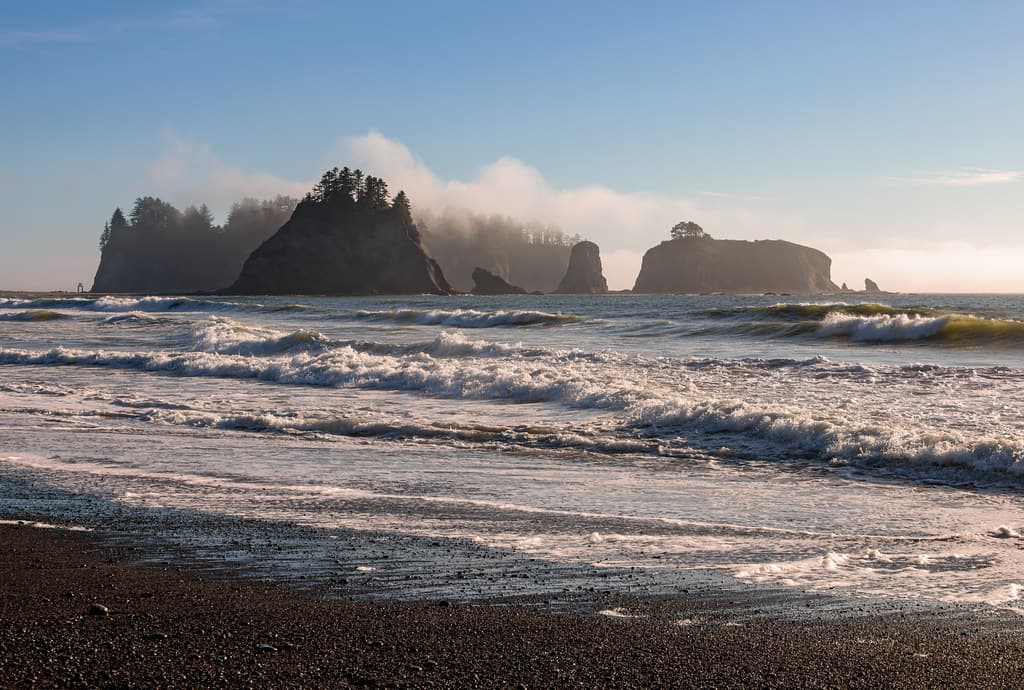
Tide pools cluster around the arch's base, their surfaces mirroring steel-colored sky until a wave crashes and resets everything. Purple and ochre sea stars cling to the rocks, unbothered by the cold Pacific surge. The beach stretches north and south in a gentle crescent, hemmed by forested headlands that seem to absorb sound, leaving only the metronome of breaking waves.
 Credit: Unsplash
gray and white stones on brown wooden fence during daytime
 Credit: Unsplash
Weathered wooden posts stand on a sandy beach
Switchbacks descend through Sitka spruce
Best light two hours before sunset
Sea stars cling to volcanic rock
Where it is
Hole-in-the-Wall Beach
Forks, Washington, USA
47.923000°, -124.641500°
Weather
Loading…
Swell
—
Temp
Warm · Restorative
UV Index
Moderate
Wind
—
Tidal State
Last known
Max Sunlight
—
Ideal Shade
—
May - Sep (Peak)
Jan - Dec (Off-season)
Historical data suggests peak visibility and stable sea temperatures occur during the prime visitation window.
Select a category to load nearby places.
Unlock restaurants, luxury stays and curated maritime experiences within 2km
Swimming at Hole-in-the-Wall Beach is generally not recommended due to cold water temperatures year-round (typically 45-55°F), strong currents, and unpredictable waves characteristic of the Pacific Northwest coast. The beach is better suited for tide pooling, beachcombing, and photography. If you do wade, stay alert for sneaker waves and never turn your back on the ocean. Always check tide tables before exploring the rock formations, as the area can become inaccessible during high tide.
Hole-in-the-Wall Beach is accessible year-round, but late spring through early fall (May-September) offers the most reliable weather with less rainfall. Summer provides the warmest temperatures and lowest tides, ideal for exploring tide pools and walking through the natural arch. Winter brings dramatic storm watching opportunities but expect rain and wind. Visit during low tide to walk through the iconic hole and access tide pools. The beach's remote Olympic Coast location means fog is common, especially in summer mornings.
Hole-in-the-Wall Beach is located within Olympic National Park, approximately 15 miles south of Forks. Take Highway 101 to Oil City Road (near milepost 162), then follow signs toward Rialto Beach. The trailhead parking area has space for about 20-30 vehicles but fills quickly in summer. There's no entrance fee, but a Northwest Forest Pass or America the Beautiful Pass may be required for parking. The beach is a short, easy walk from the parking area along a wide, relatively flat trail.
Hole-in-the-Wall Beach has no facilities or services at the beach itself—no restrooms, water, or food vendors. Forks, about 15 miles away, offers restaurants, grocery stores, gas stations, and lodging including motels, inns, and vacation rentals. La Push, a small coastal community roughly 8 miles from the trailhead, has limited dining and lodging options. Plan to bring all necessary supplies including water, snacks, and layers. The nearest restrooms are sometimes available at Rialto Beach parking area during peak season.
Yes, you can walk through the natural rock arch at low tide, which is the beach's signature feature. Timing is crucial—check tide tables before visiting and plan to arrive during low tide, typically when tides are below 3 feet. The passage through the hole reveals tide pools teeming with sea stars, anemones, and other marine life. During high tide, the arch is completely submerged and inaccessible. Allow sufficient time to return before the tide comes in, and always monitor ocean conditions for safety.
Photos