Counting the waves…
Counting the waves…

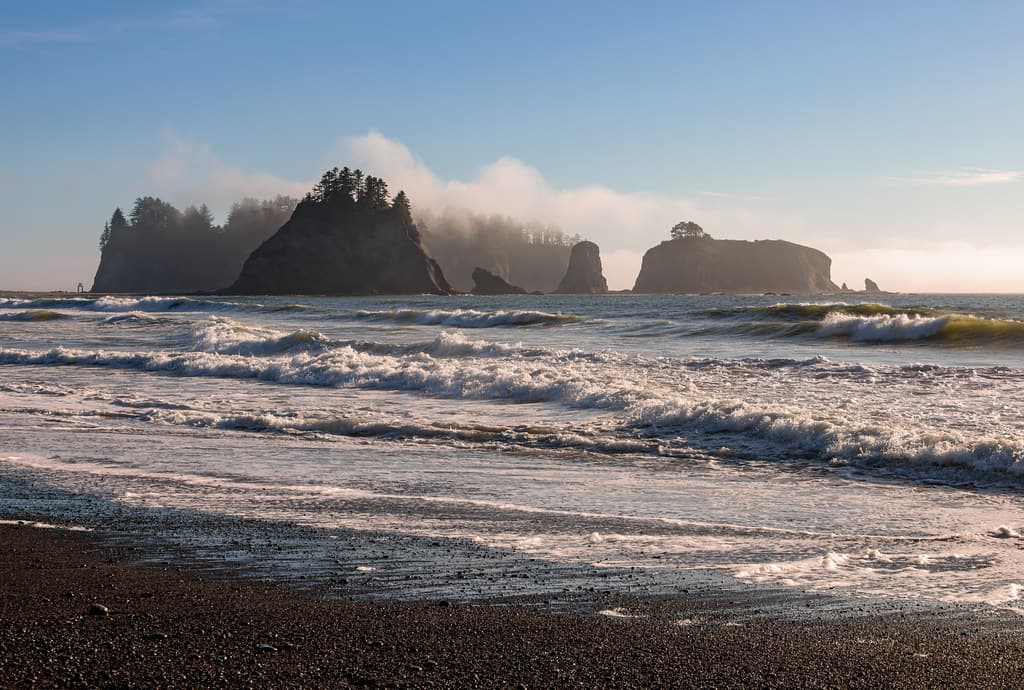
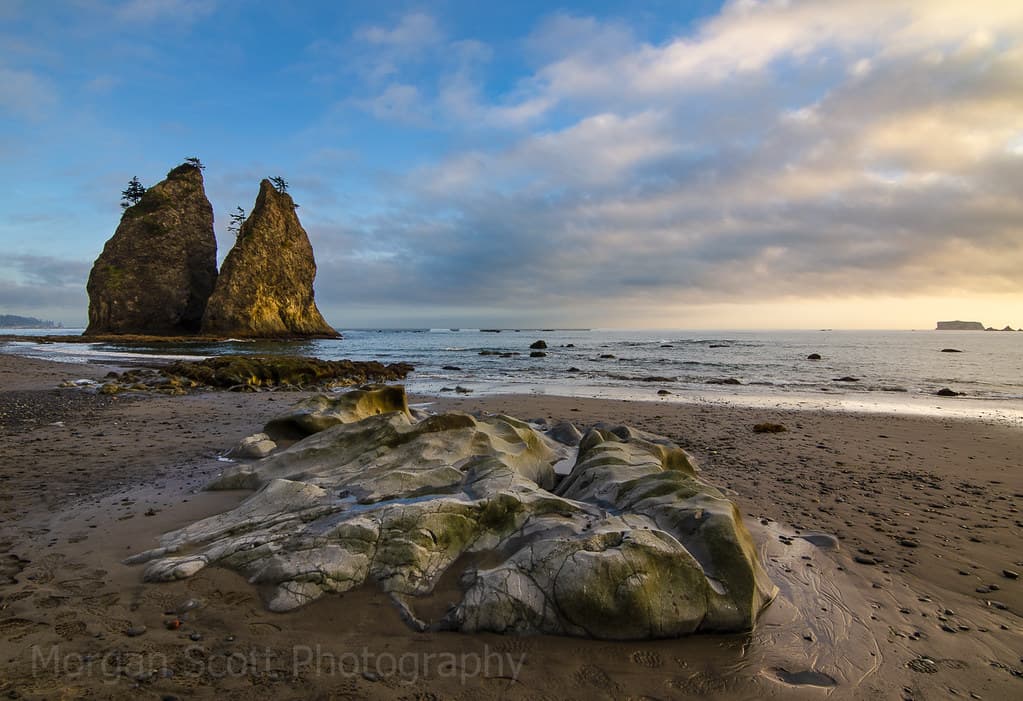
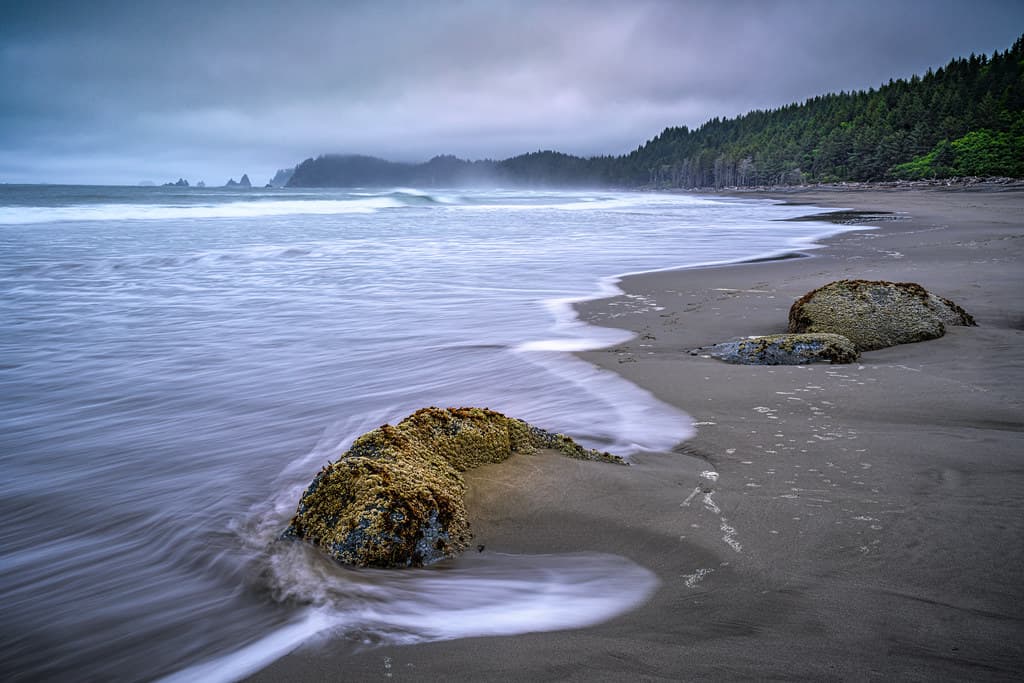
The trail descends through old-growth canopy—hemlock and cedar so thick the understory glows green even on overcast days. Then the trees part, and you're standing on a beach that feels more Nordic than Californian: charcoal sand, bone-white driftwood logs stacked like forgotten architecture, and Hole-in-the-Wall rising from the waterline a half-mile south. The sea stacks here aren't postcard-pretty; they're brooding presences, dark with barnacles and streaming kelp. You'll share the strand with tide pools cratered into the rocky shelves at low water, where ochre stars cling to stone and anemones pulse in the surge. Quileute River meets ocean at the north end, its brown freshwater braiding across the beach in shifting channels. The water stays frigid year-round—low fifties even in August—but that's not why you came. You came for the way the fog erases the horizon, for the Douglas fir snags bleached silver by storms, for the ravens calling from driftwood perches. Bring layers. The weather pivots from drizzle to brief sun and back within an hour, and the wind off the Pacific cuts through cotton like it isn't there. Pack out what you pack in—this coastline's remoteness is its protection. And if you time it right, you'll catch low tide and walk through the arch in Hole-in-the-Wall, seawater dripping from the stone overhead, barnacles sharp underfoot.
Places, rentals, tours and events within walking and driving distance of Mora Beach.
Photos
Swimming at Mora Beach is not recommended due to dangerous conditions typical of the Pacific Northwest coast. The water is extremely cold year-round (around 45-55°F), and strong currents, sneaker waves, and undertows pose serious risks. Hypothermia can set in within minutes. The beach is better suited for beachcombing, tidepooling, and scenic walks. If you venture near the water, never turn your back on the ocean and stay well above the high tide line, as sneaker waves can appear without warning.
Mora Beach can be visited year-round, with each season offering different experiences. Summer (July-August) provides the driest weather and easier access, though fog is common. Late spring and early fall offer fewer crowds and dramatic storm-watching opportunities. Winter brings powerful waves and storm systems that create spectacular scenery, but expect rain and wind. Regardless of season, dress in layers and bring waterproof gear. Low tide is ideal for exploring tide pools and sea stacks, so check tide charts before visiting.
Mora Beach is located about 15 miles west of Forks, Washington. From Forks, take Highway 110 (La Push Road) west for approximately 8 miles, then turn right onto Mora Road and follow signs for about 5 miles to the Mora Beach parking area. The road is paved but can be narrow and winding. Parking is available at the trailhead near Rialto Beach (often confused with Mora Beach, which is nearby). A Northwest Forest Pass or America the Beautiful Pass is required for parking.
Amenities near Mora Beach are limited. The closest town, Forks (15 miles east), offers restaurants, grocery stores, and hotels. Mora Campground, managed by Olympic National Park, is located very close to the beach and offers tent and RV sites with restrooms but no hookups. The nearby village of La Push (a few miles south) has a small general store and limited dining options. There are no facilities directly at Mora Beach, so bring your own food, water, and supplies for beach visits.
Mora Beach and nearby Rialto Beach feature dramatic sea stacks—offshore rock formations carved by erosion over thousands of years. These iconic formations create stunning photo opportunities and provide habitat for seabirds and marine life. At low tide, you can walk closer to some sea stacks and explore tide pools around their bases, but many remain offshore. Always check tide schedules and respect wildlife. The area's sea stacks are part of Olympic National Park's protected coastal wilderness and showcase the raw beauty of Washington's rugged coastline.