Counting the waves…
Counting the waves…

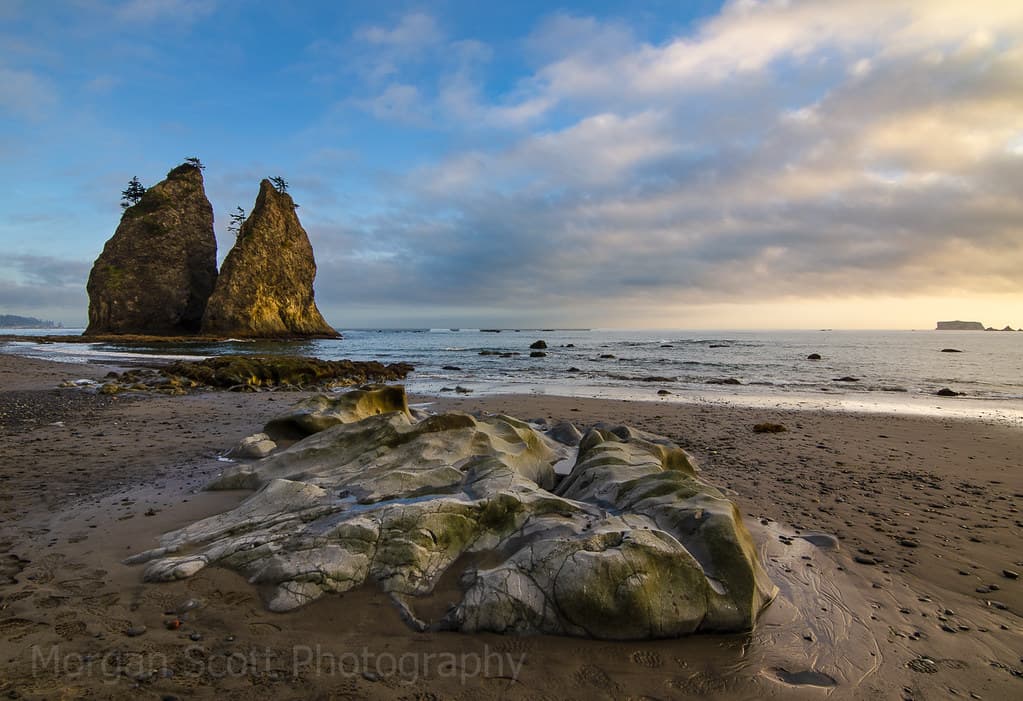
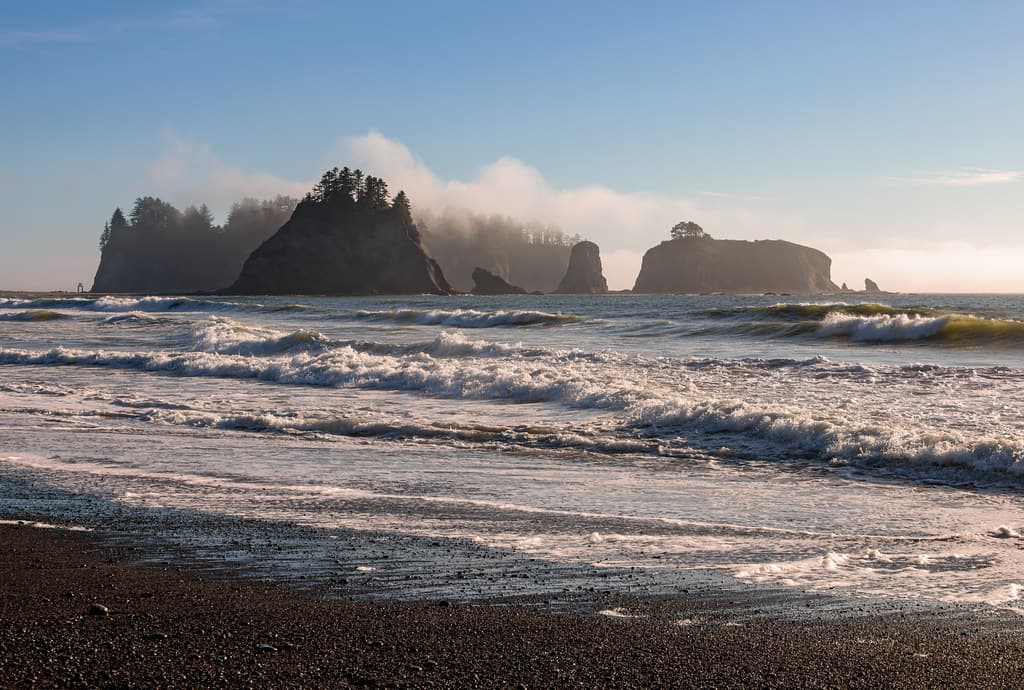
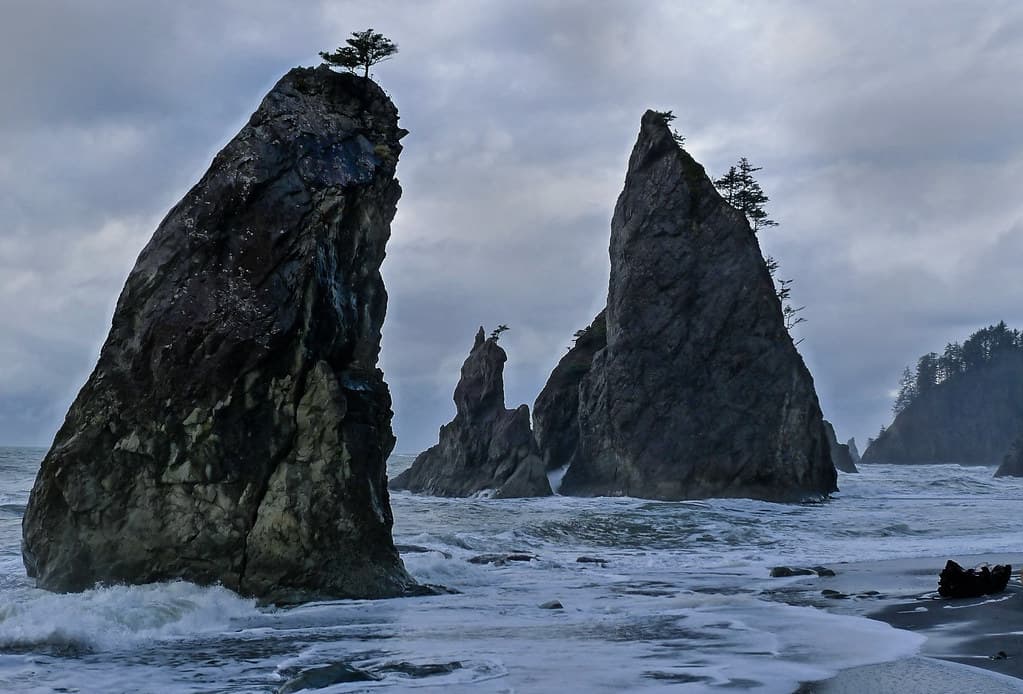
The hike through old-growth Sitka spruce and western hemlock ends abruptly where the forest meets the beach, and you step onto a landscape that feels older than memory. Gray sand stretches in both directions, interrupted by towering sea stacks draped in orange and purple starfish at low tide. Driftwood—some logs thicker than your torso—lies scattered in chaotic piles, silvered by salt and sun, creating natural benches and shelters that frame the restless Pacific. You'll want to time your visit with the receding tide to walk through Hole-in-the-Wall, a sea arch worn smooth by millennia of waves, its tunnel floor scattered with mussel shells and kelp. The tide pools on the north end demand your attention: bend close to watch hermit crabs negotiate territory while anemones pulse in the current. Bring layers—the marine air carries a damp chill even in summer, and coastal fog can roll in within minutes. The beach stretches over a mile before reaching Ellen Creek, where seals occasionally haul out on distant rocks. Ravens call from the driftwood. Sea otters dive beyond the breakers. This is the Olympic coast in its essential form: moody, untamed, and utterly indifferent to your Instagram itinerary.
Places, rentals, tours and events within walking and driving distance of Rialto Beach.
Photos
Swimming at Rialto Beach is generally not recommended due to dangerous conditions. The Pacific Ocean here features strong currents, unpredictable waves, and extremely cold water temperatures year-round. Sneaker waves can appear without warning and pull people into the surf. There are no lifeguards on duty. Visitors should stay alert near the waterline and never turn their back on the ocean. Wading in tidepools during low tide is safer, but always maintain a safe distance from the surf zone.
Rialto Beach is accessible year-round, with each season offering different experiences. Summer (June-September) provides the driest weather and calmer seas, ideal for beachcombing and photography. Winter storms (November-February) create dramatic wave action and excellent storm-watching opportunities, though expect rain and wind. Spring and fall offer fewer crowds and moderate conditions. Low tide is best for exploring tidepools and sea stacks. Check tide tables before visiting to maximize your experience, regardless of season.
From Forks, Washington, drive 14 miles west on Highway 110 (La Push Road) toward La Push. Turn right onto Mora Road and continue approximately 5 miles to the Rialto Beach parking area. The road is paved throughout. A large parking lot accommodates most vehicles, including RVs, and is free to use. The beach is located within Olympic National Park, but no entrance fee is required at Rialto Beach specifically. The short walk from parking to beach is under 5 minutes.
Rialto Beach has no food services or amenities on-site, only restrooms in the parking area. The nearest town, Forks (14 miles east), offers grocery stores, restaurants, and gas stations. Lodging options include hotels and motels in Forks. Closer to the beach, the nearby Mora Campground (within Olympic National Park) provides camping facilities. The small community of La Push, about 5 miles south, has a resort and limited dining. Pack food, water, and supplies before visiting the beach.
Rialto Beach is famous for its massive sea stacks—rocky islands just offshore created by coastal erosion—including the photogenic Hole-in-the-Wall formation accessible during low tide. The beach features enormous piles of driftwood logs bleached silver by the elements, creating a dramatic Pacific Northwest landscape. These logs accumulate from winter storms and upstream logging history. The sea stacks provide habitat for seabirds and marine life visible in tidepools. This scenery makes Rialto one of Washington's most photographed beaches.