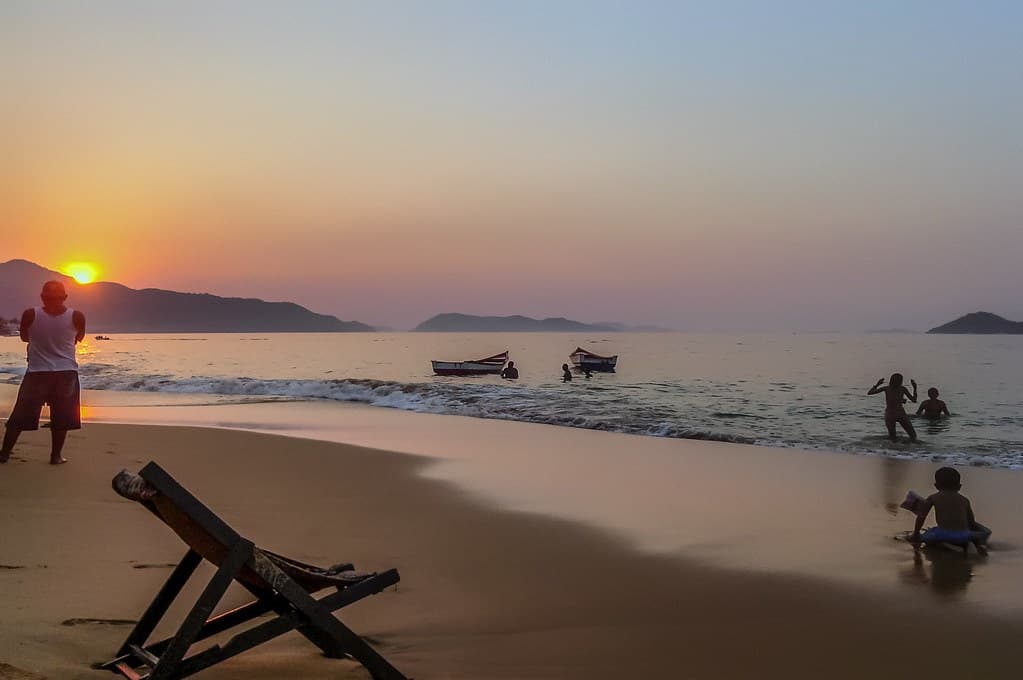
Counting the waves…
Counting the waves…
El Faro doesn't cosset you with soft landings. You step from the boat onto barnacled rock, finding purchase with bare feet, and scramble up to a perch where wind-sculpted boulders create natural armchairs. The beach, such as it is, consists of stone platforms interrupted by deep channels where the sea surges and retreats with metronomic rhythm. Crabs scuttle into crevices; anemones pulse in the shallows. Snorkeling means navigating a three-dimensional maze. You drop into a channel barely wider than your shoulders, fin through a corridor of rock hung with sponges and soft corals, then emerge into open water where the bottom falls away and barracuda hang suspended in the blue. The topography changes with every surge—new caves reveal themselves at low tide, familiar passages disappear when the sea rises. Photographers obsess over this place. Late afternoon light turns the boulders to bronze and ignites the water in shades of tourmaline and aquamarine. Compositions arrange themselves: a foreground rock, a slice of incandescent sea, the shadowed bulk of the headland beyond. You brace your camera against stone still hot from the afternoon sun and wait for the next wave to explode white against the point, aware that a hundred other visitors have framed this exact shot and knowing it doesn't matter—the light is never the same twice.
Places, rentals, tours and events within walking and driving distance of Playa El Faro.
Photos
Playa El Faro is described as a rocky beach, which means swimming conditions differ from sandy beaches. Rocky shores can have uneven depths, slippery surfaces, and sea urchins or sharp stones, so water shoes are highly recommended. Snorkeling is highlighted as an activity here, suggesting the water is clear and marine life is present around the rocks. Swimming is generally possible but requires more caution than at sandy beaches. Check conditions with your boat operator and avoid swimming during rough weather when waves against rocks can be dangerous.
Playa El Faro is best visited during the dry season from December to April when you'll enjoy the best weather and fewer crowds. This period offers optimal conditions for photography—important given its 'Instagrammable' designation—with clearer skies and calmer seas. The snorkeling visibility is typically best during these months as well. Midweek visits ensure fewer crowds, enhancing the scenic, hidden beach experience. Early morning or late afternoon light provides the most dramatic photo opportunities, especially around the lighthouse or rocky formations that likely give this beach its 'El Faro' (The Lighthouse) name.
Playa El Faro requires boat access and is located within the central island and bay system of Mochima National Park in Anzoátegui. Boats depart from Puerto La Cruz, Mochima town, or other nearby coastal points. As a scenic beach within the park's island system, it may be included on some organized tours, or you can hire a private boat and request this specific location. The journey time varies depending on your starting point but typically ranges from 30 minutes to over an hour. Confirm the exact location with experienced local boat operators.
Playa El Faro is a remote, rocky beach within Mochima National Park with minimal to no facilities. As a hidden, scenic location accessed only by boat, you should not expect restaurants, shops, bathrooms, or services. Bring all necessary supplies including water, snacks or lunch, sun protection, and snorkeling equipment. Some boat tours may include food, but confirm in advance. There is no accommodation at the beach—lodging is available in Puerto La Cruz, Barcelona, or Mochima town. Remember to pack out all trash to preserve this scenic natural environment.
Playa El Faro stands out as a scenic rocky beach within Mochima's central island and bay system, offering a different landscape than the typical sandy beaches. Its rocky nature creates excellent snorkeling opportunities with marine life thriving around the rock formations. The 'Instagrammable' designation suggests distinctive visual features—possibly a lighthouse, dramatic rock formations, or particularly photogenic coastal scenery. The combination of hidden access, scenic beauty, and snorkeling makes it appealing to adventurous travelers seeking natural beauty and underwater exploration rather than traditional beach lounging or family-friendly swimming.