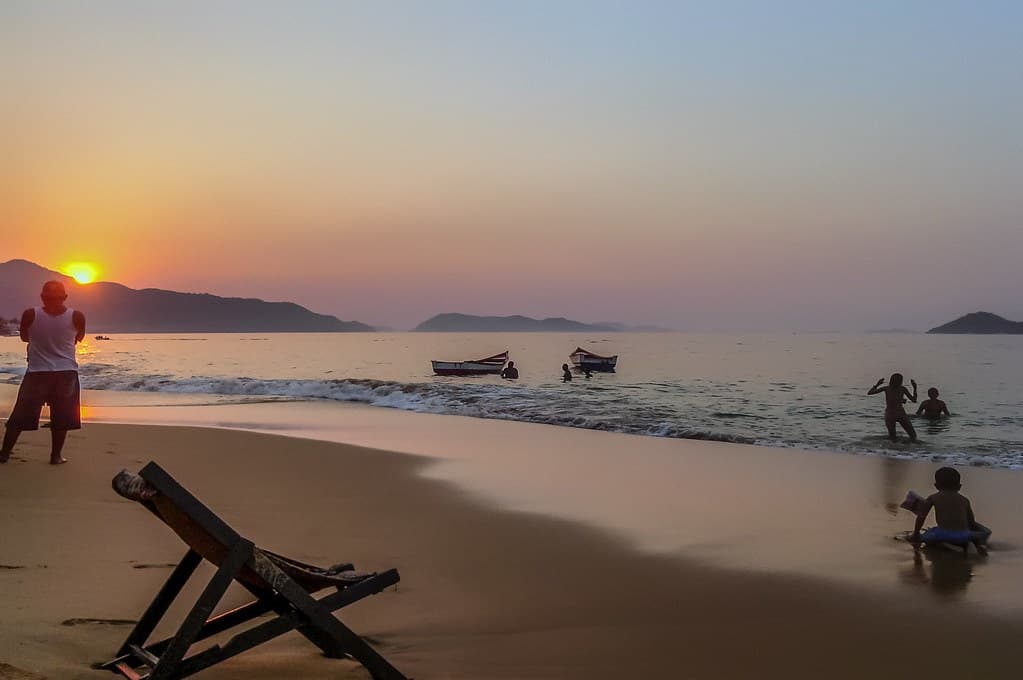
Counting the waves…
Counting the waves…
You reach Punta de Isla de Plata by boat from the main beach, then scramble over boulders slick with spray and algae to reach the point itself. There's no sand here, just rock shaped by millennia of waves into forms that defy casual description. Tide pools the size of bathtubs hold universes: sea urchins, brittle stars, juvenile octopus that flush red when you peer too close. The snorkeling—if you're bold enough to enter from the rocks—reveals a dropoff that plunges to depths where light turns blue-gray and large fish circle with predatory intent. This is advanced territory: current, surge, and a rocky shore that punishes mistakes. But the coral growth on the underwater cliff face surpasses anything at the sandy beaches, and the fish here are bigger, warier, clearly accustomed to deeper water. Bring a dive flag; boat traffic passes closer than you'd like. Above water, the point offers views across the entire bay system—the Mochima archipelago spreading south, the coastal mountains rising green and steep to the west. Pelicans dive just meters from the rocks, and frigatebirds hang motionless in the updraft created when wind hits the point. By late afternoon, the rocks radiate stored heat, and the spray catches light in rainbow arcs. It's a place for watching, not lounging; the ocean here demands attention and respect.
Places, rentals, tours and events within walking and driving distance of Playa Punta de Isla de Plata.
Photos
Swimming at Playa Punta de Isla de Plata requires caution due to its rocky nature and point location. Rocky beaches typically have uneven bottoms and can feature sharper drop-offs than sandy beaches. Water conditions around points can include stronger currents and wave action compared to protected bays. The beach is better suited for confident swimmers and snorkeling rather than casual bathing. No lifeguards are present at this remote location. Wear water shoes to protect feet from rocks, and check conditions before entering the water. The snorkeling around rocky areas can be excellent but requires care.
Visit Playa Punta de Isla de Plata during the dry season from December to April when weather is most predictable and seas are calmest for safe boat access. This period offers the best visibility for snorkeling among the rocky formations. Weekdays provide a more secluded experience at this already hidden location. Early to mid-morning provides optimal lighting for photography of this scenic, Instagrammable spot. Because it's a rocky point potentially more exposed to weather, calm conditions are essential for comfortable visits. Avoid rough weather periods when waves against rocks create dangerous conditions.
Access to Playa Punta de Isla de Plata requires boat transportation, as it's located on Isla de Plata within Mochima National Park in Anzoátegui state. Boats depart from Mochima town, Puerto La Cruz, or other nearby coastal points. Arrange transport through local tour operators or fishermen who service the Mochima National Park island system. Journey time varies from 30-60 minutes depending on departure location. This rocky point is less commonly visited than main beaches, so you may need to specifically request it or join a comprehensive island tour. Confirm the operator knows this specific location on Isla de Plata.
Playa Punta de Isla de Plata has no facilities, restaurants, or services due to its remote, hidden nature as a rocky point on an island. Visitors must be completely self-sufficient, bringing all food, water, snorkeling gear, sun protection, and first aid supplies. The rocky terrain means limited comfortable areas for setting up camp chairs or umbrellas - plan accordingly. Nearest amenities are in Mochima town or Puerto La Cruz where accommodations and restaurants are available. Pack everything in waterproof containers and be prepared to carry out all trash to preserve this pristine environment.
Playa Punta de Isla de Plata is distinguished by its rocky point geography on Isla de Plata, creating unique snorkeling opportunities and scenic vistas not found at sandy beaches. The rocky formations attract diverse marine life, making it particularly interesting for underwater exploration. Its position as a point rather than a bay creates dramatic coastal views ideal for photography. This location is likely overlooked in generic beach indexes that focus on main swimming beaches, making it a true hidden gem for adventurous travelers. The combination of scenic beauty, excellent snorkeling, and relative obscurity appeals to those seeking undiscovered spots in Mochima National Park.