Counting the waves…
Counting the waves…
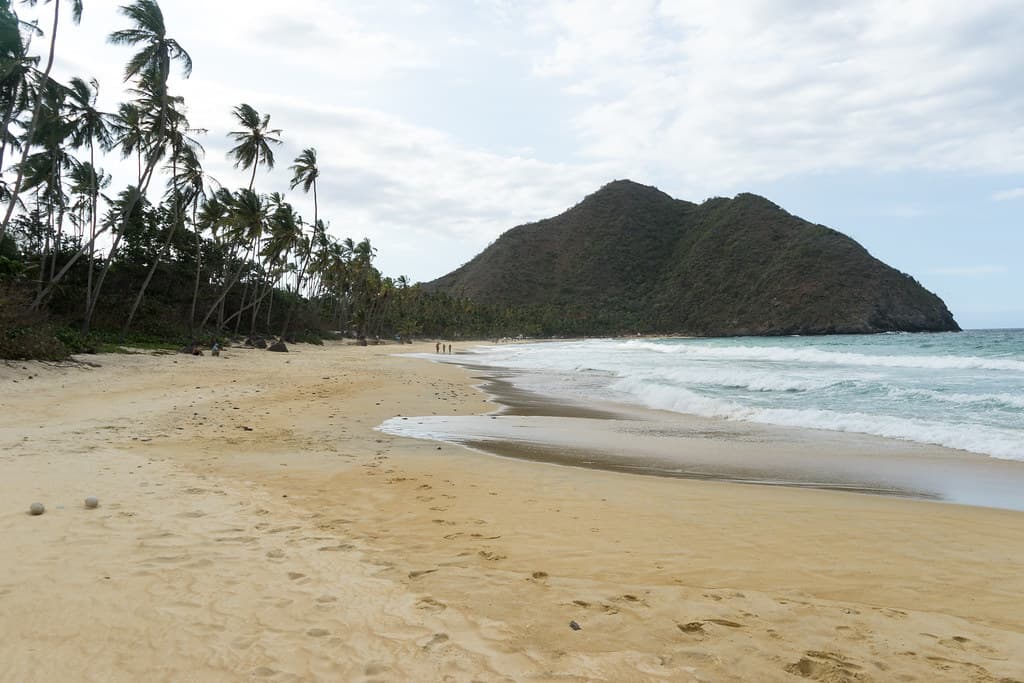
You'll smell Chuao before you see it—the mingled scent of drying cacao, salt spray, and woodsmoke from morning cookfires drifts across the water as your boat rounds the headland. The village sits in a fold of green mountains that plunge straight into the sea, accessible only by water or a punishing mountain trail. Fishermen haul nets at dawn while women spread cacao beans on wooden platforms to dry, the same rhythm their ancestors kept for four centuries. The beach itself curves for nearly a kilometer, its tan sand scattered with almond trees that offer midday shade. Waves arrive in steady sets, rolling rather than crashing, their foam leaving temporary lace patterns before retreating. Local children practice swimming strokes in the shallows after school while their parents repair nets under the trees, calling out greetings to arriving visitors without interrupting their work. You'll find no beach clubs or jet skis here, just a handful of family-run posadas where lunch means whatever fish came in that morning, fried whole and served with rice, plantains, and the kind of hot sauce that makes you reach for your beer. The village operates on Venezuelan time—slow, social, punctuated by dominoes slapping tables and merengue bleeding from open windows. When the last boat leaves at four, Chuao returns entirely to itself.
Places, rentals, tours and events within walking and driving distance of Playa Chuao.
Photos
Playa Chuao offers generally safe swimming conditions, with its sandy beach and accessible location making it suitable for most visitors. As a well-visited family beach, it has a good safety record. However, always assess current ocean conditions before entering the water, as currents and waves can vary. The beach's popularity means other swimmers are usually present. Being the main beach of the famous cocoa-producing village of Chuao, it sees regular visitors and local knowledge is accessible if you have concerns about conditions.
Playa Chuao can be visited year-round, though the dry season from December to April typically offers the best weather with sunny skies and calmer seas. That said, Chuao maintains its appeal throughout the year due to its cultural significance and natural beauty. For optimal conditions, weekdays are less crowded than weekends. The village of Chuao celebrates various festivals related to its cocoa heritage, so timing your visit around these events can enhance your experience, though expect more visitors during celebrations.
Playa Chuao is accessible by boat from ports along the Aragua coast, as the village of Chuao has limited road access due to its location between mountains and sea. Most visitors arrange boat transportation from Choroní or Puerto Colombia. Some adventurous travelers hike overland trails, though this requires good fitness and local guidance. The boat journey offers beautiful coastal scenery and is generally reliable. Once you arrive at Chuao village, the beach is easily accessible on foot. Plan your return boat schedule carefully as services are limited.
Chuao village offers basic food options including local restaurants and small eateries serving traditional Venezuelan coastal cuisine. Fresh fish and regional dishes are commonly available. Accommodation options exist in the village, ranging from simple guesthouses to homestays, though facilities are modest compared to larger towns. For more variety and comfort, many visitors stay in Choroní or Puerto Colombia and visit Chuao as a day trip. Bring cash, as card payment facilities may be limited or unavailable in this remote village setting.
Playa Chuao serves as the coastal gateway to Chuao village, world-renowned for producing exceptional cocoa beans used in premium chocolate. The village has preserved Afro-Venezuelan traditions including Devils Dancing celebrations. The beach and village together represent an authentic cultural-coastal experience, blending natural beauty with living heritage. Chuao's isolation has helped maintain traditional practices and a strong community identity. Visiting this beach means engaging with a place where coastal life, agricultural tradition, and cultural preservation intersect, making it far more than just a swimming destination.