Counting the waves…
Counting the waves…
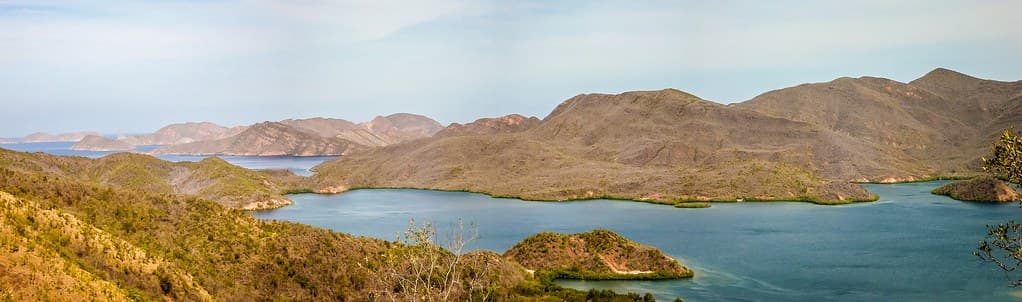
The approach reveals the cove's orientation: hills frame the western horizon, creating a natural theater for the sun's descent. You'll beach on sand that's a shade darker than neighboring strands, flecked with mica that sparkles underfoot. The surrounding vegetation reflects the drier microclimate of this section of coast—cardón cacti rise like candelabras on the slopes, and thorny acacia trees cluster near the high-tide line, their twisted branches offering minimal shade. Morning and midday here are pleasant but unremarkable. The beach waits for late afternoon, when the sun drops toward the gap between hills. The transformation begins around four-thirty: light turns horizontal, raking across the water's surface and igniting the cove in warm amber. The dry grasses on the hillsides glow like copper wire. By five-fifteen, the sun sits perfectly framed between the ridgelines, its reflection painting a molten path across the cove's calm water. Local captains know to linger after dropping passengers, using the quiet hour to mend nets or sort tackle while waiting for the color show. The water stays swimmable into dusk, still holding the day's warmth. Small waves—barely large enough to qualify—lap the shore with metronomic consistency, creating a rhythm that marks the fading light.
Places, rentals, tours and events within walking and driving distance of Playa Cautaro.
Photos
Playa Cautaro generally offers calm waters suitable for swimming, typical of protected coves in the Mochima region. However, conditions can vary with weather and tides. Always check local conditions before entering the water and be aware that this is a remote beach without lifeguards on duty. The cove setting usually provides natural shelter from strong currents, making it relatively safe for swimmers of moderate ability. Avoid swimming alone and inform someone of your plans when visiting isolated beaches.
The best time to visit Playa Cautaro is during the dry season, typically from December to April, when you'll encounter fewer crowds and more affordable boat rates. Weekdays are particularly quiet compared to weekends when local visitors arrive. The low-profile nature of this cove means it rarely gets crowded even during peak season. Early morning or late afternoon visits offer the best lighting for photography and cooler temperatures. The beach is known for sunset views, so plan to stay into the evening if possible.
Playa Cautaro is accessible only by boat from Mochima town or nearby coastal points in Sucre state. You'll need to arrange transportation with local fishermen or tour operators who offer beach-hopping services in the Mochima National Park area. Boats typically depart from the main pier in Mochima village. Expect a journey of 15-30 minutes depending on sea conditions and departure point. Negotiate prices in advance and confirm return pickup times, as this is a hidden beach with limited spontaneous boat traffic.
Playa Cautaro has no permanent facilities, restaurants, or lodging on site due to its hidden, low-profile nature. Visitors must bring all food, water, and supplies needed for the day. The nearest accommodations and restaurants are located in Mochima town, where you'll find budget-friendly posadas and local eateries. Pack a cooler with snacks and plenty of drinking water, and plan to take all trash with you. Some boat operators can arrange to bring food or provide basic meals as part of tour packages.
Playa Cautaro stands out for its low-profile cove setting, offering a more intimate and secluded experience than busier Mochima beaches. The protected cove creates naturally calm waters and a sense of privacy that appeals to travelers seeking tranquility. Its scenic backdrop and excellent sunset views make it particularly special for photographers and romantic visits. The hidden nature means you're likely to have the beach largely to yourself, especially on weekdays. The cove geography creates unique swimming conditions and interesting snorkeling opportunities around rocky edges.