Counting the waves…
Counting the waves…

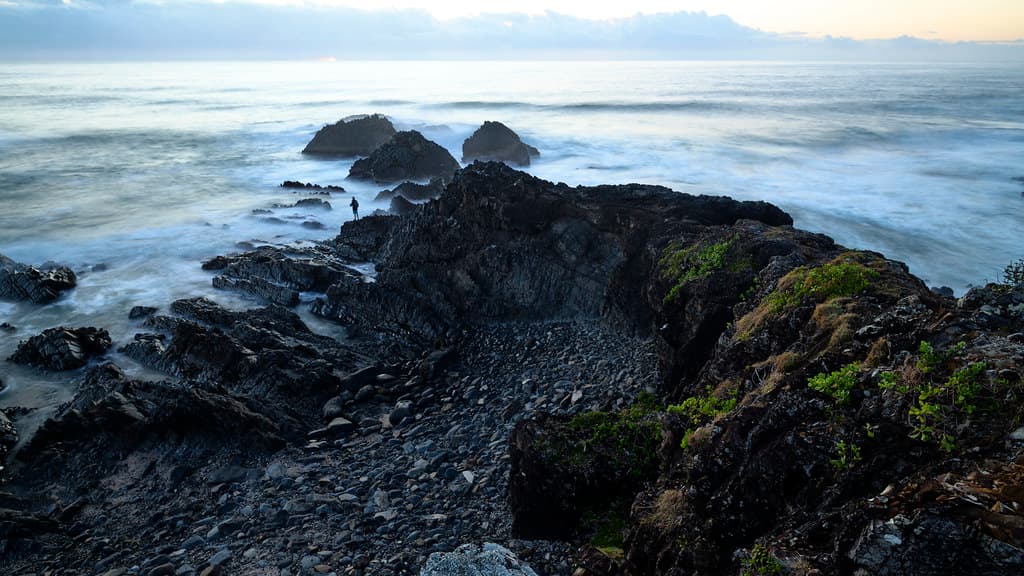
The unpaved access road through Murramarang National Park tells you everything: Depot Beach wasn't designed for convenience. You'll rattle past angophoras and banksias for twenty minutes before the sand appears, bone-white against turquoise shallows. The reward is a shoreline where you're more likely to encounter a foraging brush turkey than another beachgoer, where the only development is a modest campground tucked into the forest. Morning light slants through the canopy onto sand still dimpled by nocturnal wombat tracks. The surf breaks clean over a sandy bottom, forgiving enough for learners yet shapely enough to hold your attention. Between swells, you'll spot the dark shapes of groper cruising the rocky northern headland. By afternoon, the wind typically swings onshore, but that hardly matters when you're watching a mob of kangaroos emerge from the scribbly gum forest to graze the dune grass. Stay past golden hour and the real magic unfolds. As shadows lengthen across Durras Lake to the south, kangaroos venture onto the beach itself,Indifferent to your presence as they nibble salt-tolerant succulents. The night sky here—absent light pollution—renders the Milky Way in sharp detail. You'll fall asleep to the sound of waves and possums scratching in the treetops above your tent.
Places, rentals, tours and events within walking and driving distance of Depot Beach.
Photos
Depot Beach is generally suitable for swimming, though conditions vary with weather and season. The beach is patrolled during peak periods, but it's unpatrolled most of the year, so swim with caution. The beach can experience moderate surf and occasional rips. Always check conditions before entering the water and swim between the flags when lifeguards are present. The remote location means help is further away than at urban beaches, so it's best to swim with others and stay within your abilities.
Depot Beach is accessible year-round, with each season offering different appeals. Summer (December-February) brings warm weather ideal for swimming, though it's the busiest period. Autumn and spring offer mild temperatures, fewer crowds, and excellent wildlife watching opportunities. Winter is quieter and still pleasant for beach walks, though water temperatures drop. Wildlife, particularly kangaroos on the beach, can be spotted throughout the year. School holidays see increased visitor numbers, so visit mid-week for a more secluded experience.
Depot Beach is located within Murramarang National Park, approximately 20km south of Batemans Bay via the Princes Highway. Turn off at the Depot Beach Road sign and follow the sealed road through the park. A national park entry fee applies. There's a dedicated parking area near the beach with limited spaces that can fill quickly during peak periods and holidays. The access road and parking are suitable for 2WD vehicles. From the car park, it's a short walk to the beach through coastal bushland.
Depot Beach has no commercial facilities—no shops, cafes, or restaurants on-site. Visitors should bring all food, water, and supplies from Batemans Bay or Ulladulla. The nearby Depot Beach campground offers basic camping facilities including toilets and cold showers, but bookings are essential and it's very popular. For hotels, restaurants, and full amenities, stay in Batemans Bay (20km north) or Ulladulla (30km south). Pack out all rubbish as bins are limited within the national park.
Yes, Depot Beach is famous for kangaroos that frequent the beach and surrounding bushland, particularly eastern grey kangaroos. They're most commonly seen during early morning and late afternoon, often grazing on the grassy areas near the beach or resting in the shade. While sightings are common year-round, they're wild animals, so encounters aren't guaranteed. Observe from a respectful distance, never feed them, and don't approach closely—they can be unpredictable. This unique wildlife experience makes Depot Beach special among Australian beaches.