Counting the waves…
Counting the waves…

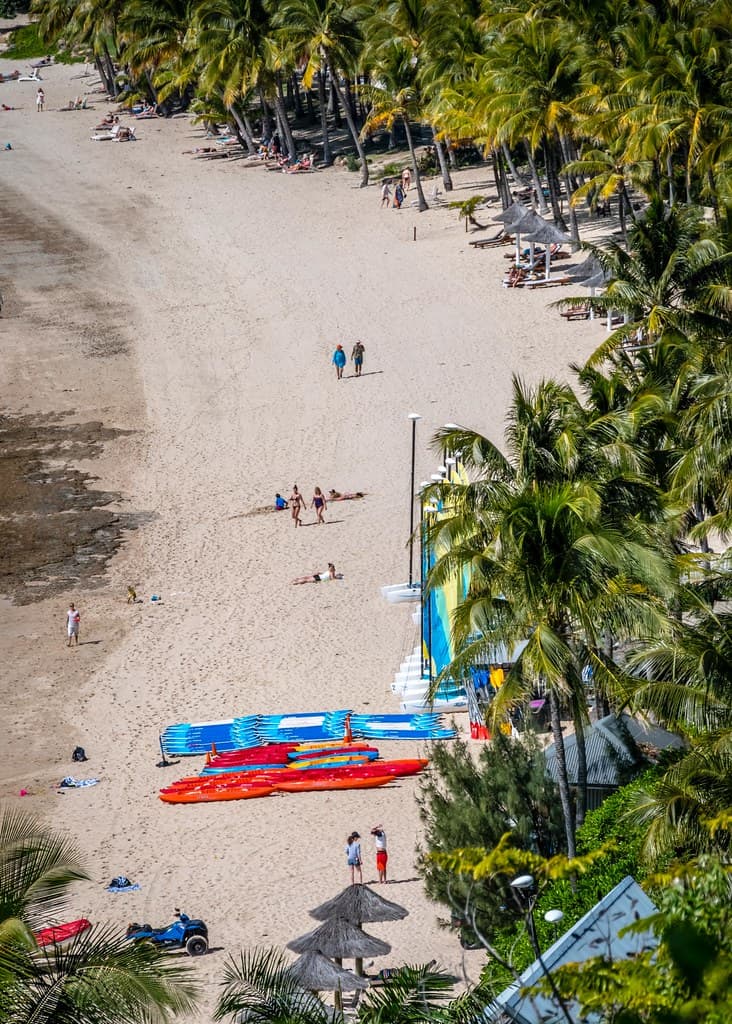
Catseye Beach arcs along the northeastern edge of Hamilton Island in a perfect crescent, its sand composed of pulverized coral that squeaks underfoot and glows bone-white against the turquoise shallows of the Whitsundays. You walk straight from the island's cluster of low-rise resorts onto the beach, no gates or fees, just a smooth transition from poolside to shoreline. The water here sits inside the protective embrace of the Great Barrier Reef's outer corals, which means the surf rarely rises above knee height—ideal for families but decidedly not for board riders. Snorkeling gear from the island's watersports hut lets you kick out to the rocky headlands at either end, where anemones grip the boulders and parrotfish scrape algae in audible crunches. Midday brings flotillas of stand-up paddleboarders tracing the shore, their boards casting quick shadows over the sand below. A trio of gum trees offers shade near the southern point, and beneath them, you often spot brush turkeys scratching through leaf litter, utterly unbothered by beach towels spread three meters away. The island's main commercial strip—cafés, gelato counters, provisioners—sits a five-minute stroll inland, but most visitors stay planted on their towels until the sun drops behind Dent Island's forested ridge. As the light softens, catamarans return from day sails to Whitehaven, their sails dropping one by one in the marina just beyond the beach's northern curve, and the water takes on the pale jade hue that makes every snapshot look retouched.
Places, rentals, tours and events within walking and driving distance of Catseye Beach.
Photos
Catseye Beach is generally safe for swimming with calm, sheltered waters protected by a reef. The beach has a stinger net during jellyfish season (November to May), and lifeguards patrol daily. The gentle slope and lack of strong currents make it family-friendly. However, always swim between the flags and wear protective stinger suits during summer months. Marine stingers can be present in tropical waters year-round, so check warning signs and ask lifeguards about current conditions before entering the water.
Catseye Beach is enjoyable year-round due to Hamilton Island's tropical climate. The dry season (May to October) offers pleasant temperatures of 20-27°C with minimal rainfall and lower humidity, ideal for beach activities. Summer (December to March) is warmer and more humid with occasional rain, but water temperatures are perfect for swimming. Winter months provide excellent conditions for snorkeling with clearer water visibility. The beach faces west, offering stunning sunset views throughout the year, making late afternoons particularly magical regardless of season.
Catseye Beach is located on Hamilton Island's western side, easily accessible as no cars are allowed on the island. From Hamilton Island Airport or marina, take the complimentary island shuttle bus or resort buggy that stops at Catseye Beach. Most visitors walk from nearby resorts, as the island is compact and pedestrian-friendly. Golf buggies are the main transport and can be rented for self-drive exploration. The beach is directly accessible from several resorts, including the Hamilton Island Resort, making it extremely convenient for guests.
Catseye Beach offers excellent amenities including Beach Club Restaurant for casual dining with ocean views, plus several cafés and bars nearby. Non-motorized water sports equipment rentals are available directly on the beach. The Hamilton Island Beach Club and qualia resort provide luxury accommodation steps from the sand, while Hamilton Island Resort offers family-friendly options. Facilities include showers, changing rooms, beach lounges, and umbrellas for hire. The adjacent marina village has additional restaurants, shops, and a small supermarket within walking distance.
Catseye Beach offers good snorkeling opportunities, particularly around the rocky headlands at either end of the beach and near the fringing coral reef. The calm, clear waters make it suitable for beginners and families. You can spot colorful tropical fish, small reef fish, occasionally sea turtles, and various coral formations. The best snorkeling is typically at high tide when water clarity improves. Equipment can be rented from water sports operators on the beach. For more diverse marine life, many visitors also take boat trips to the nearby Great Barrier Reef.