Counting the waves…
Counting the waves…
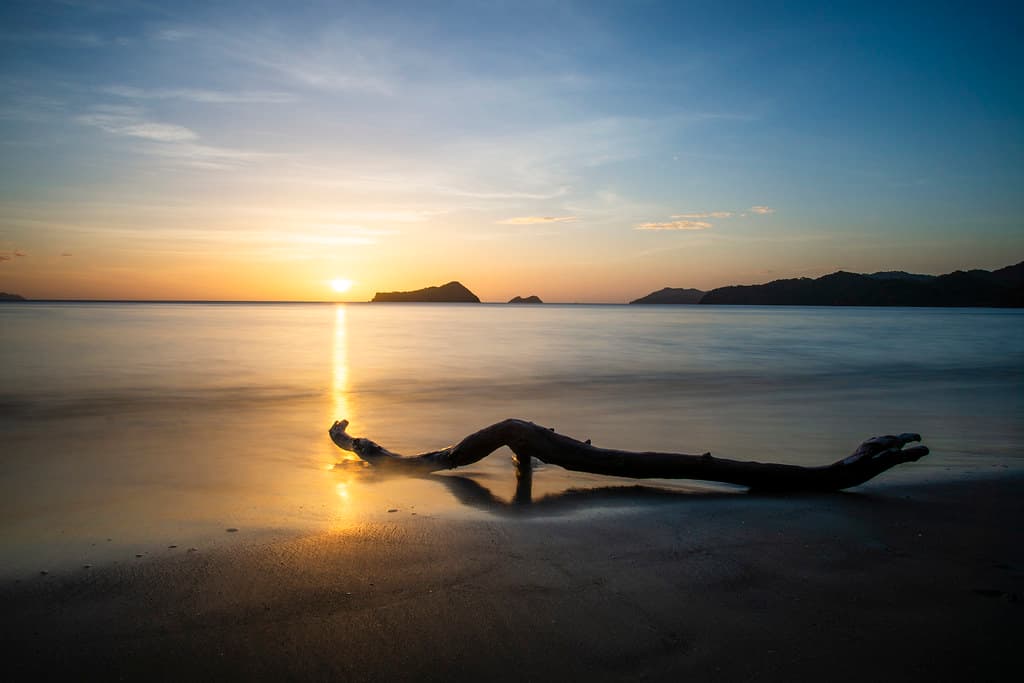
You'll know you've arrived when you see the rows of wooden drying racks hung with monofilament nets, their green floats bobbing in the breeze. Iguanita functions as Cuajiniquil's backyard: a beach where function trumps aesthetics but beauty sneaks through in unguarded moments. Fishing pangas rest on log rollers, their hulls painted with names like *Delfin* and *Maria José*, and the morning air carries the mineral smell of fresh-caught fish being cleaned on plank tables. The beach itself runs long and relatively straight, the sand packed hard enough for walking barefoot without sinking. Almond trees provide intermittent shade, their roots exposed by years of erosion forming gnarled seats and backrests. At midday, the water glows a murky green-blue, stirred by sediment from nearby river mouths, and the waves roll in with modest energy—enough to knock over a child but nothing intimidating. You might spot a local woman wading fully clothed to cool off, or a grandfather teaching his grandson to bodysurf the knee-high shore break. By late afternoon, smoke rises from open-air kitchens where families grill the day's catch, and the scent of charred snapper skin mingles with salt air. Frigatebirds circle overhead, waiting for discarded fish scraps, and the sun drops toward the peninsula's ridgeline, backlighting the pangas and turning the wet sand into a mirror that reflects orange and pink. This is Costa Rica before tourism reshaped its coasts—practical, unpretentious, alive with the rhythms of people who depend on the ocean.
Places, rentals, tours and events within walking and driving distance of Playa Iguanita.
Photos
Playa Iguanita is generally considered more family-friendly than many remote northern Guanacaste beaches, with calmer conditions typical of the area. However, ocean conditions can still vary, and there are no lifeguards on duty. Parents should supervise children closely and assess current wave and tide conditions before entering the water. The beach's use by locals suggests it's reasonably safe under normal conditions. As with any Pacific beach, respect the ocean, watch for currents, and stay cautious, especially with young children.
The dry season from December to April offers the best weather and easiest access to Playa Iguanita, with sunny skies and calmer seas. During this period, roads are more passable and beach conditions are most predictable. The wet season (May-November) brings afternoon rains and lusher surroundings but fewer tourists. Since this beach remains quiet year-round, you can avoid crowds during any season. Weekdays are typically quieter than weekends when local families may visit. Early mornings provide cooler temperatures and serene atmosphere.
Playa Iguanita is located south of the small fishing village of Cuajiniquil in northern Guanacaste. From Cuajiniquil, you'll typically need local knowledge or directions from residents, as the beach is not heavily signed. The roads may be unpaved and rough, so a 4WD vehicle is recommended, especially during wet season. From Liberia or La Cruz, reach Cuajiniquil first via Highway 1 and local roads. Ask locals in Cuajiniquil for specific directions, as they're familiar with access routes to this quiet beach.
Playa Iguanita itself has minimal to no facilities. The nearby village of Cuajiniquil offers very basic services including small local sodas (casual eateries) serving traditional Costa Rican food and a few simple lodging options, though choices are limited. For more developed tourism infrastructure, La Cruz (about 30-40 minutes away) provides better hotel and restaurant selections. Most visitors bring their own food and drinks for beach days. This area caters primarily to independent travelers and those seeking authentic, low-key coastal experiences rather than resort amenities.
Playa Iguanita stands out for its authenticity and low-profile character as a beach genuinely used by locals rather than dominated by tourism. Unlike developed Guanacaste beaches with resorts and crowds, Iguanita offers a glimpse into traditional coastal life in this region. The beach attracts nature-focused visitors who appreciate scenic beauty without commercialization. Its proximity to Santa Rosa National Park and the Guanacaste Conservation Area provides excellent opportunities for combining beach relaxation with wildlife observation and wilderness exploration in one of Costa Rica's most biodiverse regions.