Counting the waves…
Counting the waves…
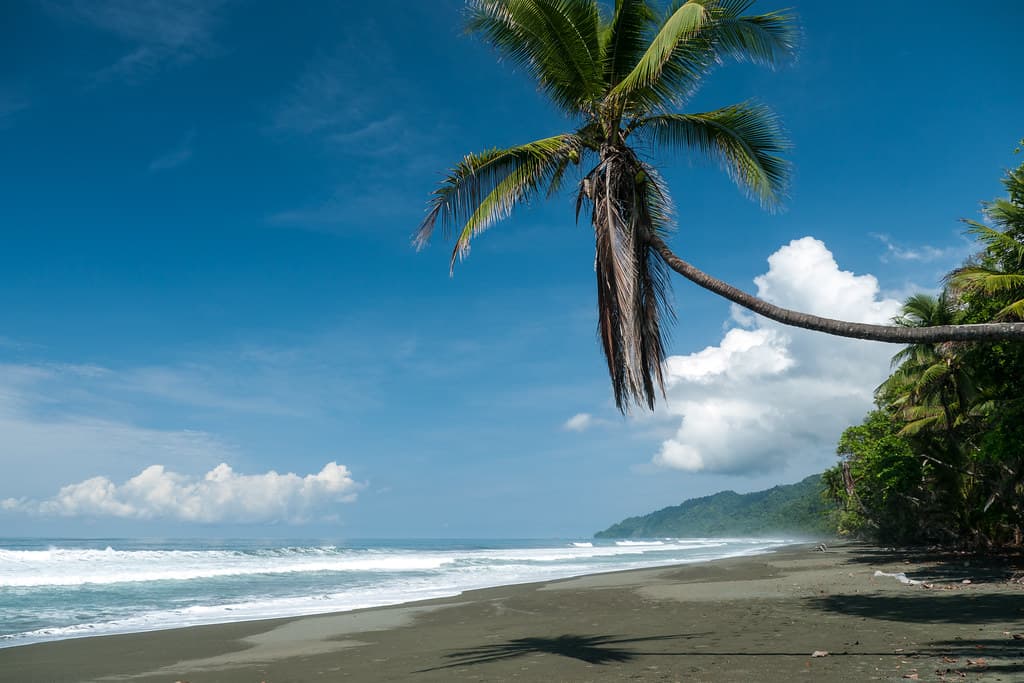
The road ends at a weathered pulpería selling cold beer and dubious empanadas, and beyond that, a kilometer of dark sand stretching beneath a canopy of beachside almendro trees. This is Carate, the jumping-off point for Corcovado's La Leona entrance, but it's worth lingering even if you're not continuing into the park. Scarlet macaws fly in raucous pairs overhead. A coati noses through leaf litter at the forest edge. The Pacific arrives in long, muscular sets that shake the ground. At low tide, the beach extends wide enough for the weekly supply plane to land on packed sand—you'll see its tracks scored into the tidal zone, already filling with water as the ocean reclaims its runway. Beachcombers find everything here: glass fishing floats from Japanese boats, waterlogged coconuts drifted from Colombia, the occasional whale bone bleached white as paper. The jungle behind the beach isn't secondary growth; these are the same ancient trees that fill Corcovado, spilling their biodiversity right to the surf line. Sunset here is a performance of silhouettes—cecropia trees backlit by orange and purple, frigatebirds wheeling against the color, waves turned to liquid bronze. You sit on a driftwood log near the pulpería as barefoot kids kick a soccer ball on the sand and horses graze on beach grass. The darkness, when it comes, is absolute. You hear the ocean, the insects, something larger moving in the forest. This is as far as you can drive on the Osa Peninsula. Everything else requires walking.
Places, rentals, tours and events within walking and driving distance of Playa Carate.
Photos
Swimming at Playa Carate requires caution due to strong Pacific currents and occasional riptides. The beach is largely unmonitored with no lifeguards present. Conditions vary throughout the year, with calmer waters typically during dry season mornings. Always check with local lodges or guides about current conditions before entering the water. The remote location means emergency services are distant, so assess your swimming ability honestly and stay close to shore in calmer areas.
The dry season from December through April offers the best weather with sunny days and less rain, though it's also slightly busier with hikers heading to Corcovado. May through November brings heavy rainfall, especially September and October, making roads challenging. For fewer crowds and better wildlife viewing as animals seek water sources, consider the shoulder months of late November or early May. Mornings year-round typically offer clearer skies and better conditions for enjoying the beach.
Playa Carate requires a 4x4 vehicle or collective taxi from Puerto Jiménez, roughly 45 kilometers on an unpaved, often rough road taking 1.5-2 hours. The road becomes impassable during heavy rains. Most visitors arrange transportation through their lodge or hire a local driver familiar with conditions. There's no public bus service directly to Carate. Some visitors fly into Puerto Jiménez from San José, then arrange ground transport. The journey itself offers stunning coastal and jungle views.
Accommodation options near Playa Carate are limited to a few eco-lodges and basic cabins, most requiring advance reservations. Finca Exotica and Lookout Inn are popular choices offering meals as part of their packages. There are no restaurants or stores at Carate itself; most lodges provide three meals daily using local ingredients. Bring any snacks or special dietary items from Puerto Jiménez. The nearest proper town with services is Puerto Jiménez, about two hours away by rough road.
Playa Carate serves as the primary trailhead for the popular La Leona ranger station entrance to Corcovado National Park, located about 3.5 kilometers south along the beach. Many multi-day Corcovado treks begin here, offering the dramatic experience of hiking along wild beach where rainforest meets ocean. The beach itself showcases incredible biodiversity with scarlet macaws, monkeys, and other wildlife often visible. This remote location provides an authentic wilderness experience with minimal development and spectacular sunsets over the Pacific.