Counting the waves…
Counting the waves…
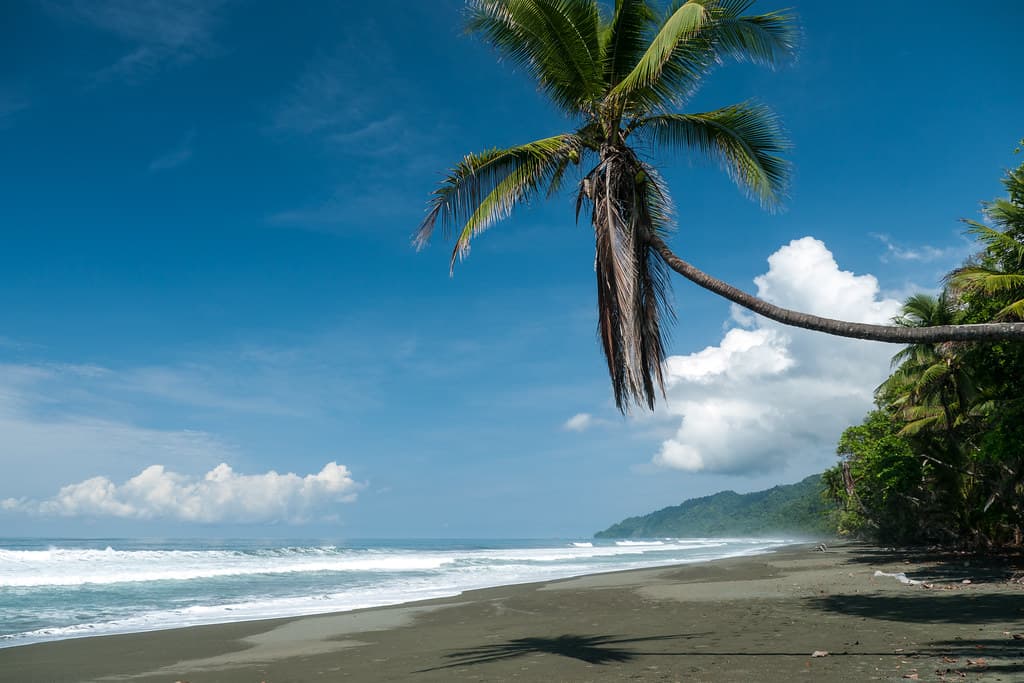
The dirt track from Puerto Jiménez ends abruptly at Carate, a scatter of tin-roofed houses and a landing strip carved from pasture. Beyond, Playa Madrigal unfurls in a three-mile arc of cocoa-brown sand, backed by a tangle of buttonwood and sea grape that gives way to primary rainforest. You reach the shore on foot, wading the shallow mouth of a creek where herons stalk the shallows. Waves arrive in long, crumbling sets, their thunder absorbed by the density of the jungle behind you. Pelicans cruise the break in formation. At low tide, the beach widens to reveal tide-smoothed stones and fragments of driftwood bleached silver by salt and sun. Scarlet macaws—pairs and trios—cross the canopy at dawn and dusk, their squawks audible even above the surf. You'll share this stretch with almost no one. A handful of eco-lodges operate inland, their guests arriving by charter flight or bone-rattling shuttle. There are no vendors, no umbrellas, no Wi-Fi. Just the rhythm of the Pacific, the calls of howler monkeys at first light, and the knowledge that one of Central America's most biodiverse wilderness areas lies steps from where you stand.
Places, rentals, tours and events within walking and driving distance of Playa Madrigal.
Photos
Swimming at Playa Madrigal requires caution due to strong Pacific currents and variable wave conditions typical of the remote southern Osa coast. The beach is exposed and generally better suited for beachcombing and wildlife watching than swimming. Conditions can change quickly, and there are no lifeguards or emergency services nearby. During calmer periods, wading in shallow areas may be possible, but always be aware of rip currents. The isolated nature of this beach means help is far away, so conservative judgment is essential when considering entering the water.
The best time to visit Playa Madrigal is during the dry season from December through April, when you'll experience the best weather and fewer crowds. This remote beach benefits from the dry season's more accessible road conditions, as the rough track to Carate can be challenging when wet. Sunsets are spectacular year-round, but clearer dry-season skies enhance the experience. Wildlife is active throughout the year, though different species may be more visible in different seasons. The area sees relatively few visitors even in peak season due to its remote location.
Playa Madrigal is near Carate, at the end of a challenging dirt road extending south from Puerto Jiménez. The journey requires a 4x4 vehicle and takes 1.5-2 hours from Puerto Jiménez, with the road becoming progressively rougher. Some visitors fly into Carate on small charter planes, landing at the nearby airstrip. Collective taxis and shuttle services run between Puerto Jiménez and Carate, though schedules are limited. The beach is within walking distance of Carate's small community, which marks the southern road terminus of the Osa Peninsula.
The Carate area offers limited but authentic lodging options, primarily eco-lodges and simple accommodations catering to adventurous travellers and those entering Corcovado National Park. Most lodges include meals, which is important since independent dining options are extremely scarce. A few very basic sodas (small restaurants) may operate irregularly in Carate village. Many visitors treat this area as an overnight stop before or after hiking Corcovado. Puerto Jiménez, about two hours away, is the nearest town with more comprehensive services and supplies.
Playa Madrigal embodies the remote, untamed wilderness character that defines the southern Osa Peninsula. Its location near Carate, the end of the road, creates a true sense of reaching civilization's edge. The beach serves as a threshold to Corcovado National Park and exemplifies the wild Pacific coastline with minimal human impact. Wildlife sightings on or near the beach are common, including scarlet macaws, monkeys, and various seabirds. The combination of isolation, dramatic natural beauty, and proximity to one of the world's most biodiverse places makes it special for wilderness seekers.