Counting the waves…
Counting the waves…
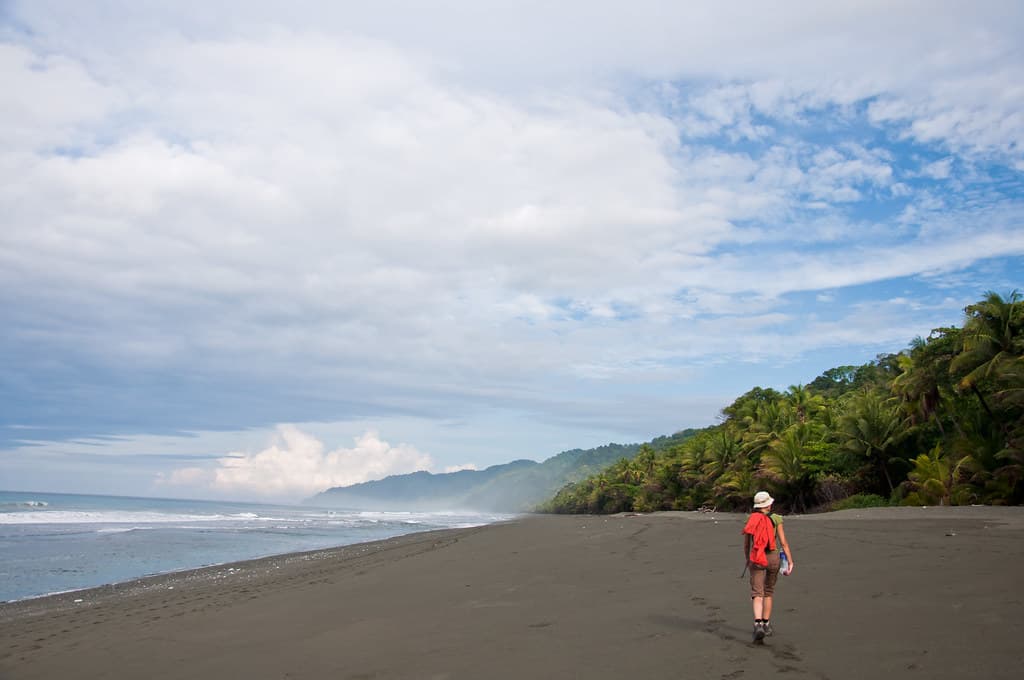
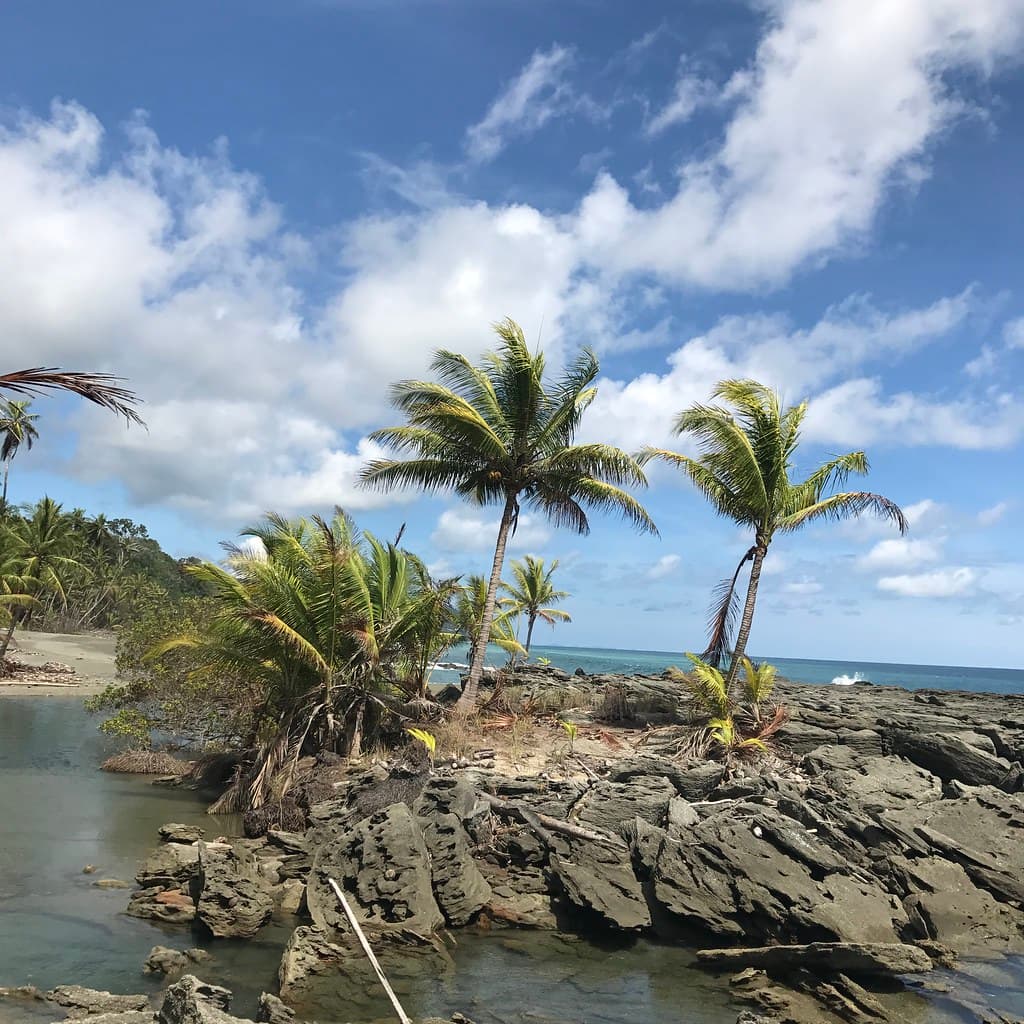
Where the Río Oro meets the ocean, the beach sprawls wide and lonely, its sand darkened by minerals washing down from the Osa's forested highlands. Driftwood logs bleached silver by salt and sun form natural benches; pelicans perch on them at dawn, scanning the surf for baitfish. The river mouth shifts with each rainy season, sometimes carving deep channels you'll need to wade, sometimes spreading into shallow braids that warm under your feet. Scarlet macaws fly overhead in pairs, their calls echoing across the empty strand. Coatis shuffle through the wrack line, flipping over palm fronds in search of crabs. The jungle behind the beach is dense and immediate—no hotels, no palapas, just the unbroken canopy of Corcovado's buffer zone pressing close to the high-tide mark. You'll reach Playa Río Oro by foot or boat; the nearest road ends miles back at Carate's airstrip. That remoteness filters out everyone but serious hikers and fishermen who know these coordinates by heart. At low tide, tidal pools form in the volcanic rock outcrops to the south, each one a saltwater terrarium alive with urchins and anemones.
Places, rentals, tours and events within walking and driving distance of Playa Río Oro.
Photos
Swimming conditions at Playa Río Oro can be challenging due to strong Pacific currents and waves typical of the Osa Peninsula's exposed coastline. There are no lifeguards on duty at this remote beach. Always assess conditions carefully before entering the water, avoid swimming alone, and stay close to shore. The beach's isolation means emergency services are far away. During rainy season, river outflows can create additional hazards. Consult locals or your lodge about current conditions before visiting.
The dry season from December through April offers the best weather and easier access to Playa Río Oro, though the beach remains uncrowded year-round due to its remote location. Green season (May-November) brings afternoon rains and lusher surroundings, with excellent wildlife viewing as animals congregate near water sources. Road conditions to Carate deteriorate significantly during heavy rains, potentially requiring 4WD vehicles. For the quietest experience with reasonable weather, consider the shoulder months of November or early December.
Reaching Playa Río Oro requires traveling to the Carate area at the southern end of the Osa Peninsula. From Puerto Jiménez, drive south approximately 43 kilometers on a rough, unpaved road that typically requires 4WD, especially during rainy season. The journey takes 2-3 hours. Alternatively, charter flights land at Carate's small airstrip, or arrange boat transport along the coast. Most visitors access this beach while staying at nearby eco-lodges. Always check current road conditions before attempting the drive.
The Carate area offers limited but quality eco-lodge accommodations, typically all-inclusive properties that provide meals as part of the stay. Options range from rustic jungle lodges to more comfortable boutique properties. Don't expect restaurants or shops—most facilities cater to guests staying multiple nights. Puerto Jiménez, about 2-3 hours away, has the nearest town amenities including sodas, restaurants, and grocery stores. Book lodging well in advance, especially during dry season, and confirm meal arrangements with your accommodation.
Playa Río Oro stands out for its exceptional remoteness and the pristine rainforest that meets the sand, offering a truly wild coastal experience. Its proximity to Corcovado National Park means outstanding wildlife viewing opportunities, including scarlet macaws, monkeys, and coastal bird species. The beach sees very few visitors compared to more accessible Osa destinations, providing genuine solitude. The Río Oro itself adds scenic interest where it meets the ocean. This is a destination for adventurous travelers seeking authentic wilderness rather than beach resort amenities.