Counting the waves…
Counting the waves…
A refined fusion of water purity, environmental stability, and communal vibrancy for Plage de Tuara.
View MethodologyAnalyzed via live sensors and environmental data.
Wave height, wind, and atmospheric stability.
Live footfall and crowd balance metrics.
Community reviews and curated sentiment.
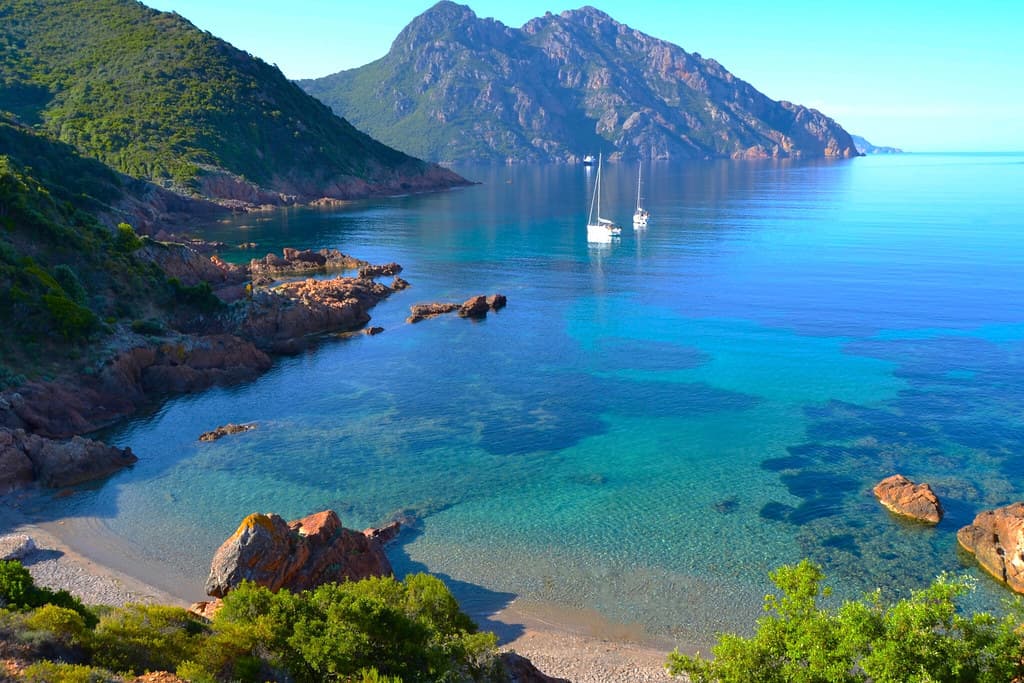
“You'll arrive by boat or by footpath threading through maquis scrub, emerging onto a shoreline framed by ochre granite walls. The water shifts from amber over sand to indigo in deeper channels, and the only soundtrack…”
Limited recent visitor reports — live OBI telemetry is your best guide for current conditions.
You step onto warm sand carried here by millennia of Scandola tides, hemmed in by cliffs that glow terracotta in afternoon light. Plage de Tuara lies tucked into the southern flank of the Girolata peninsula, accessible only by a forty-minute coastal trail from the village or by zodiac from Porto. Either way, you leave behind roads, bars, and beach umbrellas.
Snorkeling here means gliding over posidonia meadows where rainbow wrasse dart between blades, the seabed a mosaic of white sand and dark volcanic cobbles. The cove's shelter keeps the swell gentle, and you can float on your back, listening to nothing but your own breath and the distant cry of a yellow-legged gull.
 Credit: Unsplash
a view of a beach from a hill overlooking the ocean
 Credit: Unsplash
A view of a beach and ocean from a hill
Coastal maquis path, 40 minutes
Calm shallows, wrasse and bream
Rust-red granite, amber light
Prime Visitation
Best Weather|Less Crowds
Where it is
Plage de Tuara
Osani, Corse-du-Sud, France
42.361100°, 8.608600°
Weather
Loading…
Swell
—
Temp
Warm · Restorative
UV Index
Moderate
Wind
—
Tidal State
Last known
Max Sunlight
—
Ideal Shade
—
May - Sep (Peak)
Jan - Dec (Off-season)
Best Weather|Less Crowds
Select a category to load nearby places.
Unlock restaurants, luxury stays and curated maritime experiences within 2km
Plage de Tuara can be safe for swimming and offers excellent snorkeling when conditions are calm, with clear waters and marine life around the protected bay. However, safety depends heavily on weather and sea conditions, as this remote location has no lifeguards or rescue services nearby. The hidden bay setting typically provides some protection from waves. Snorkeling is a highlight, but always check conditions before entering the water. Given the beach's remoteness, swim conservatively and never alone. The pristine waters make it rewarding for confident swimmers and snorkelers.
The best time to visit Plage de Tuara is June through September when weather is most settled and seas are calmest for boat access. Early summer (June) and early autumn (September) offer fewer crowds while maintaining good conditions. Because access requires effort, the beach sees fewer visitors than easily accessible beaches even in peak season. Calm weather is essential if arriving by boat, and clear days showcase the bay's beauty best. Check marine forecasts before planning your visit, as rough seas can make boat access impossible or uncomfortable.
Plage de Tuara requires boat access or a hiking trail to reach, as it's not accessible by car. Boat excursions from Porto, Galéria, or Calvi often visit beaches in the Girolata area and may include Tuara. Some visitors kayak from Girolata or nearby points. Hiking trails from Osani or through the coastal paths may provide access, but verify current trail conditions and your fitness level before attempting. This remoteness is part of the beach's appeal but requires planning. Organized boat tours are the most reliable option for most visitors seeking to discover this hidden gem.
Plage de Tuara has no facilities, restaurants, or services whatsoever. This is a completely wild, remote beach where you must be entirely self-sufficient. Bring all food, water, sun protection, and any equipment you need for your visit. Pack out all trash to preserve the pristine environment. The nearest services are in Girolata village (which itself is remote with limited facilities) or further afield in Galéria, Porto, or Osani. This lack of development is precisely what makes the beach special for adventurous visitors seeking an untouched natural experience.
Plage de Tuara epitomizes the remote, pristine beauty of the Scandola-Girolata area, accessible only by boat or trail, which gives it strong appeal for discovery-minded travelers. The journey itself becomes part of the experience, whether by hiking coastal paths or cruising by boat through stunning scenery. The beach offers exceptional snorkeling in clear, protected waters surrounded by dramatic Corsican coastal landscapes. Its remoteness means fewer visitors and an authentic wilderness experience. For those willing to make the effort, Tuara rewards with unspoiled natural beauty and a genuine sense of adventure.
Photos