Counting the waves…
Counting the waves…
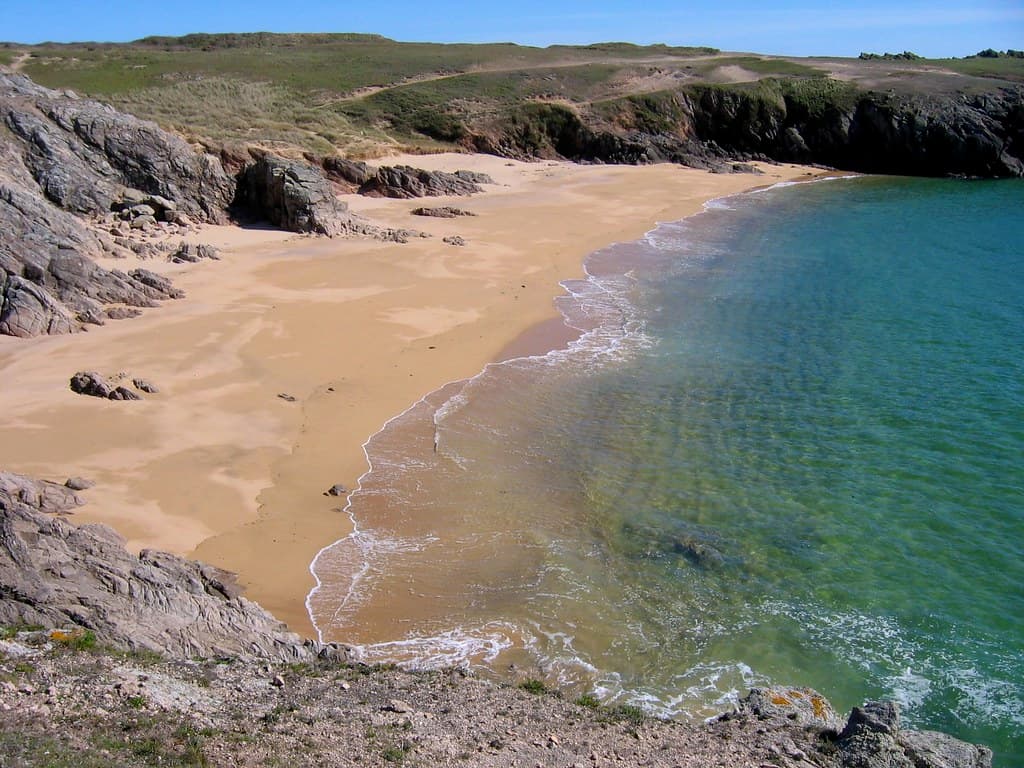
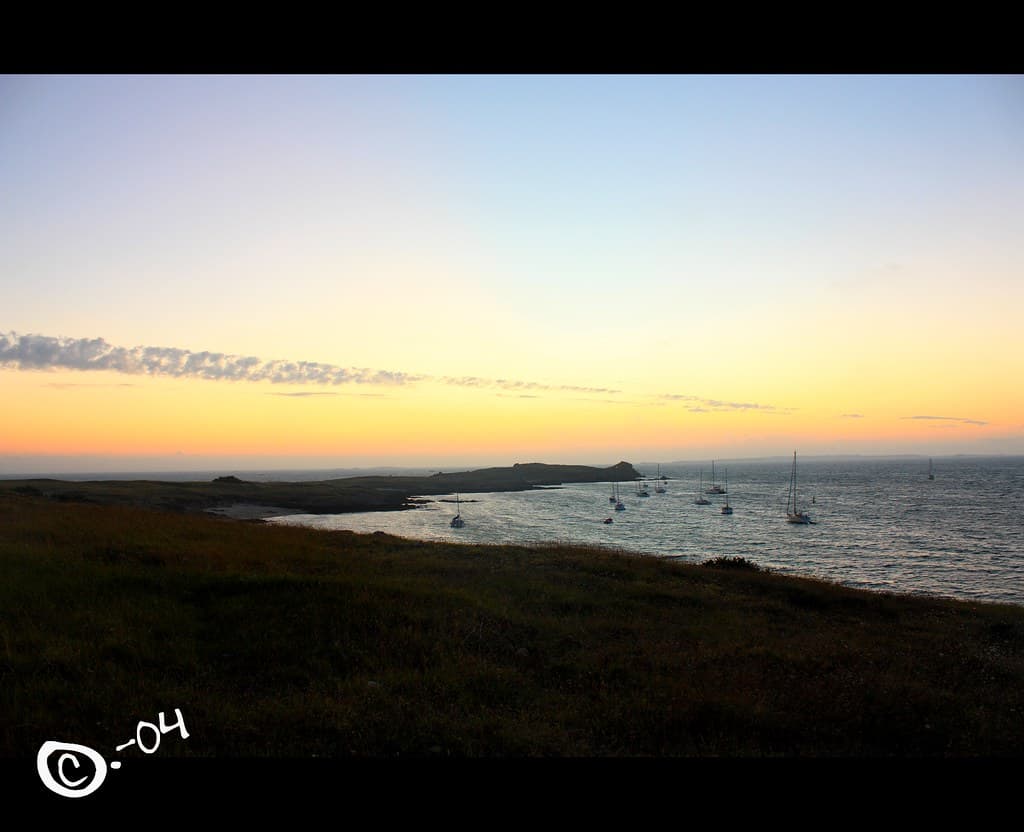
The ferry from Quiberon deposits you in a village of whitewashed houses and lobster traps, and from there it's a twenty-minute walk across heathland that smells of wild thyme and salt. Plage de Treac'h er Goured appears suddenly as you crest the final ridge: a wide arc of fine sand tucked between granite outcrops, the Atlantic rolling in with that particular Breton shade of green-blue that exists nowhere else. Families stake out spots near the dunes while you wade into water cold enough to make you gasp, the seabed a mosaic of kelp and smooth stones. The island's 250 year-round residents move through summer crowds with the patience of people who know the ferries will empty again come September. You'll see them hauling nets at dawn, hanging laundry in gardens where hydrangeas bloom improbably pink against stone walls. By late afternoon, the beach thins out as day-trippers queue for the last boat, and the light turns honeyed, gilding the offshore rocks where cormorants spread their wings to dry. Stay past sunset and you'll understand why islanders rarely leave. The sky bleeds violet and copper over Quiberon's distant peninsula, the lighthouse on Île de Hoëdic blinks awake to the south, and the only sounds are waves and wind through marram grass. This is Brittany stripped to its essence: rock, water, light, and the deep quiet of a place that refuses to hurry.
Places, rentals, tours and events within walking and driving distance of Plage de Treac'h er Goured.
Photos
Plage de Treac'h er Goured is generally safe for swimming during calm weather, with shallow waters near shore that are suitable for families with children. However, as an Atlantic-facing beach on an outer island, conditions can change quickly with wind and tides. There are no lifeguards on duty, so swimmers should exercise caution and monitor weather conditions. The beach's sheltered position on Île-d'Houat's east side typically offers calmer waters than western-facing beaches. Always check local tide times and avoid swimming during rough seas or strong winds.
The beach is accessible year-round, but late spring through early autumn (May to September) offers the most reliable weather and warmest water temperatures for swimming. Summer months (July-August) provide the longest days and calmest seas, though the island becomes busier with visitors. For fewer crowds and mild weather, visit in June or September. Winter visits are possible for scenic walks and dramatic Atlantic views, but expect cooler temperatures and rougher seas. The beach is particularly stunning at sunset throughout the year, thanks to its western exposure.
Reaching this beach requires taking a passenger ferry to Île-d'Houat from Quiberon (30-60 minutes), with seasonal services also available from Port-Navalo, Vannes, and La Trinité-sur-Mer. Once on the car-free island, the beach is approximately a 20-minute walk from the port village along coastal paths. No motorized vehicles or parking facilities exist on Houat, so bring comfortable walking shoes. Ferry schedules vary by season, with more frequent services in summer. Book tickets in advance during peak season, and check weather conditions as crossings can be cancelled in rough seas.
The beach itself has no facilities—no restaurants, shops, or toilets directly on-site. All amenities are located in Houat's main village near the port, about 20 minutes' walk away, where you'll find small grocery shops, restaurants, and cafés. Accommodation options on the island include hotels, vacation rentals, and a campsite, all in or near the village. Visitors should bring their own food, water, and beach supplies for the day, as there are no vendors at the beach. Plan to carry everything you need for your visit.
This beach stands out as one of Brittany's most pristine island beaches, accessible only by boat with no road access or development nearby. The combination of turquoise waters, white sand, and dramatic coastal scenery rivals Mediterranean beaches while maintaining an authentic, unspoiled character. Being car-free enhances the peaceful atmosphere. The beach's position on Île-d'Houat offers exceptional sunset views over the Atlantic and neighboring islands. Its relative remoteness means fewer crowds than mainland beaches, creating an almost private island experience, especially outside peak summer months.