Counting the waves…
Counting the waves…

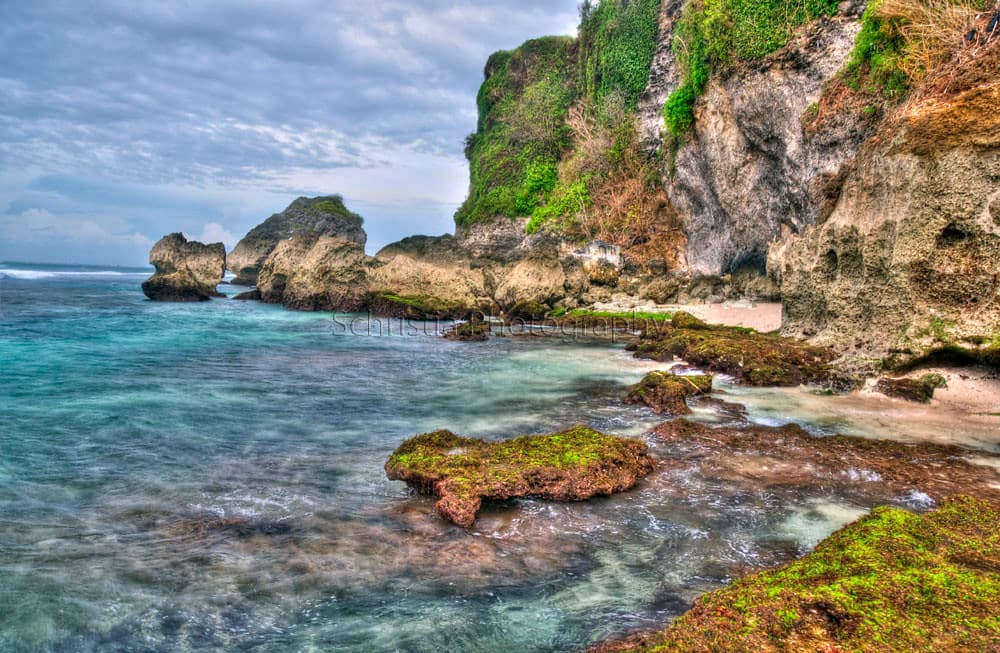
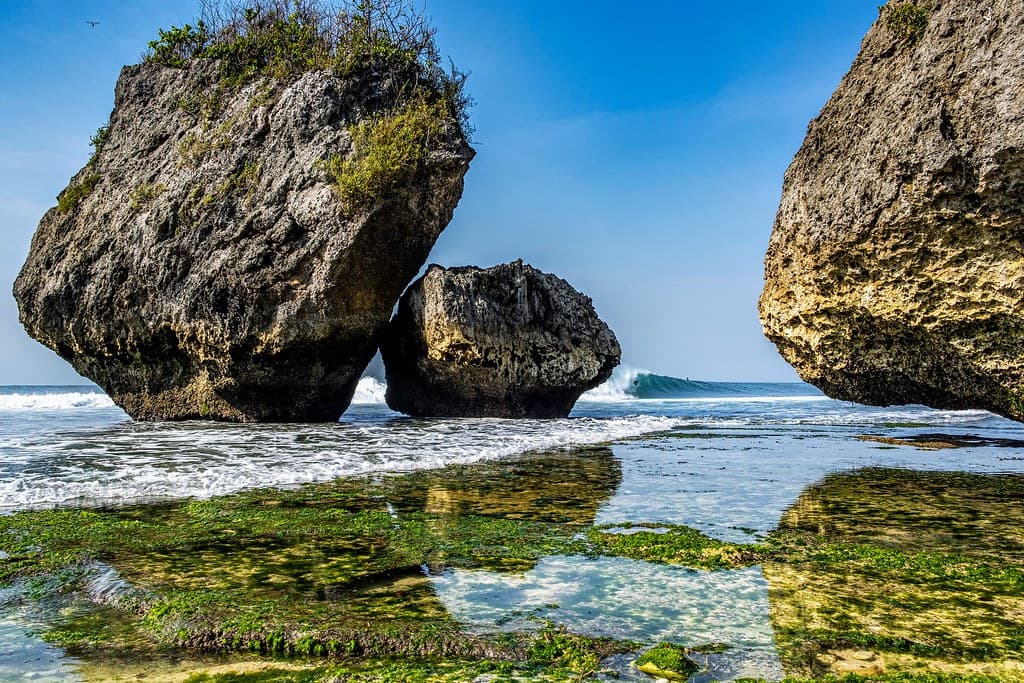
The path down begins near an abandoned Boeing 737 fuselage—a weathered landmark that signals you're close. As you descend the steep staircase carved into Pecatu's limestone bluffs, the roar of the ocean grows louder, and the air turns thick with humidity and brine. By the time you reach the sand, your calves will remind you that this beach demands effort, and that's precisely why it remains empty even when Uluwatu's beaches swarm with visitors. The shore stretches nearly a kilometer in both directions, a sweep of bone-white sand backed by low dunes and scrub. In the wet season, a small river cuts across the beach, warm and shin-deep. You'll see local fishermen mending nets beneath makeshift shelters, their boats resting on bamboo rollers. The surf here is inconsistent—shifty peaks that break over sand—but the real draw is the space itself, the sense of having stumbled onto a shoreline that predates the island's tourism machine. Bring water and snacks; there's nothing here but sand, sea, and the occasional cow wandering down from the clifftop grazing land. The climb back up is unforgiving in midday heat, so time your visit for late afternoon when the light turns the limestone cliffs gold and the temperature drops enough to make the ascent bearable.
Places, rentals, tours and events within walking and driving distance of Nyang Nyang Beach.
Photos
Swimming conditions at Nyang Nyang Beach vary considerably. The beach faces strong Indian Ocean currents and can have powerful waves, particularly during the wet season (November-March). There are no lifeguards on duty, and the beach's remote location means help isn't readily available in emergencies. The long stretch of white sand does offer calmer spots during dry season mornings, but always exercise caution. Check conditions before entering the water, avoid swimming alone, and stay close to shore. The beach is better suited for sunbathing and walks than serious swimming.
Nyang Nyang Beach is accessible year-round, but the dry season (April-October) offers the best conditions with calmer seas, less rain, and more manageable surf. Early mornings are ideal for avoiding crowds and heat, as the descent requires a steep walk. The beach faces west, making it excellent for sunset viewing. Midday can be extremely hot with limited shade, so bring sun protection. During wet season, the stairs become slippery and the beach can accumulate debris, though you'll find even more solitude during these months.
Nyang Nyang Beach is located near Pecatu in southern Bali, accessible via Jalan Nyang Nyang off the main Uluwatu road. The access point is somewhat hidden, so GPS navigation is recommended. There's a small parking area at the top where you can leave scooters or cars. From the parking area, you must descend approximately 500 steep concrete steps through cliffs to reach the beach—a 15-20 minute walk down. The climb back up is strenuous, so bring water and wear proper footwear. The remote access contributes to the beach's secluded atmosphere.
Nyang Nyang Beach has extremely limited amenities, which maintains its secluded character. There's typically one small beach warung (local shack) selling basic drinks, snacks, and simple Indonesian dishes, though it may not always be open. There are no permanent restroom facilities, shops, or loungers for rent. Bring your own food, plenty of water, sunscreen, and beach equipment. The nearest restaurants and accommodations are in the Uluwatu and Pecatu areas, approximately 10-15 minutes away by scooter. Come prepared for a true off-the-beaten-path beach experience.
Nyang Nyang Beach remains one of Bali's best-kept secrets primarily due to the challenging 500-step descent down steep cliffs, which deters casual beachgoers. The remote location, hidden access point, and lack of signage mean many tourists never discover it. Unlike nearby Uluwatu or Padang Padang beaches, there's no surf break to attract surfers, and minimal facilities mean it doesn't appear in mainstream tour itineraries. The beach stretches over a kilometer of pristine white sand, so even when visitors arrive, they spread out naturally, maintaining the serene, isolated atmosphere.