Counting the waves…
Counting the waves…

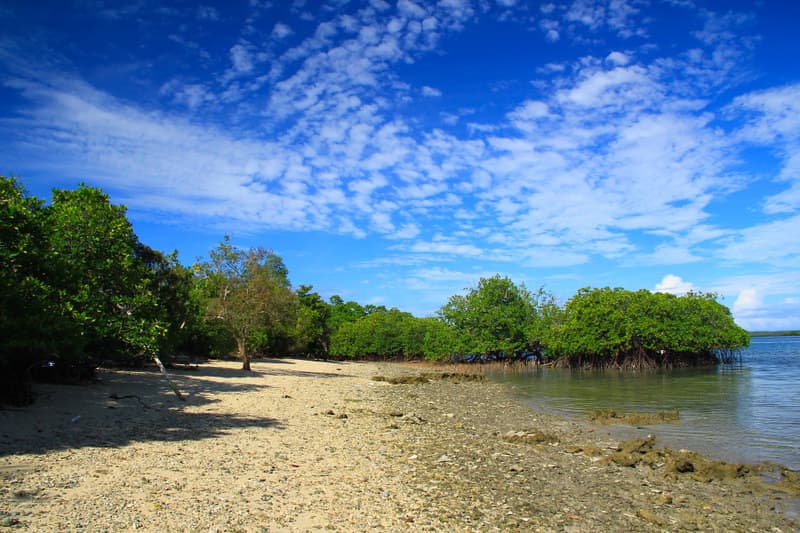
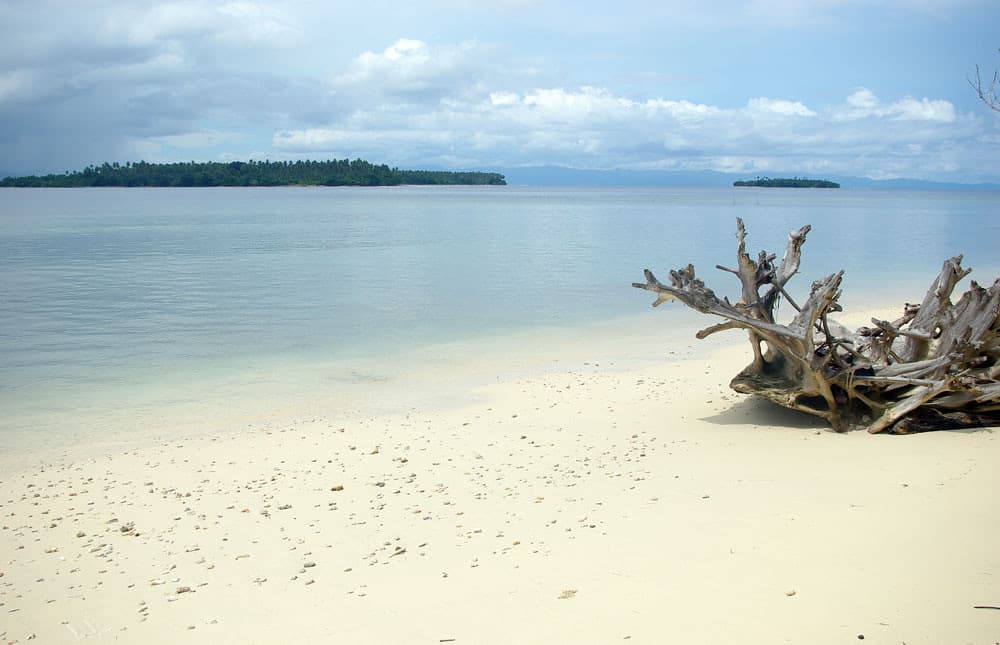
Tagalaya Beach unfurls along Tobelo's eastern shore like a ribbon of talc, its three-kilometer arc protected by headlands thick with pandanus and sago palms. You'll wade through bathwater shallows where the sand bottom stays visible until you're waist-deep, the gradient so gradual that local children treat the bay as a saltwater playground. Behind you, the volcanic spine of Halmahera rises in green ridges; ahead, the horizon breaks only where distant islands punctuate the Maluku Sea. The beach holds its reputation as Halmahera's finest for good reason: consistent year-round conditions, minimal development, and a shoreline that remains pristine despite its accessibility from Tobelo town. Mornings bring fishermen hauling nets filled with skipjack and mackerel; afternoons see families picnicking under makeshift palm-frond shelters. The sand itself—impossibly white, impossibly soft—came from millennia of coral grinding against volcanic rock, creating a texture that photographer's lenses struggle to capture accurately. You'll find few commercial operations here, just a handful of warungs serving grilled fish and es kelapa muda. The absence of resorts means the beach belongs to Tobelo's residents and the occasional traveler willing to venture beyond Raja Ampat. Bring your own snorkel gear, pack reef-safe sunscreen, and prepare for a beach experience that feels lifted from an earlier decade of Indonesian island travel.
Places, rentals, tours and events within walking and driving distance of Tagalaya Beach.
Photos
Tagalaya Beach generally offers calm, safe swimming conditions, particularly during the dry season when waters are clearest and most tranquil. The beach features gentle slopes and minimal currents in most areas, making it suitable for swimmers of various skill levels. However, always exercise caution and check local conditions before entering the water. During monsoon periods, waves can become stronger and visibility may decrease. There are no lifeguards on duty, so swim responsibly and avoid venturing too far from shore, especially if traveling with children.
Tagalaya Beach can be visited year-round, though the dry season from October to March typically offers the most ideal conditions with calmer seas, clearer skies, and better visibility for swimming and photography. April to September brings the wet season with occasional rainfall and rougher waters, but the beach remains accessible and less crowded. North Maluku's tropical climate means warm temperatures throughout the year. For the best beach experience with optimal weather and stunning white sand visibility, plan your visit between October and March when rainfall is lowest.
Tagalaya Beach is located approximately 20-30 kilometers from Tobelo town center in North Halmahera. The most common way to reach the beach is by renting a motorbike or hiring a car with driver from Tobelo, which takes about 45-60 minutes on coastal roads. Local ojek (motorcycle taxis) are also available. The route offers scenic coastal views along the way. Parking is available near the beach area, though facilities are basic. For those flying in, Tobelo has Gamar Malamo Airport with connections to regional hubs.
Tagalaya Beach has limited facilities directly on-site, reflecting its relatively undeveloped, natural character. Basic food vendors occasionally sell snacks and drinks, but options are inconsistent. Most visitors bring their own supplies or eat in Tobelo before visiting. Accommodation is primarily found in Tobelo town, which offers guesthouses, homestays, and small hotels catering to various budgets. Day-tripping from Tobelo is the most practical approach, allowing you to enjoy the beach's pristine beauty while accessing more reliable dining and lodging options in town.
Tagalaya Beach stands out as one of Halmahera's most famous beaches, renowned for its striking white sand that contrasts beautifully with the turquoise waters typical of North Maluku's coastline. The beach offers a relatively pristine, unspoiled environment with fewer crowds than more developed tourist destinations. Its island setting provides excellent opportunities for photography, with coconut palms framing the shoreline and clear waters ideal for snorkeling when conditions permit. The beach represents authentic Indonesian island beauty without heavy commercialization, appealing to travelers seeking natural, off-the-beaten-path coastal experiences.