Counting the waves…
Counting the waves…

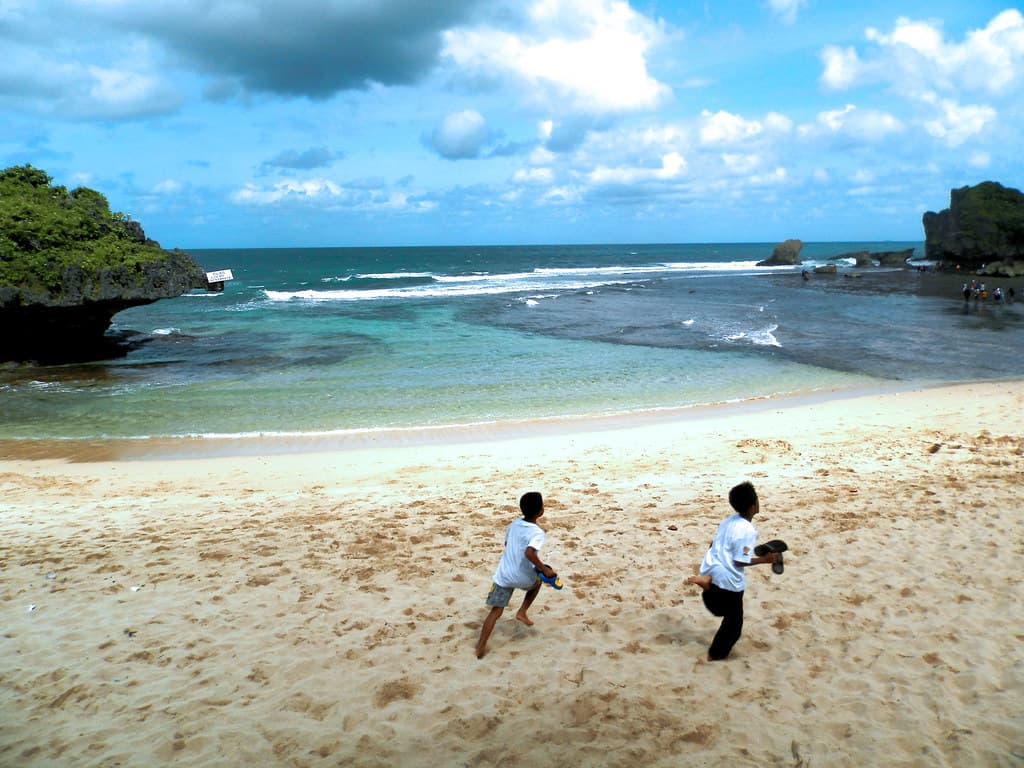
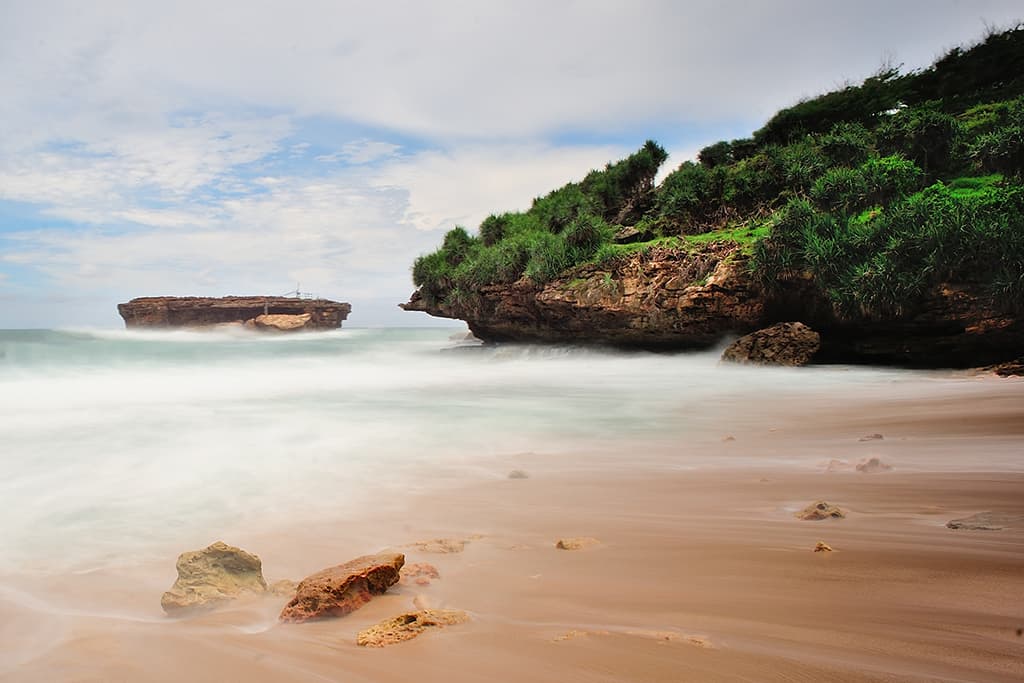
The drive from Yogyakarta to Gunungkidul winds through teak forests and cassava fields before the landscape cracks open into limestone plateaus. When you round the final bend, Indrayanti appears as a generous crescent of bone-white sand pressed between jagged headlands, the kind of accessible beauty that draws extended families every weekend. Unlike the black volcanic shores that define much of Java's coastline, this stretch gleams with imported coral sand, soft underfoot and forgiving on bare skin. You'll share the beach with locals who arrive bearing coolers and badminton nets, claiming spots beneath thatch-roofed gazebos that march in neat rows along the shore. The water here shifts from milky jade in the shallows to deep sapphire beyond the break, and while the waves can surge with surprising force, the gradual slope makes wading manageable for children. Fishermen haul nets at dawn; by midmorning, their catch sizzles in the warungs that line the access road, perfuming the salt air with lemongrass and chili. The cliffs bookending the cove offer shade in the afternoon and vantage points for photographers chasing the interplay of light on limestone. You can walk the length of the beach in ten minutes, rent a sun lounger for a few thousand rupiah, or simply spread a sarong and watch the theatre of families negotiating the surf. There's no pretense here—just honest coastal pleasure within easy reach of the cultural heartland.
Places, rentals, tours and events within walking and driving distance of Indrayanti Beach.
Photos
Swimming conditions at Indrayanti Beach are generally safer than many south coast Yogyakarta beaches, with calmer waters and a gradual slope. However, waves can still be strong during certain seasons, particularly June to August. Always observe warning flags and local signs. Lifeguards may not always be present, so supervise children closely. The beach has a gentle sandy bottom near shore, making it more family-friendly. Avoid swimming during high tide or rough weather. Check current conditions with beachside vendors or restaurants before entering the water.
Indrayanti Beach can be visited year-round, but the dry season from April to October offers the best weather with minimal rainfall and calmer seas. May to September provides ideal beach conditions with sunny skies. The wet season (November to March) brings occasional afternoon showers but fewer crowds. Weekdays are significantly less crowded than weekends and Indonesian public holidays. Arrive early morning (before 10am) to avoid crowds and secure good parking. Sunset views are spectacular, typically between 5-6pm depending on the season.
Indrayanti Beach is located about 2.5 hours (65km) southeast of Yogyakarta city center. Rent a scooter or car for flexibility, following signs to Gunungkidul beaches via Baron Beach route. The road is well-paved but winding through hills. Alternatively, hire a private driver or join organized tours from Yogyakarta. Parking is available near the beach entrance with modest fees (typically 5,000-10,000 IDR for motorcycles, 10,000-20,000 IDR for cars). Arrive early on weekends as parking fills quickly. Public transportation options are limited and inconvenient.
Indrayanti Beach has excellent facilities including numerous beachfront restaurants and warungs serving fresh seafood, Indonesian dishes, and cold drinks. Popular options include grilled fish, prawns, and squid at reasonable prices. Beach chairs and umbrellas are available for rent, often free with restaurant orders. Clean toilets, changing rooms, and freshwater showers are accessible for small fees. No overnight accommodations directly on the beach, but guesthouses and homestays are available in nearby villages within 10-15 minutes' drive. Small shops sell snacks, drinks, and beach essentials.
Indrayanti Beach stands out for its pristine white sand, which is finer and brighter than neighboring beaches like Baron or Krakal. The beach is exceptionally well-maintained and clean, with organized facilities and a more developed tourism infrastructure. It features distinctive white-painted beachfront buildings that create a Mediterranean-like atmosphere, popular for photography. The protected cove location provides calmer waters compared to more exposed Gunungkidul beaches. While this means more crowds, it also offers better swimming conditions and a more comfortable, family-oriented experience with readily available amenities.