Counting the waves…
Counting the waves…

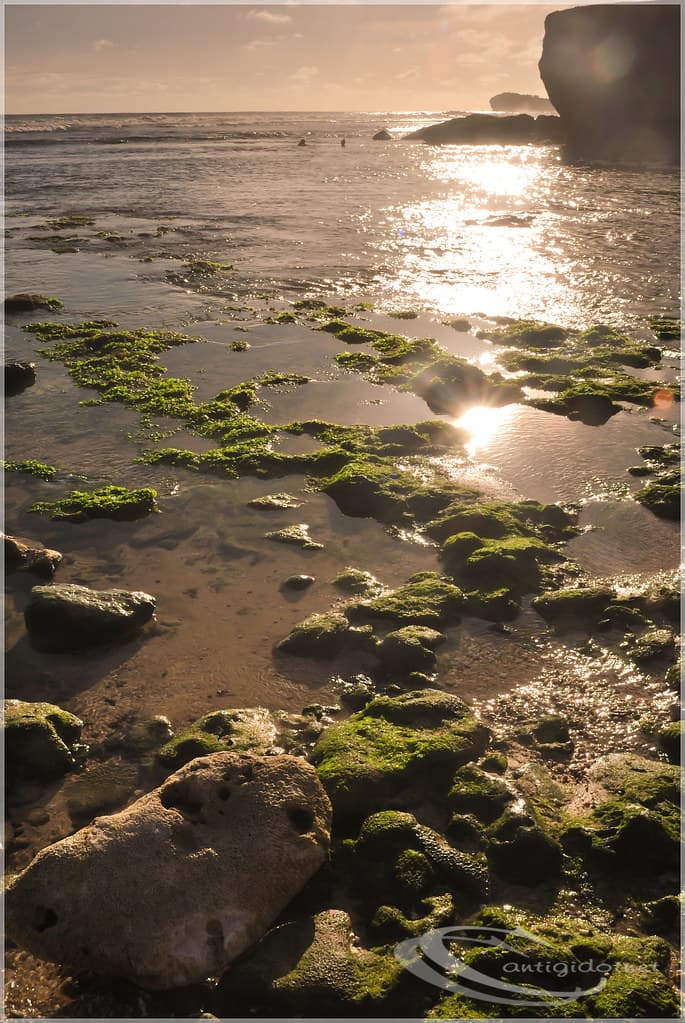
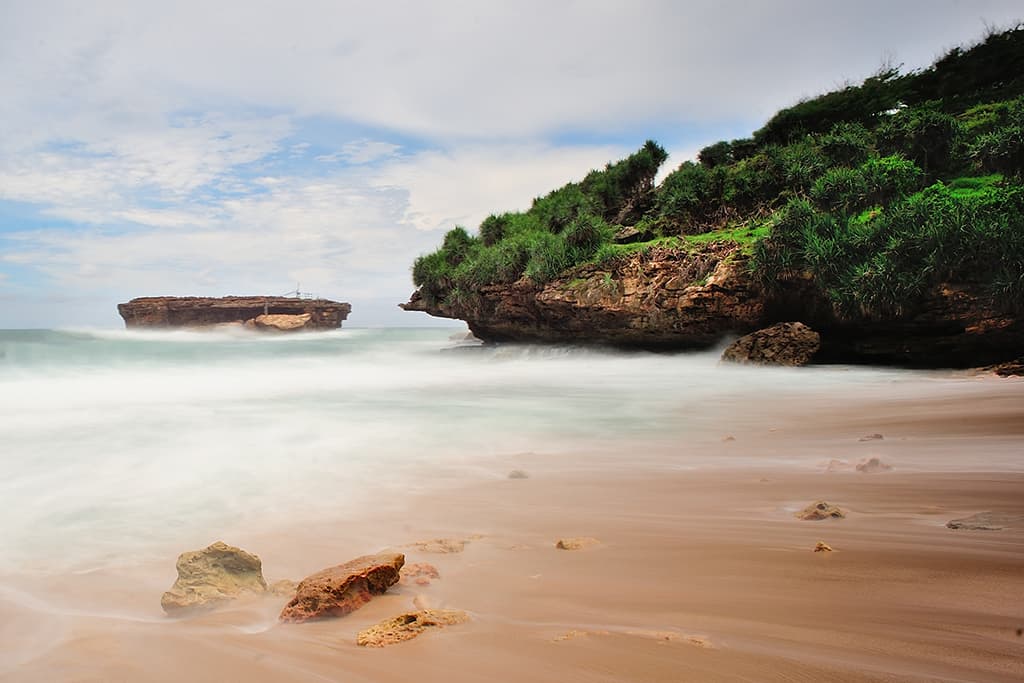
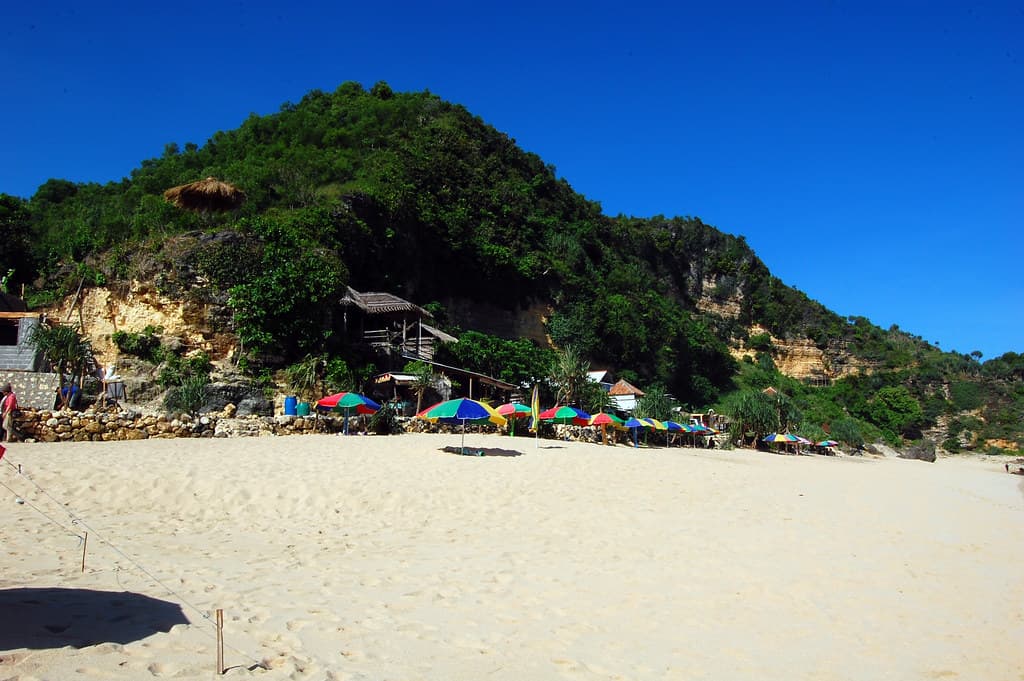
The descent reveals the beach in stages—first the rustle of lontar palms, then the marine smell of salt on limestone, finally the lone dracaena tree rising from the shore like a landmark painted by a solitary hand. Pok Tunggal occupies a pocket cove where Gunungkidul's karst plateau meets the Indian Ocean, its white sand compressed between cliffs that block coastal winds and filter afternoon light into honey tones. Local fishermen pull nets at dawn, their boats beached beside the tree, and by midmorning you'll have the sand mostly to yourself. The water here swings from jade calm to frothy cerulean depending on swell, and the eastern headland shelters a cluster of tide pools where hermit crabs navigate thumb-sized universes. You'll wade carefully—coral rubble mingles with sand underfoot—but the shallows stay bathwater-warm. Vendors under thatched shelters sell grilled snapper with sambal and cold kelapa muda, and the whole scene feels unpolished in the best way: no resort signage, no jet-ski hum, just the crash of surf and the creak of bamboo shade. Stay past four o'clock and watch the sun sink behind the western cliff, turning the tree's silhouette into the beach's unofficial emblem. The climb back up—232 steps—feels earned, especially if you've spent hours letting salt dry on your skin and watching clouds shift over Java's southern rim.
Places, rentals, tours and events within walking and driving distance of Pok Tunggal Beach.
Photos
Swimming at Pok Tunggal Beach requires caution. The waves can be strong and unpredictable, especially during the wet season. The beach has steep drop-offs and currents that make it more suitable for wading in shallow water than serious swimming. Always observe local conditions before entering the water, stay close to shore, and avoid swimming alone. Lifeguards are not consistently present, so visitors should exercise personal judgment and supervise children closely at all times.
Pok Tunggal Beach can be visited year-round, though the dry season from April to October offers the most reliable weather with calmer seas and easier access roads. The wet season (November-March) brings occasional rain but fewer crowds. Early morning visits are ideal for avoiding midday heat and catching stunning sunrise views. Weekdays are significantly quieter than weekends, when domestic tourists arrive in larger numbers. Visiting during low tide reveals more beach area for exploration.
Pok Tunggal Beach is located approximately 70 kilometers southeast of Yogyakarta city, requiring about 2-2.5 hours by car or motorbike. The most practical approach is renting a vehicle, as public transportation doesn't reach the beach directly. From the main parking area, visitors must descend a long staircase (around 200+ steps) to reach the beach. Parking facilities are available near the entrance with a modest fee. The access road is paved but winding, so drive carefully.
Basic warungs (small local eateries) near the entrance sell simple Indonesian meals, snacks, and drinks, though options are limited. It's wise to bring extra water and snacks, especially for a full day visit. Accommodation directly at the beach is minimal; most visitors stay in nearby Wonosari town or return to Yogyakarta city where hotels and guesthouses are plentiful. Some travelers camp on the beach, but facilities are very basic with limited amenities available.
The beach's name "Pok Tunggal" refers to the iconic solitary duras tree (also called lontar palm) standing prominently on the white sand. This single tree has become the beach's signature landmark and most photographed feature, creating a striking contrast against the turquoise waters and limestone cliffs. Local legends surround this tree, with some believing it holds spiritual significance. The tree provides rare natural shade on the beach and serves as a distinctive orientation point for visitors.