Counting the waves…
Counting the waves…

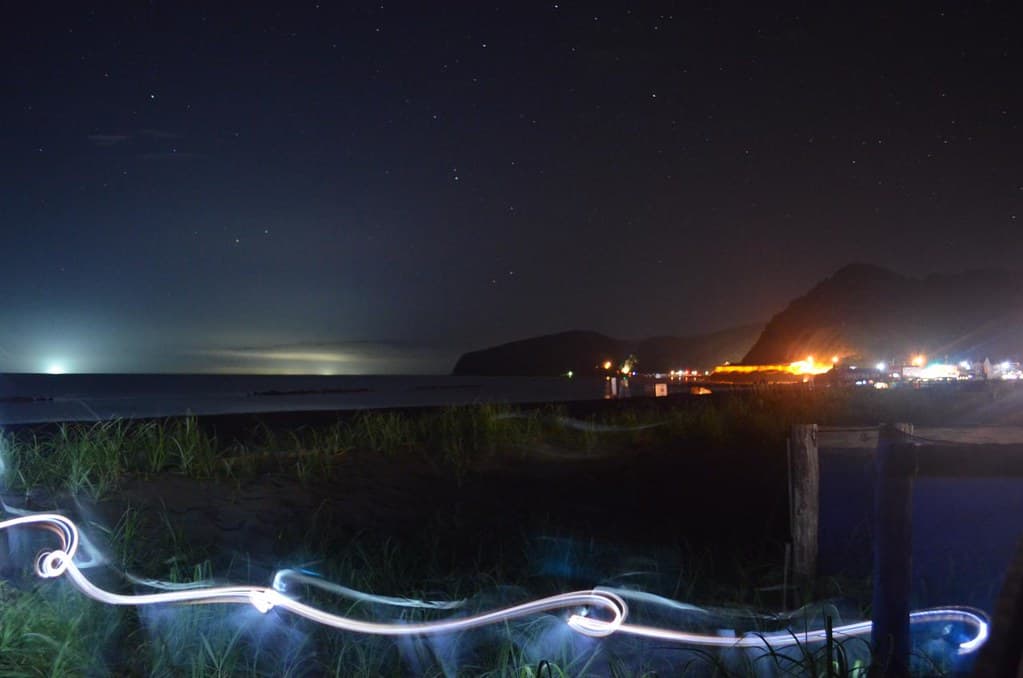
The beach stretches along Hokkaido's western coast in an unpolished ribbon of volcanic sand, anchored at one end by the red-and-white lighthouse that marks Ishikari Port. You'll notice the lack of resort trappings immediately: no thatched umbrellas or beach clubs, just open space where the city dissolves into coastline. On clear days, Mount Teine's ski runs etch the eastern horizon while fishing boats dot the bay, their wakes catching afternoon light. Local families claim their territory early on summer weekends, setting up shade tents and portable grills near the parking area. The water stays bracing even in July—this is the Sea of Japan, after all—but children wade in shin-deep pools while their parents patrol the tide line for interesting stones and driftwood sculpted by winter storms. Gulls pivot overhead, their calls competing with the rhythmic clang from container ships being loaded a kilometer south. You'll share the sand with dog walkers, kite flyers, and the occasional university student escaping Sapporo's concrete grid. The beach works best as a half-day escape: arrive mid-morning when the wind is calm, bring your own provisions, and treat it as Sapporo residents do—not as a destination, but as a convenient slice of coastline where the city pauses and the horizon opens wide.
Places, rentals, tours and events within walking and driving distance of Shinko Beach.
Photos
Shinko Beach is generally safe for swimming during summer months, with lifeguards typically on duty from July to August. The beach features gentle waves suitable for families and children. However, Hokkaido's waters remain cold even in summer, with temperatures rarely exceeding 20°C (68°F). Strong currents can occur, so always check local conditions and warning flags before entering the water. Outside the guarded season, swimming is at your own risk. The beach is well-maintained with designated swimming areas separated from boat zones.
The best time for swimming and beach activities is July through August when temperatures reach 20-25°C and lifeguards are present. However, Shinko Beach offers year-round appeal. Spring and autumn provide pleasant walking conditions with fewer crowds. Winter transforms the beach into a dramatic landscape with ice formations and snow-covered shores, popular with photographers. Summer weekends can be busy with local families. For a quieter experience, visit on weekdays or during shoulder seasons. Always dress warmly outside summer months, as Hokkaido coastal weather can be cool and windy.
Shinko Beach is located in Ishikari, approximately 30-40 minutes by car from central Sapporo via Route 231. Free parking is available near the beach, making it highly accessible for day trips. Public transportation is limited; the most practical option is driving or taking a taxi from Sapporo. Some visitors combine the beach visit with stops at nearby Ishikari Bay New Port or salmon fishing areas. The beach is well-signposted from major roads, and parking lots can accommodate a good number of vehicles, though they fill quickly on summer weekends.
Shinko Beach has basic facilities including restrooms and changing areas during the summer season. The nearby Ishikari area offers several seafood restaurants, particularly known for fresh salmon dishes and Ishikari-nabe (salmon hot pot). Most dining options are a short drive from the beach rather than directly on-site. Convenience stores can be found within a few kilometers for snacks and supplies. For overnight stays, visitors typically base themselves in Sapporo, as Ishikari has limited accommodation options. It's advisable to bring your own food and drinks for a beach day, especially outside peak summer.
Yes, Shinko Beach's location in Ishikari makes it an excellent spot to observe salmon runs, particularly in autumn (September-October) when salmon return to spawn in the nearby Ishikari River. The area has historical significance as a major salmon fishing port. While you won't see massive runs directly on the beach, the adjacent river mouth and nearby fishing areas offer viewing opportunities. Local fishing activity increases during this season, and the experience connects to Hokkaido's indigenous Ainu culture and fishing heritage. This makes autumn visits unique beyond typical beach activities.