Counting the waves…
Counting the waves…
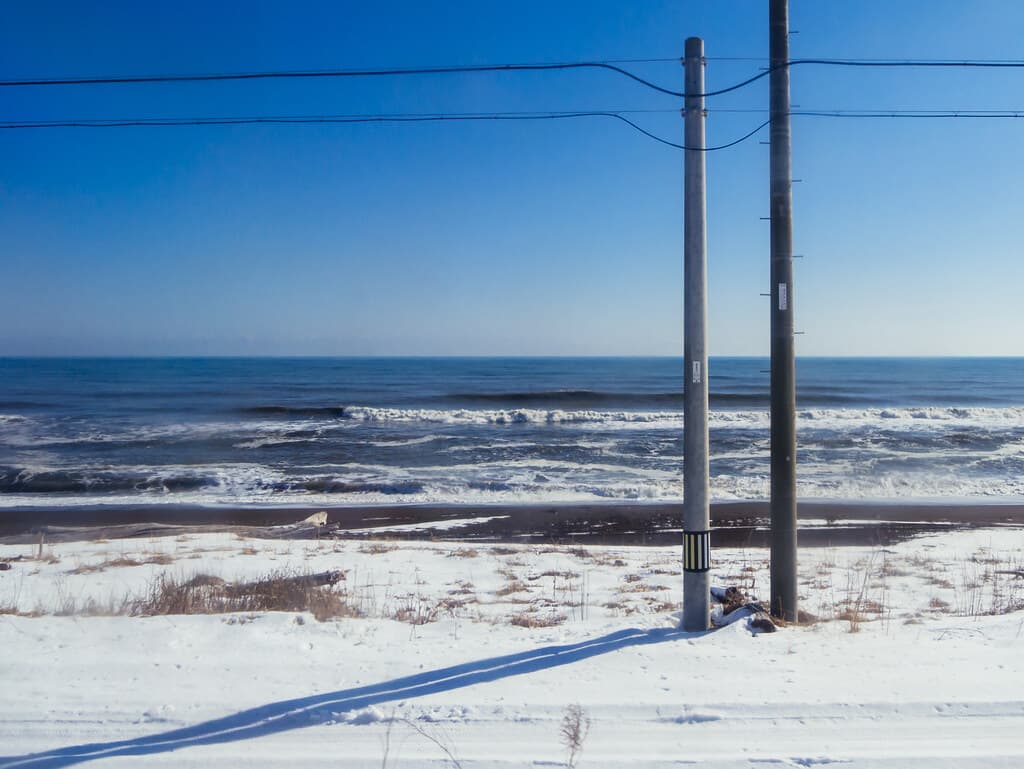
Konbumori Beach doesn't offer the postcard ease of a tropical shore. You'll navigate a narrow gravel road through coastal forest before the Pacific unfolds in a cold, restless expanse. The sand is coarse and dark—ground volcanic rock mixed with shell fragments—and the tide leaves behind tangles of konbu kelp, the namesake seaweed that thrives in these nutrient-rich currents. Driftwood logs, bleached bone-white, scatter along the tideline like skeletal monuments. The coastline unfolds in jagged rhythm: basalt outcrops jut into the surf, their surfaces pocked and honeycombed by centuries of wave action. Low tide reveals tidal pools where purple sea urchins cling to stone and tiny crabs dart between fronds of red algae. In winter, ice forms along the rocks, and you might spot Steller's sea eagles perched on offshore crags, scanning for fish. The wind here is constant, carrying the briny scent of the ocean and the faint iodine tang of kelp. This is not a beach for lounging. It's a place for walking the tideline with your hood cinched tight, for watching storm waves crack against the cliffs, for understanding that beauty on the edge of the North Pacific demands respect. The nearby Kushiro Shitsugen wetlands buffer the coast, and cranes sometimes lift from the marshes to wheel overhead, their calls audible above the surf's low roar.

Places, rentals, tours and events within walking and driving distance of Konbumori Beach.
Photos
Swimming at Konbumori Beach is generally not recommended due to its rugged coastline, rocky terrain, and often cold waters typical of Hokkaido's Pacific coast. The beach is better suited for scenic walks, photography, and coastal exploration rather than swimming. Strong currents and waves can occur, particularly during changing tides. If you plan to approach the water's edge, wear sturdy footwear and exercise caution on slippery rocks. Always check local weather conditions before visiting, as conditions can change rapidly along this exposed coastline.
Konbumori Beach can be visited year-round, with each season offering distinct experiences. Summer (June-August) provides the mildest weather and longer daylight hours, ideal for coastal walks and photography. Autumn brings dramatic scenery with changing foliage. Winter offers stark, beautiful landscapes, though access may be challenging due to snow and ice. Spring sees coastal fog creating atmospheric conditions. Given Hokkaido's climate, temperatures remain cool even in summer. Early morning and late afternoon visits provide excellent lighting for photography of the rugged coastline, regardless of season.
Konbumori Beach is located along Kushiro's coastline and is most easily accessed by car, as public transportation options are limited to this relatively remote area. From central Kushiro, drive along the coastal roads following local signage. A rental car is highly recommended for visiting this hidden beach. Parking facilities exist near the beach access points, though they may be basic and unmarked compared to major tourist destinations. The drive from Kushiro city center typically takes 20-30 minutes depending on your starting point and specific beach access point chosen.
Konbumori Beach is a relatively undeveloped area with minimal on-site facilities, reflecting its hidden, natural character. There are no restaurants, restrooms, or shops directly at the beach, so visitors should come prepared with food, water, and supplies. For dining and accommodations, you'll need to return to Kushiro city, which offers various hotels, ryokans, and restaurants featuring local Hokkaido seafood. Plan ahead and bring essentials, including appropriate clothing for changing weather conditions typical of coastal Hokkaido. The lack of development is precisely what makes this beach appealing to those seeking unspoiled scenery.
Konbumori Beach's rugged coastline showcases dramatic natural rock formations, jagged cliffs, and powerful wave action characteristic of Hokkaido's Pacific coast. Unlike sandy resort beaches, this area features raw, windswept beauty with volcanic rocks and coastal erosion creating striking geological formations. The landscape offers excellent opportunities for nature photography, particularly during dramatic weather or at golden hour. The relatively undiscovered nature means fewer crowds and a more authentic wilderness experience. The coastline also provides habitat for seabirds and marine life, making it appealing for wildlife observation and those seeking untouched natural beauty.