Counting the waves…
Counting the waves…
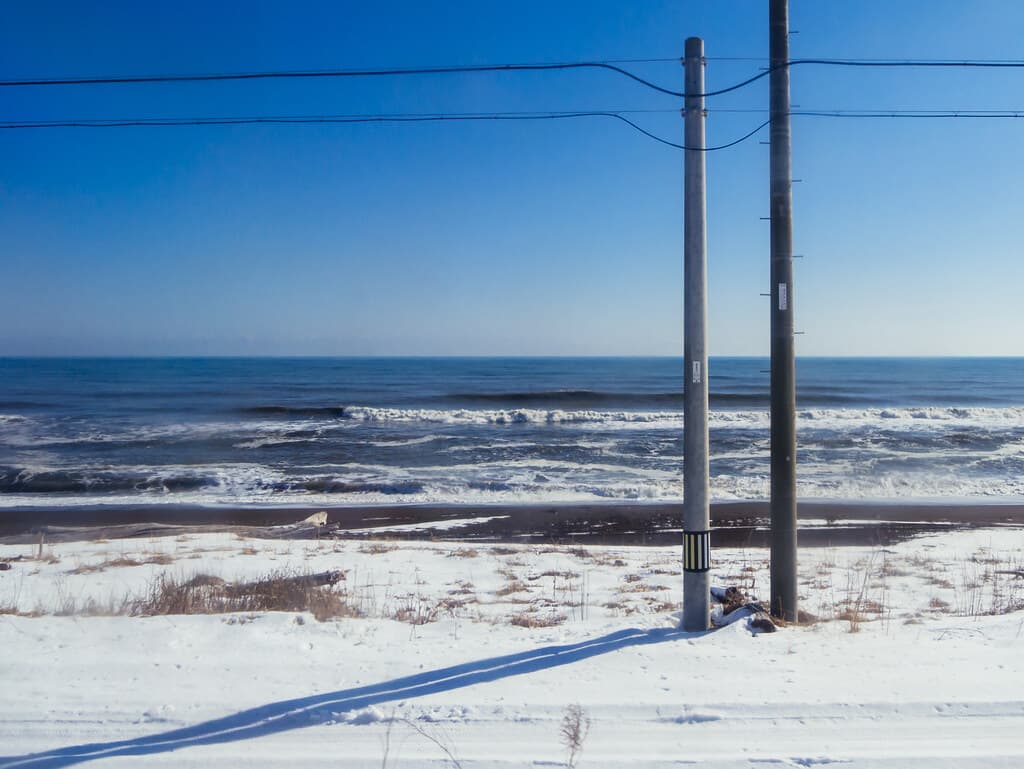
The drive east from Kushiro city takes you through wetland flats where red-crowned cranes hunt in the reeds and morning fog clings to the grasses. Then the road reaches Shirarutoro, a quiet extension of coastline where the land simply gives way to beach. The sand here is dark—volcanic, textured, cold underfoot even in summer—and stretches in both directions with hardly a footprint to interrupt it. Driftwood dominates the upper beach, massive logs bleached white by salt and sun, arranged in chaotic piles by winter storms. You'll walk among them like a sculpture garden, each piece smoothed into abstract forms. The Pacific here is moody, restless, its waves rolling in with persistent energy regardless of season. In winter, sea smoke rises from the water when frigid air meets the relatively warmer ocean; in summer, dense fog banks drift onshore by afternoon. This is not a beach for swimming or sunbathing. It's a place for walking, for watching weather move across open water, for the kind of solitude that resets your internal clock. Bring layers—the wind is constant—and expect to have the shoreline largely to yourself. The wetlands behind you, the ocean before you, and nothing but time.
Places, rentals, tours and events within walking and driving distance of Shirarutoro Beach.
Photos
Shirarutoro Beach is primarily known for scenic walks rather than swimming. Hokkaido's Pacific coast has cold water year-round, with summer temperatures rarely exceeding 15-18°C. The area can experience strong currents and sudden weather changes. There are no lifeguards on duty, and facilities are minimal. Most visitors come for photography, beachcombing, and nature observation rather than water activities. If you do wade in, stay close to shore and be extremely cautious of currents and cold water temperatures that can quickly cause hypothermia.
While accessible year-round, Shirarutoro Beach offers different experiences seasonally. Summer (June-August) provides the mildest weather for comfortable walks, though fog can roll in from the Pacific. Autumn brings dramatic skies and clearer visibility. Winter transforms the beach into a stark, beautiful landscape, sometimes with drift ice visible offshore, though temperatures drop well below freezing. Spring can be misty but peaceful. Early morning visits any season often reward you with stunning light and fewer visitors, ideal for photography and solitude.
Shirarutoro Beach is located along the eastern coast of Kushiro, accessible by car via Route 44. From central Kushiro, it's approximately a 30-40 minute drive eastward. Limited parking is available near the beach access points along the coastal road. Public transportation options are scarce in this area, so renting a car is highly recommended. The beach is somewhat remote, so ensure you have a full tank and check road conditions, especially in winter when snow and ice can affect coastal roads.
Shirarutoro Beach is a remote coastal area with minimal facilities directly nearby. Visitors should plan to bring their own food and drinks, as restaurants and shops are scarce along this stretch. The main town of Kushiro, roughly 30-40 minutes away, offers the nearest concentration of restaurants, convenience stores, and accommodations ranging from business hotels to ryokans. For those wanting proximity to the coast, some minshuku (family-run guesthouses) exist in the broader coastal area, though advance booking is essential.
Shirarutoro Beach stands out for its untouched, wild character and relative isolation compared to Hokkaido's more developed beach areas. It offers expansive views of the Pacific Ocean with minimal human presence, making it ideal for those seeking solitude and raw natural beauty. The beach serves as a quieter extension of the Kushiro coastline, attracting photographers and nature lovers rather than sunbathers. Its position along migration routes also makes it interesting for birdwatching, and the dramatic meeting of land and sea creates constantly changing atmospheric conditions.