Counting the waves…
Counting the waves…
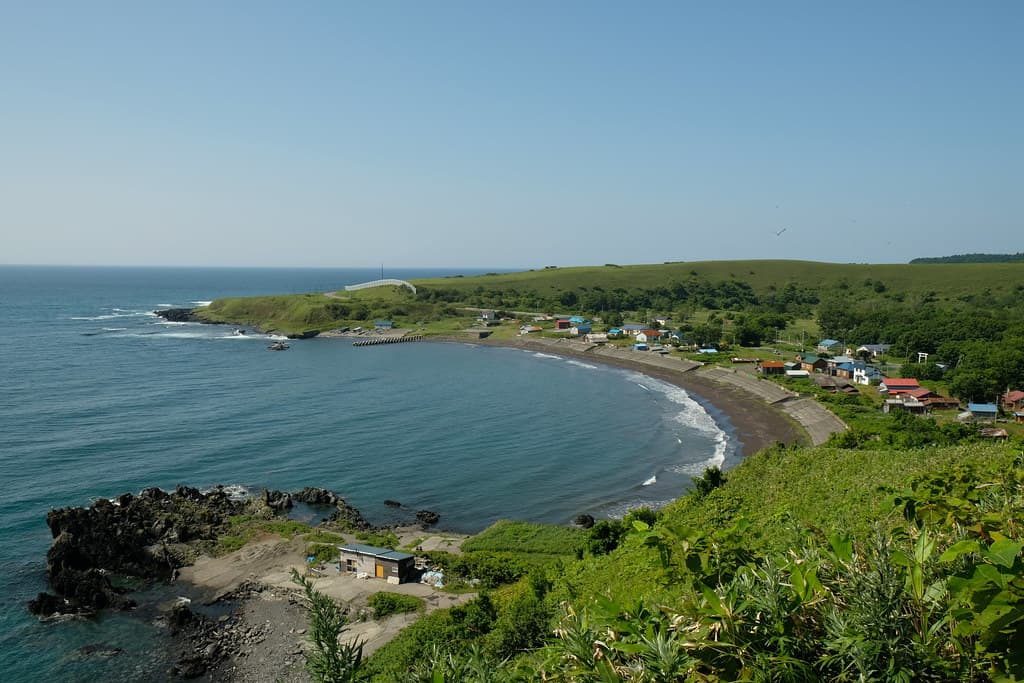
You arrive at Kutsugata Beach after circling half of Rishiri Island's coastal road, the kind of place where fishermen mend nets in morning fog and tourists are scarce enough that locals nod in greeting. The beach curves gently, its charcoal-colored sand soft underfoot—ground down from the same volcanic rock that built Mount Rishiri, whose 1,721-meter summit dominates every sightline. In June, alpine flowers bloom on the mountain's flanks while the beach remains cool, windbreaker weather even when the sun breaks through. The water here is frigid year-round, fed by currents that sweep down from the Kuril Islands. You're not here to swim. Instead, you walk the tideline where smooth stones pile up in ridges, each one a piece of island geology polished by ten thousand tides. Driftwood tangles mark the high-water line, silvered by salt and sun. Offshore, kelp forests sway in the shallows, and if you time your visit for low tide, tidal pools reveal purple sea urchins and small crabs scuttling between rocks. The island receives snow from November through April, transforming Kutsugata into a study in monochrome—white peaks, grey water, black sand. Summer brings hikers bound for Mount Rishiri's summit trail, but the beach itself remains quiet, a place to sit on driftwood and watch fishing boats return to harbor as the light softens and the wind never quite stops.
Places, rentals, tours and events within walking and driving distance of Kutsugata Beach.
Photos
Swimming conditions at Kutsugata Beach vary significantly by season. During summer months (July-August), the water remains quite cold due to Hokkaido's northern location, typically ranging from 15-18°C. The beach has no lifeguards on duty, and currents can be unpredictable around Rishiri Island's coastline. Most visitors enjoy the beach for its scenic beauty and walking rather than swimming. If you do enter the water, exercise caution and stay close to shore. Always check local conditions before swimming, as weather can change rapidly.
While Kutsugata Beach is accessible year-round, late June through September offers the most comfortable weather for beach visits, with temperatures ranging from 15-25°C. Summer provides the longest daylight hours and clearest views of Mount Rishiri. Spring (May-June) brings wildflowers, while autumn (September-October) offers stunning foliage colors. Winter visits are possible but expect snow, cold temperatures, and limited services. The shoulder seasons of late spring and early autumn provide fewer crowds while maintaining pleasant weather for coastal walks and photography.
Reaching Kutsugata Beach requires first taking a ferry to Rishiri Island from Wakkanai (approximately 1 hour 40 minutes). From Rishiri's main port towns (Oshidomari or Kutsugata), the beach is accessible by rental car, which is recommended for exploring the island. Limited parking is available near the beach. Public buses operate around the island but with infrequent schedules, making car rental the most practical option. The island's coastal road provides easy access, and the beach is well-marked along the western shore.
Kutsugata Beach is located near the small port village of Kutsugata, which offers limited but authentic lodging options including minshuku (family-run guesthouses) and small hotels. Several local restaurants serve fresh seafood, particularly Rishiri's famous uni (sea urchin) and kelp products. Amenities are basic compared to mainland beaches—expect small, locally-owned establishments rather than large resorts. For more dining and accommodation variety, the larger town of Oshidomari on the island's east coast offers additional options, though advance booking is recommended, especially during summer.
Yes, Kutsugata Beach offers spectacular views of Mount Rishiri (Rishiri-zan), the island's iconic 1,721-meter volcanic peak. The western coastal position provides excellent vantage points, particularly during clear mornings when the mountain is less likely to be shrouded in clouds. The combination of rugged coastline, sandy beach, and the dramatic mountain backdrop makes this location popular with photographers. Views are best from late spring through early autumn, though the mountain's visibility depends heavily on weather conditions, as fog and clouds frequently obscure the summit.