Counting the waves…
Counting the waves…
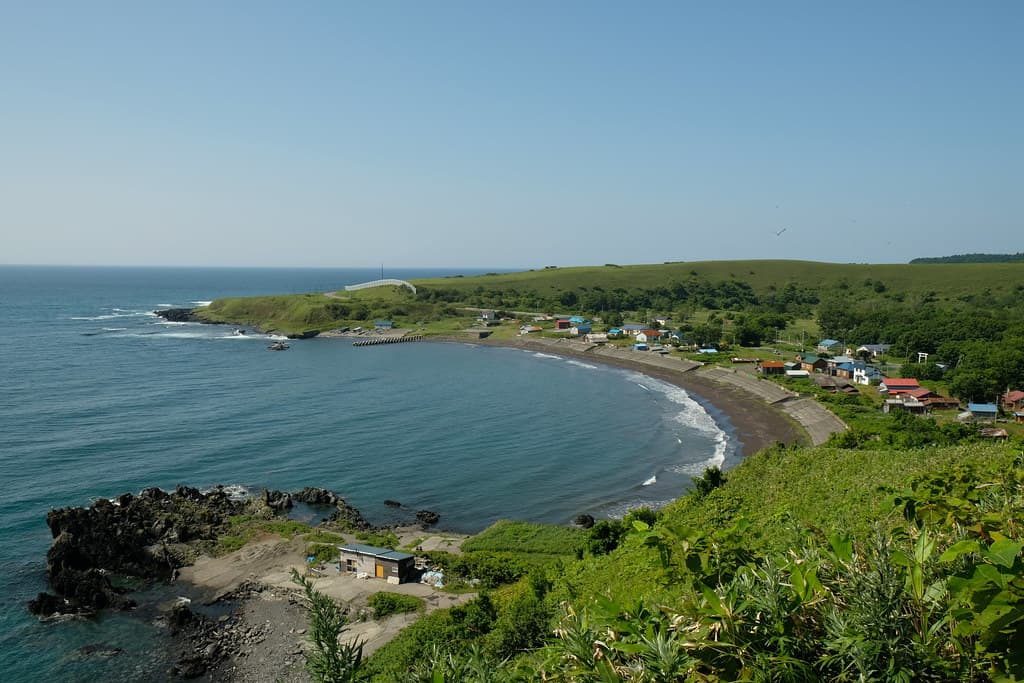
Oshidomari Beach occupies the eastern shore of Rishiri Island, where the ferry terminal anchors a small port town and Mount Rishiri—an active stratovolcano—commands every sightline. You'll walk from the dock along a compact crescent of dark sand, the kind that holds warmth underfoot on sunny days and turns slate-gray when clouds roll in from the Sea of Japan. Kelp tangles along the tideline, and the smell of salt mixes with diesel from fishing boats moored nearby. The beach serves as Rishiri's living room. Families arrive with coolers and fold-up chairs, children wade in shallows that never lose their glacial bite, and older residents sit on driftwood benches watching the Wakkanai ferry come and go. In winter, pack ice drifts close enough to shore that you can hear it creak. Come summer, the volcano's reflection stretches across calm morning water before wind picks up by noon. You won't find resort umbrellas or cocktail service—this is a working waterfront. A handful of guesthouses and seafood joints line the road behind the beach, their menus leaning heavily on uni harvested that morning. The mountain trails begin less than two kilometers inland, so most visitors use Oshidomari as base camp rather than destination, but the beach itself rewards an hour of your attention, especially as the last ferry departs and the crowd thins to almost no one.
Places, rentals, tours and events within walking and driving distance of Oshidomari Beach.
Photos
Swimming conditions at Oshidomari Beach vary significantly by season. During summer months (July-August), the water is calmer and supervised swimming is generally possible, though the water remains quite cold even in peak season. Outside summer, strong currents and cold temperatures make swimming unsafe. The beach is more commonly used for wading and shoreline activities rather than extended swimming. Always check local conditions before entering the water, as weather on Rishiri Island can change rapidly.
Oshidomari Beach is technically accessible year-round, but late June through September offers the most pleasant conditions. July and August provide the warmest weather and calmest seas, ideal for families and beach activities. Spring (May-June) and autumn (September-October) offer fewer crowds and scenic views of Mount Rishiri, though cooler temperatures. Winter visits are possible but expect snow, freezing conditions, and limited services. The beach serves as a ferry port year-round, so basic access is maintained in all seasons.
Oshidomari Beach is located adjacent to Oshidomari Ferry Terminal, the main port connecting Rishiri Island to mainland Hokkaido. Most visitors arrive via ferry from Wakkanai (approximately 1 hour 40 minutes). The beach is within walking distance of the terminal. Free parking is available near the port area and beach access points. Rental cars, bicycles, and local buses are available for exploring the island. The beach's proximity to the ferry terminal makes it one of the most accessible spots on Rishiri.
Oshidomari port area offers several restaurants and shops serving local Hokkaido seafood, particularly fresh sea urchin (uni), which is a regional specialty. Convenience stores and cafes are within walking distance of the beach. Basic restrooms and changing facilities are available near the ferry terminal. For accommodation, several minshuku (Japanese guesthouses), hotels, and ryokan are located in Oshidomari town, making it a convenient base for exploring Rishiri Island. Amenities are more limited outside the summer tourist season.
Yes, Oshidomari Beach offers excellent views of Mount Rishiri (Rishiri-zan), the 1,721-meter volcanic peak dominating the island. On clear days, the mountain's distinctive conical shape provides a stunning backdrop to the beach, making it a popular photography spot. The view is particularly dramatic during sunrise and sunset. However, the peak is frequently obscured by clouds and fog, especially in summer. Early morning typically offers the clearest views. The combination of beach and mountain scenery makes this location particularly scenic among Hokkaido's coastal areas.