Counting the waves…
Counting the waves…

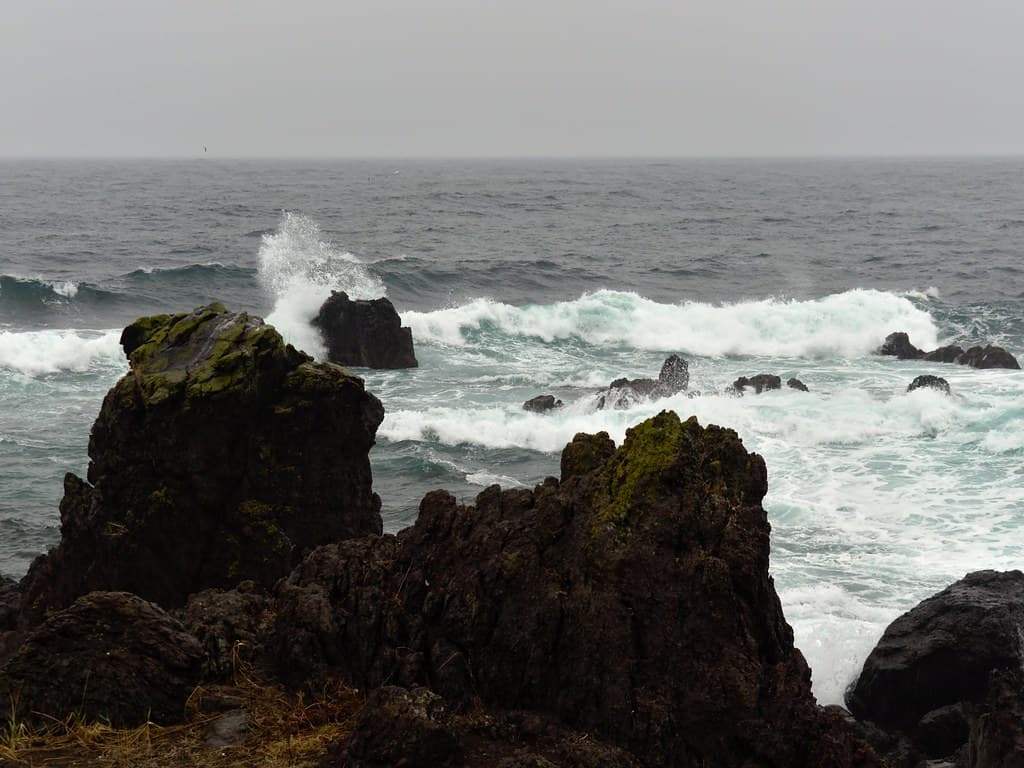
The ferry from Wakkanai deposits you onto Rishiri Island, where Oniwaki Beach curves along the western shore in a wide crescent of smooth, dark pebbles. Mount Rishiri-Fuji rises 1,721 meters almost directly from the waterline, its symmetrical cone dominating every view. The stones beneath your feet—polished by centuries of wave action—range from charcoal gray to rust-tinged brown, remnants of the volcano that shaped this entire island. Kombu harvesters work the shallows during summer months, spreading their leathery kelp harvest across rocks to dry. The beach lacks amenities, which keeps crowds nonexistent even during Japan's Golden Week. Cold currents from the north ensure water temperatures rarely climb above 15°C, even in August. Driftwood logs, bleached silver by sun and salt, collect at the high-tide line, offering impromptu seating for those content to watch fishing boats chug past en route to deeper waters. The shoreline walk toward Cape Notoro reveals tide pools teeming with sea urchins and starfish. Fishermen set up portable grills to roast fresh-caught atka mackerel, the smoke drifting across the beach. As daylight fades, the volcano's silhouette sharpens against the sky, and if conditions align, you'll witness alpenglow painting the summit pink while waves continue their rhythmic assault on the stones.
Places, rentals, tours and events within walking and driving distance of Oniwaki Beach.
Photos
Swimming conditions at Oniwaki Beach are generally challenging due to cold water temperatures year-round and occasional strong currents around Rishiri Island. The beach is more suited for scenic walks and photography rather than swimming. Even in summer, water temperatures rarely exceed 20°C (68°F). There are no lifeguards on duty, and facilities are minimal. If you do enter the water, stay close to shore and be cautious of rocks and uneven surfaces. Most visitors enjoy the beach for its natural beauty and tranquil atmosphere rather than water activities.
Oniwaki Beach is accessible year-round, with each season offering distinct experiences. Summer (June-August) provides the mildest weather with temperatures around 15-20°C, ideal for coastal walks and wildflower viewing. Early summer brings less fog than other Hokkaido coastal areas. Autumn offers dramatic scenery with changing foliage, while winter transforms the beach into a stark, peaceful landscape, though ferry services to Rishiri Island may be limited. Spring can be foggy but reveals emerging vegetation. Visit during summer for the most comfortable weather and reliable transportation.
Reaching Oniwaki Beach requires taking a ferry to Rishiri Island from Wakkanai (1h 40min) on Hokkaido's northern coast. Once on the island, you'll need to rent a car or bicycle, as public transportation is limited. The beach is located along the island's coastal road, accessible by car with informal parking areas nearby. Some visitors join guided island tours that include coastal stops. The island's circular road makes navigation straightforward, though a GPS or map is recommended as signage may be primarily in Japanese.
Oniwaki Beach is in a remote area with limited immediate amenities. Most dining and lodging options are concentrated in Oshidomari, the main port town, roughly 20-30 minutes away by car. The island offers minshuku (Japanese guesthouses), small hotels, and a few ryokan featuring local seafood, particularly sea urchin and kelp. Convenience stores in the main settlements provide basic supplies. It's advisable to arrange accommodation in advance, especially during summer, and bring snacks and water when visiting the beach, as there are no facilities on-site.
Yes, Oniwaki Beach offers spectacular views of Mount Rishiri (Rishiri-zan), the 1,721-meter volcanic peak dominating the island. The beach's position provides unique coastal perspectives of this iconic mountain, making it popular with photographers. Visibility depends on weather conditions—fog is common, especially in spring and early summer. Clear days reveal the mountain's full grandeur rising directly from the sea. Early morning typically offers the best visibility and lighting. The combination of volcanic peak, coastline, and Sea of Japan creates memorable scenery distinct from Hokkaido's mainland beaches.