Counting the waves…
Counting the waves…
A refined fusion of water purity, environmental stability, and communal vibrancy for Pulau Aur Beach.
View MethodologyAnalyzed via live sensors and environmental data.
Wave height, wind, and atmospheric stability.
Live footfall and crowd balance metrics.
Community reviews and curated sentiment.
“You'll motor three hours from Mersing's diesel-scented jetty, past fish farms and flat atolls, until Pulau Aur's forested peaks rupture the horizon. The island's eastern drops—sheer coral walls descending beyond 40…”
Limited recent visitor reports — live OBI telemetry is your best guide for current conditions.
The speedboat ride from Mersing feels like a pilgrimage, each nautical mile stripping away another layer of connectivity until you're left with salt spray and the thrum of twin outboards. Pulau Aur materializes as a dark emerald knuckle, its jungle canopy concealing the handful of dive resorts tucked into coves where monitor lizards sun themselves on sun-bleached driftwood. The sand here isn't powdery white—it's coarse, mixed with crushed coral and flecked with volcanic rock, a reminder that beauty doesn't require postcard perfection.
Beneath the surface, the real drama unfolds. The island's signature dive sites—Pinnacle, Rayner's Rock—attract pelagics that cruise the blue water beyond the reef edge. You'll descend past table corals wide as dining tables, through clouds of fusiliers that part and re-form around your bubbles, until the wall drops into cobalt obscurity. Between dives, you'll eat grilled ikan kembung at wooden tables, the fish caught that morning, still tasting of the sea.
 Credit: Unsplash
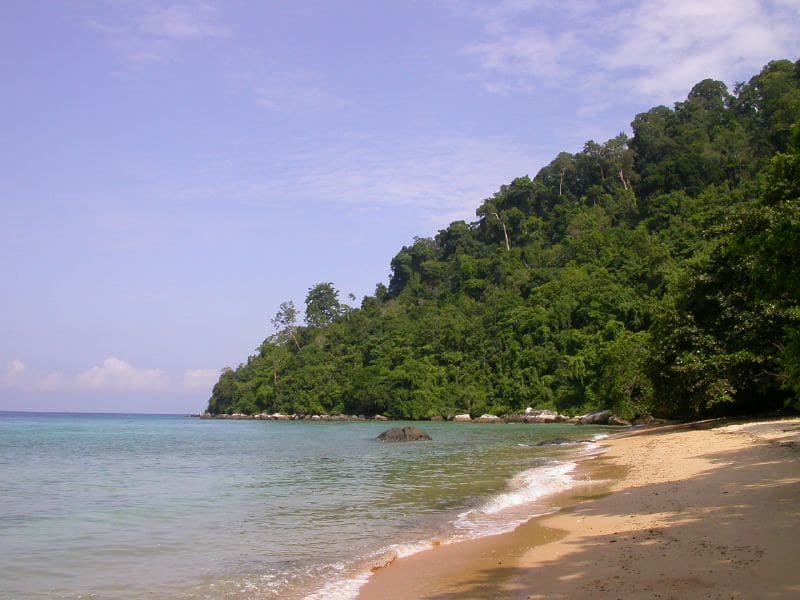
a beach with trees and a body of water
 Credit: Unsplash
a yellow kayak sitting on the beach next to the ocean
Morning currents bring eagle rays
Barracuda schools at depth
Monitor lizards cross the path
Prime Visitation
remote trip
Where it is
Pulau Aur Beach
Mersing, Johor, Malaysia
2.445000°, 104.513000°
Weather
Loading…
Swell
—
Temp
Warm · Restorative
UV Index
Moderate
Wind
—
Tidal State
Last known
Max Sunlight
—
Ideal Shade
—
Jan - Dec (Peak)
May - Nov (Off-season)
Historical data suggests peak visibility and stable sea temperatures occur during the prime visitation window.
Select a category to load nearby places.
Unlock restaurants, luxury stays and curated maritime experiences within 2km
Swimming and snorkeling conditions at Pulau Aur are generally excellent during calm weather, with clear waters and vibrant coral reefs. The island's sheltered bays offer protected swimming areas. However, currents can strengthen during monsoon season (November-February). Always check weather forecasts before your trip and swim in designated areas near your resort. Snorkelers should wear appropriate footwear to protect against coral and sea urchins. Life jackets are typically available through dive operators. Boat traffic can be present, so stay visible and follow local safety guidelines.
The best time to visit Pulau Aur is March to October, with peak conditions from April to September. During these months, you'll enjoy calm seas, excellent visibility for diving (often 20-30 meters), and sunny weather ideal for beach activities. Avoid November through February when the northeast monsoon brings rough seas, heavy rain, and reduced boat services—many resorts close during this period. The driest months are typically June to August, though underwater visibility can be slightly better in April-May before plankton blooms increase.
Pulau Aur is accessible only by boat from Mersing town in Johor. Most visitors arrange transportation through their resort, which includes boat transfers from Mersing jetty (journey takes 2-3 hours depending on sea conditions). Independent travelers can park at designated lots near Mersing jetty (daily fees apply, around RM5-10). From there, you'll need to book a speedboat transfer with local operators. It's essential to coordinate boat schedules in advance, as departures depend on tides, weather, and passenger numbers.
Pulau Aur has limited accommodation consisting mainly of small beach resorts and dive lodges offering basic to mid-range chalets. Most operate on a package basis including meals, as there are no restaurants or shops on the island. Accommodations typically provide three meals daily featuring local Malaysian and seafood dishes. Facilities are rustic—expect fan-cooled rooms, shared bathrooms at budget spots, and limited electricity (often generator-powered for specific hours). Book well in advance, especially for peak season. Bring any special snacks, medications, or supplies from the mainland.
Pulau Aur sits in the South China Sea approximately 65km offshore, making it one of Johor's most pristine outer islands with exceptional marine biodiversity. The island's remote location means less human impact and healthier coral ecosystems. Divers frequently encounter large pelagic species including barracuda schools, reef sharks, and occasionally whale sharks. The surrounding dive sites feature dramatic underwater topography with pinnacles, swim-throughs, and walls descending beyond 30 meters. Visibility during good conditions often exceeds 20 meters, significantly better than closer islands.
Photos