Counting the waves…
Counting the waves…

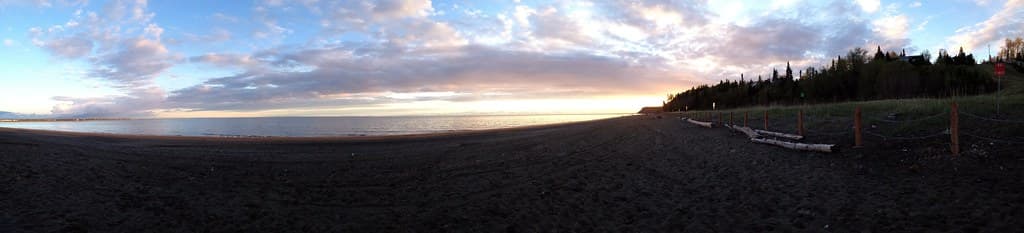
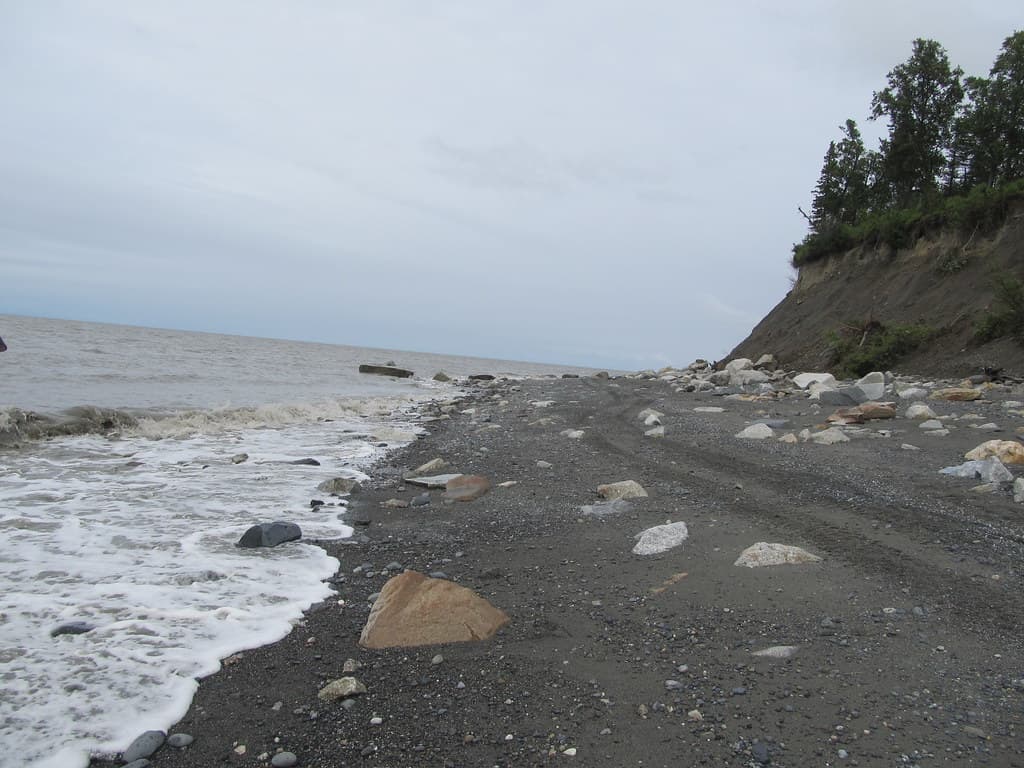
North Kenai Beach stretches along Cook Inlet like a rumpled wool blanket, its dark sand flecked with driftwood bleached bone-white by sun and storm. During low tide, the waterline retreats so far you'll squint to spot it, leaving behind tide pools pocked with hermit crabs and acres of exposed mudflats where locals dig for razor clams with cylindrical tubes and quick hands. The Kenai Mountains rise directly behind you, their glaciated peaks catching alpenglow even on overcast afternoons. This isn't a beach for lying out or building sandcastles. You'll want boots—the sand packs firm near the waterline but turns to silt farther out—and layers, because the wind off the inlet carries bite even in July. Bald eagles perch in the cottonwoods edging the shore, waiting for salmon carcasses or unwary seabirds. Beachcombers find Japanese glass floats, geoduck shells, and the occasional fossil from ancient seabeds. The beach runs for miles without development, just a gravel access road and the occasional fisherman casting into the murky water. In winter, you might spot belugas following eulachon runs, their white backs cutting through gray swells. Summer brings dipnetters hauling in salmon, their nets heavy with sockeye. You won't find facilities or lifeguards here—just uninterrupted shoreline and the rhythmic hiss of waves dragging volcanic grit back toward the inlet's mouth.
Places, rentals, tours and events within walking and driving distance of North Kenai Beach.
Photos
Swimming at North Kenai Beach is generally not recommended due to frigid water temperatures year-round, typically ranging from 35-55°F. The waters of Cook Inlet present strong currents and tidal fluctuations that can be dangerous even for experienced swimmers. Most visitors enjoy wading, beachcombing, and wildlife viewing rather than swimming. Always supervise children closely near the water and be aware of incoming tides, which can change rapidly and cover extensive beach areas quickly.
North Kenai Beach offers year-round access, with each season providing unique experiences. Summer months (June-August) feature the warmest temperatures, extended daylight hours, and peak opportunities for beachcombing and wildlife viewing, including beluga whales. Winter visits offer dramatic storm-watching and potential northern lights viewing. Spring and fall provide excellent bird migration viewing. Plan around low tide for maximum beach exploration. Weather can change quickly regardless of season, so dress in layers and prepare for wind and cool temperatures even in summer.
North Kenai Beach is located off the North Kenai Road, accessible from the Kenai Spur Highway. The beach features multiple public access points with parking areas along North Kenai Road. Free parking is available at designated beach access points, though facilities are minimal. The beach is approximately 10 miles from downtown Kenai and roughly 100 miles south of Anchorage via the Seward Highway and Sterling Highway. Roads are paved and accessible year-round, though winter driving requires appropriate vehicle preparation.
North Kenai Beach itself has minimal amenities—no restrooms, food services, or developed facilities at most access points. The nearby town of Kenai, approximately 10 miles away, offers restaurants, grocery stores, gas stations, and various lodging options including hotels and vacation rentals. For beach visits, bring your own food, water, and supplies. Some visitors choose accommodations in Kenai or Soldotna and make North Kenai Beach a day trip destination while exploring the Kenai Peninsula region.
Yes, North Kenai Beach is one of the best locations for viewing beluga whales in Alaska, particularly during summer months. Cook Inlet supports a population of endangered beluga whales that follow salmon runs into the area. The best viewing typically occurs from May through September during incoming tides when belugas move closer to shore to feed. Bring binoculars for optimal viewing, and watch for their distinctive white coloring in the gray waters. Early morning and evening often provide the calmest conditions for spotting wildlife.