Counting the waves…
Counting the waves…

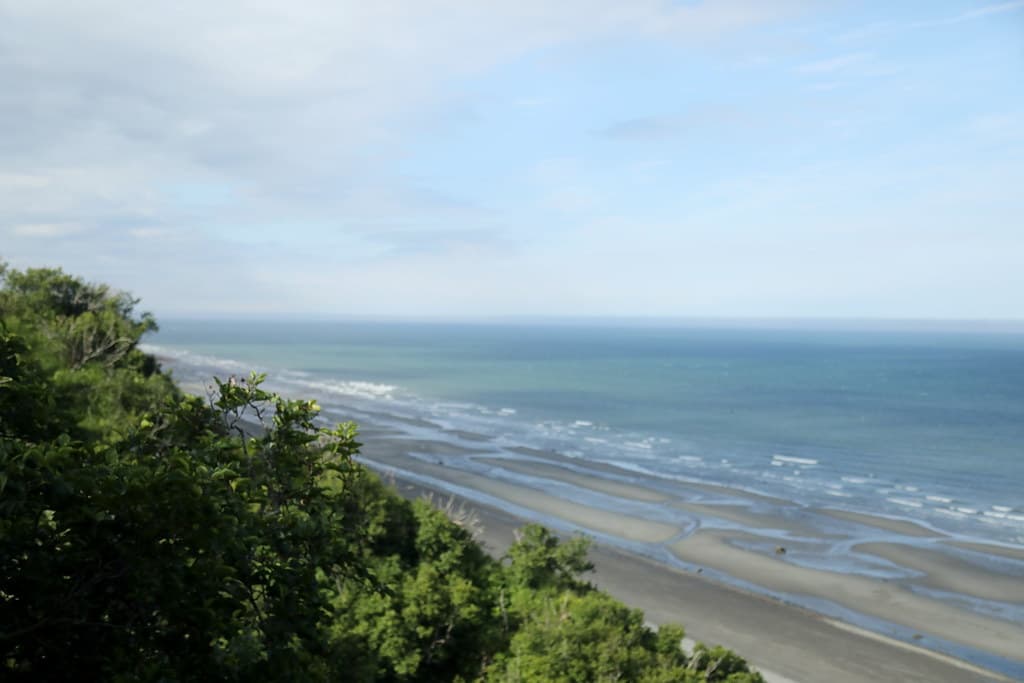
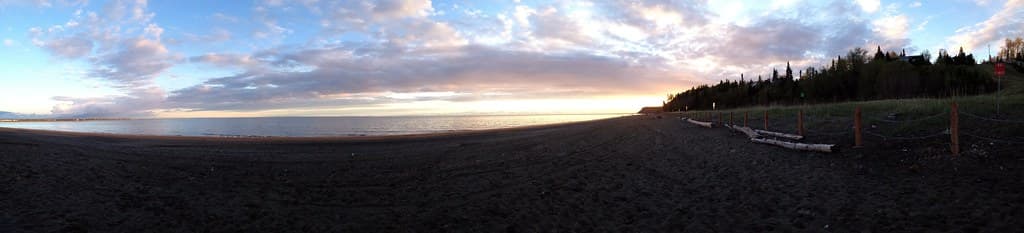
Captain Cook Beach stretches along Cook Inlet's eastern shore, a place where the usual Alaska tourist trail doesn't venture. You'll find yourself on a compact strand of charcoal-colored sand studded with driftwood logs the size of telephone poles, their silver bark polished smooth by seasons of ice and tide. The Chugach Mountains rise to the east, while across the inlet's gray-blue expanse, the volcanic cones of Redoubt and Iliamna pierce the sky—some days sharp-edged, others blurred behind curtains of weather rolling in from the Pacific. The beach belongs to the rhythm of extreme tides that can swing twenty feet in six hours, rewriting the shoreline twice daily. During minus tides, you'll walk across exposed mudflats dotted with clamshells and kelp, watching for the white heads of eagles perched in shoreline cottonwoods. The water stays frigid year-round—upper forties in summer—but that doesn't diminish the appeal of beachcombing or simply standing at the continent's edge while harbor seals surface offshore, their dark heads bobbing like buoys. Come in any season and you'll likely have the place to yourself. Winter brings the possibility of northern lights shimmering above the inlet. Summer stretches daylight to near-midnight, bathing the volcanic skyline in alpenglow that shifts from rose to violet. The beach asks nothing of you except presence—no facilities, no lifeguards, just you and the mechanics of tide, wind, and the enormous Alaska sky.
Places, rentals, tours and events within walking and driving distance of Captain Cook Beach.
Photos
Swimming at Captain Cook Beach is generally not recommended due to extremely cold water temperatures year-round, typically ranging from 35-55°F (2-13°C). The beach sits along Cook Inlet, which has strong tidal currents and significant tidal ranges that can create hazardous conditions. Hypothermia is a serious risk even in summer months. Most visitors enjoy the beach for beachcombing, wildlife viewing, and scenic photography rather than water activities. If you do wade in shallow areas, wear appropriate footwear and never turn your back on the water due to unpredictable wave action.
Captain Cook Beach offers year-round access, but summer months (June-August) provide the most comfortable weather with temperatures around 50-65°F and extended daylight hours—up to 19 hours in June. This period is ideal for beachcombing and wildlife viewing, including potential beluga whale sightings. Spring and fall offer excellent opportunities to see migratory birds and dramatic stormy skies. Winter visits reward hardy travelers with possible northern lights displays and a serene, frozen landscape, though temperatures drop below freezing and daylight is limited. Dress in layers regardless of season, as coastal winds can be strong.
Captain Cook Beach is located approximately 35 miles north of Kenai along the Kenai Spur Highway. From Kenai, drive north on the Kenai Spur Highway (also called Nikishka) for about 20-25 minutes. Look for Captain Cook State Recreation Area signs. The beach is accessed through Captain Cook State Recreation Area, which has a day-use parking area near the shoreline. A daily or annual Alaska State Parks pass is required for parking. The gravel parking lot accommodates multiple vehicles. Roads are generally well-maintained, though winter conditions may require four-wheel drive or tire chains.
Captain Cook Beach is in a relatively remote area with limited nearby amenities. The beach itself has no food services, so pack your own snacks and water. Captain Cook State Recreation Area offers basic campground facilities with tent and RV sites, picnic areas, and vault toilets, but no restaurants or stores within the park. The nearest services are in Nikiski, about 10-15 minutes south, where you'll find a few small stores and gas stations. For more dining and lodging options, Kenai (35 miles south) offers hotels, restaurants, and full services. Plan accordingly and bring supplies.
Yes, Captain Cook Beach offers opportunities to spot beluga whales, particularly during summer months when they follow salmon runs into Cook Inlet. These small white whales are most commonly seen from May through September, often traveling in pods relatively close to shore. The best viewing times are during incoming tides when belugas hunt for fish. Bring binoculars for better viewing. The inlet is also home to one of the few remaining Cook Inlet beluga populations, making sightings special but not guaranteed. Patient observers may also spot sea otters, seals, and various seabirds along this scenic stretch of coastline.