Counting the waves…
Counting the waves…

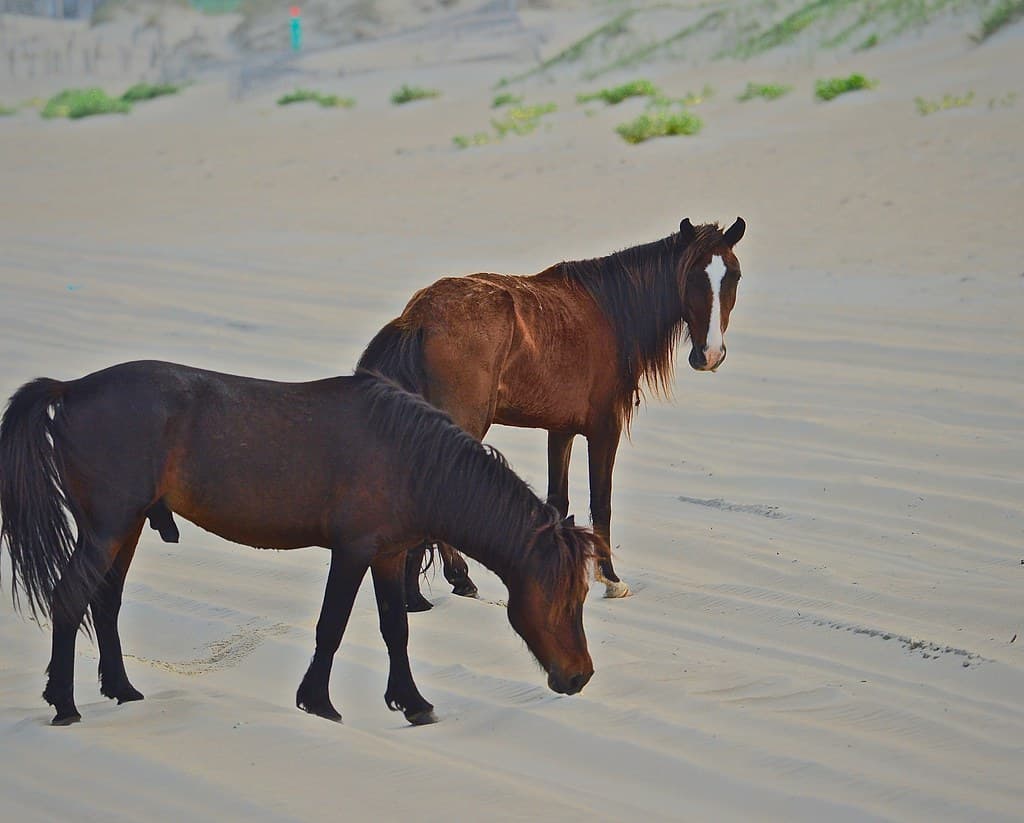
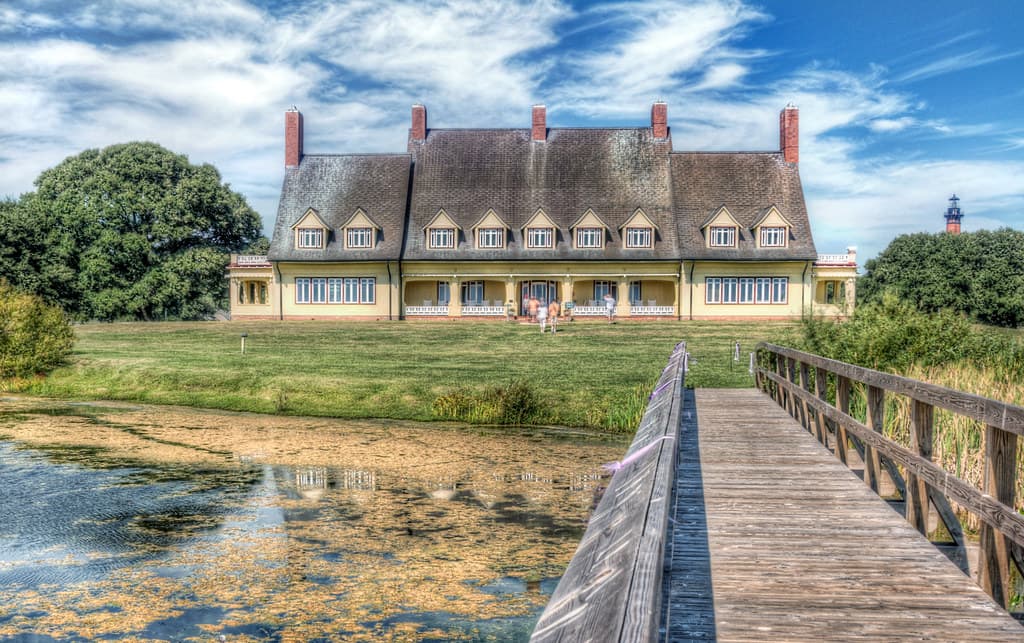
The beach begins where pavement ends. Past the last vacation rental in Corolla, four-wheel-drive vehicles bounce along hard-packed sand toward Carova, an unincorporated stretch where roughly a hundred horses—loose-limbed, shaggy-maned, unbothered—wander freely between dunes and tide pools. You might find a bay mare nosing through sea oats twenty yards from your towel, or a stallion silhouetted against dawn light, the kind of encounter that turns a morning swim into something you'll describe for years. The shoreline itself runs wide and flat, ideal for long walks interrupted only by sanderlings skittering ahead of foam and the occasional shipwreck timber surfacing after storms. In summer the water stays tepid enough for extended swims; autumn delivers cleaner swells and fewer beachgoers. Winter wind sculpts the dunes into sharp ridges, and spring brings nesting terns that stake out territory with dive-bombing precision. Corolla village anchors the southern end with its 1875 lighthouse, still operational, whose 220 spiral steps reward climbers with views across sound and ocean. The surrounding historic district holds a one-room schoolhouse and keeper's quarters turned museum. But the real draw remains that stretch of undeveloped coast where tire tracks fade with each tide and the only crowd control comes from a herd of feral horses who've claimed this sand as their own.
Places, rentals, tours and events within walking and driving distance of Currituck Beach.
Photos
Currituck Beach has no lifeguard services, so swimming is at your own risk. The Atlantic waters can have strong currents, rip tides, and variable wave conditions depending on weather. Check surf reports before entering the water and never swim alone. The beach is relatively remote in some sections, so exercise caution. Summer months typically offer calmer conditions, while fall and winter bring rougher seas. Always supervise children closely and be aware that emergency services may take longer to reach this less-developed area compared to other Outer Banks beaches.
Currituck Beach is accessible year-round, with each season offering different experiences. Summer (June-August) brings warm weather and water temperatures around 75°F, ideal for swimming but also peak crowds. Spring and fall offer pleasant temperatures (60s-70s°F), fewer visitors, and excellent conditions for beachcombing and wildlife viewing. Winter is quiet and beautiful but cold, with temperatures in the 40s-50s°F. May-June and September-October provide the best balance of good weather and smaller crowds. Note that summer also brings higher accommodation prices and traffic congestion in Corolla.
Currituck Beach is accessed through Corolla, located at the northern end of North Carolina's Outer Banks via NC Highway 12. From the mainland, take US-158 or US-64 east to the Outer Banks, then follow NC-12 north. Public beach access points with parking lots are available throughout Corolla, including several along Ocean Trail. Parking is free at most public access areas but can fill quickly in summer. Some sections require four-wheel drive vehicles to access. The northernmost areas beyond the paved road are only accessible by 4WD on the beach itself.
Corolla offers various dining options ranging from casual seafood restaurants to pizza shops and cafes, concentrated in the main commercial areas along NC-12. Grocery stores like Food Lion and specialty markets are available for self-catering. Lodging primarily consists of vacation rental homes and condos rather than traditional hotels, ranging from oceanfront estates to more modest cottages. Book well in advance for summer stays. A few small resorts exist, but the area emphasizes private rentals. The nearby Currituck Club development offers upscale dining and shopping options as well.
Yes, Currituck Beach is home to a herd of wild Spanish Mustangs that roam freely on the northern beaches beyond the paved section of NC-12. These protected horses are descendants of Colonial Spanish horses and have lived here for centuries. You can observe them from your vehicle if driving on the 4WD beach, but must maintain at least 50 feet distance—approaching or feeding them is illegal and dangerous. Organized wild horse tours are available through local operators if you don't have a four-wheel drive vehicle or prefer guided viewing with expert commentary.