
Counting the waves…
Counting the waves…

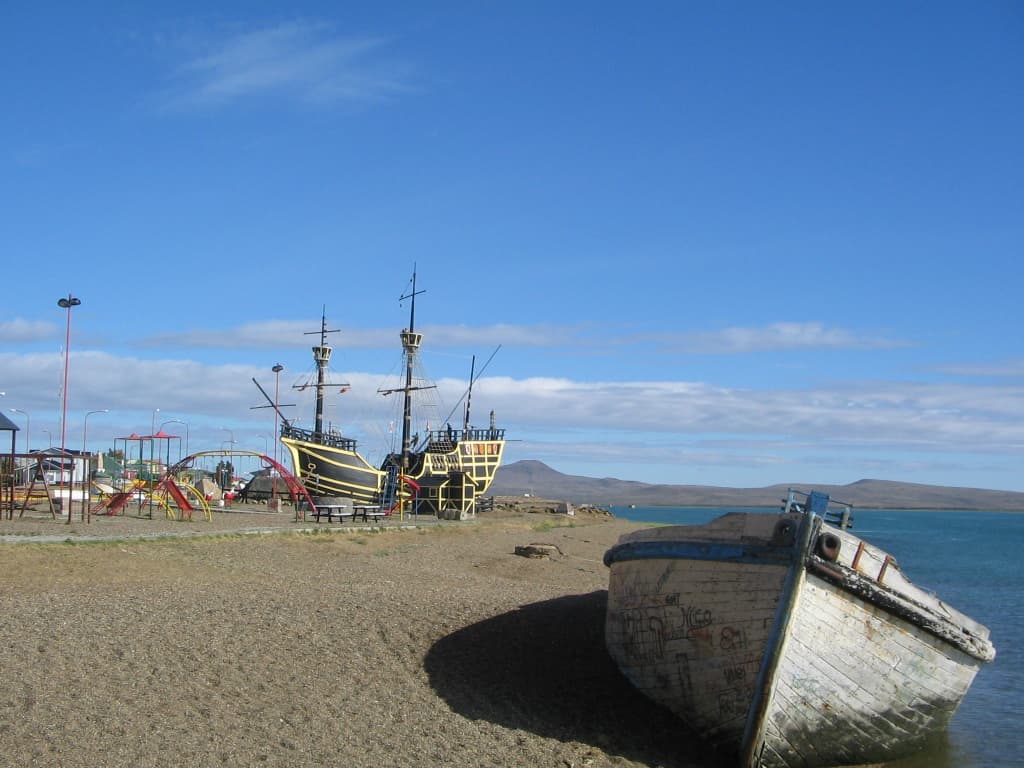
The beach at Puerto Santa Cruz announces itself in the rattle and click of stones shifting underfoot. These aren't jagged rocks but river-worn ovals in slate, cream, rust—smoothed to tactile perfection by the relentless tumble of tides. The Santa Cruz River spreads wide here before surrendering to the Atlantic, its brown currents swirling with silt carried from glacial headwaters in the Andes. You can smell brine and mud, diesel from the fishing boats, the faint char of someone's lunchtime grill. Behind you, the town maintains a weathered dignity: corrugated metal roofs, walls the color of old plaster, a church steeple that's been leaning slightly westward for decades. Darwin slept here in 1834 before rowing upstream; you can still sense that frontier mood in the unhurried rhythms, the way locals nod in greeting without breaking stride. The beach itself serves as backyard, playground, and contemplation space—kids build stone towers while their parents scan the water for dolphin fins breaking the surface. Sunset stains the estuary copper and violet, light bouncing off wet pebbles until the entire shore seems to glow. Upturned boats rest above the tide line, their hulls patched and repainted countless times. A few cormorants dry their wings on wooden posts, black silhouettes against the dimming sky. You sit, letting the stones conform to your weight, and watch the river carry its ancient cargo toward the sea.
Places, rentals, tours and events within walking and driving distance of Playa Puerto Santa Cruz.
Photos
Playa Puerto Santa Cruz is a pebble beach on the Santa Cruz River estuary, where swimming is generally not the main activity due to cold water temperatures and strong tidal currents typical of Patagonian estuaries. The water can be quite chilly year-round, and the pebbly surface makes entry less comfortable than sandy beaches. There are no lifeguard services, so exercise caution if you choose to wade or swim. The beach is better suited for walking, photography, and enjoying the coastal scenery. Always be aware of tidal schedules.
Playa Puerto Santa Cruz is accessible year-round and particularly appealing for budget travelers due to its free access and town proximity. Summer (December-February) offers the warmest temperatures, though 'warm' in Patagonia means 15-20°C. The shoulder seasons of spring and autumn provide good visibility for photography and sunset viewing with fewer winds. Sunset visits are particularly recommended as the beach faces west over the estuary. Winter visits are possible but expect cold conditions and shorter daylight hours for beach exploration.
Playa Puerto Santa Cruz is located directly in the town of Puerto Santa Cruz, making it easily accessible on foot from the town center. The beach is along the waterfront and can be reached by walking from most accommodations in town. If arriving from elsewhere, Puerto Santa Cruz is connected to Río Gallegos and other regional destinations by Route 3, the main coastal highway. Buses serve the town, and rental cars are available in larger cities like Río Gallegos. Once in town, simply head toward the waterfront.
Puerto Santa Cruz is a functioning town with tourism infrastructure, including several hotels, hostels, and guesthouses to suit various budgets. Restaurants serving Patagonian cuisine, including local lamb and seafood, are available in the town center within walking distance of the beach. You'll find grocery stores, bakeries, and cafés for supplies and meals. Accommodation options range from basic to comfortable, and the town serves as a stopping point for travelers along Route 3. Services are more limited than in larger cities but adequate for overnight stays.
Playa Puerto Santa Cruz is distinguished by its location in a historic port town, offering a blend of natural beauty and local culture. The pebble beach provides a different texture and character compared to sandy beaches, creating interesting photographic opportunities. The estuary setting means dramatic tidal changes and excellent birdwatching for species that inhabit coastal wetlands. Sunsets over the Santa Cruz River estuary are particularly scenic. The beach's proximity to town amenities makes it one of the more accessible and family-friendly options in this remote region.